How to Reconstitute Peptides
A complete step-by-step guide to reconstituting lyophilised research peptides with bacteriostatic water. Covers supplies, technique, concentration math, and proper storage for research use.
For research purposes only. All information sourced from peer-reviewed literature.
What Is Reconstitution?
Reconstitution is the process of dissolving a lyophilised (freeze-dried) peptide powder into a liquid solution so it can be accurately measured and administered via syringe in test subjects. Research peptides are shipped as dry powder because peptides are far more stable in this form — they can remain viable for months or years when stored properly.
Once dissolved in liquid, the clock starts: the solution degrades over time and must be refrigerated and used within a defined window (typically 25–30 days with bacteriostatic water).
The process itself is straightforward — you add a measured amount of liquid to the powder and let it dissolve. What requires attention is the concentration math: the amount of liquid you add determines the concentration of the solution, which determines how much liquid you need to draw for each dose in test subjects.
Supplies You'll Need
Before you begin, gather everything. Working with a clean, organised setup prevents contamination and measurement errors.
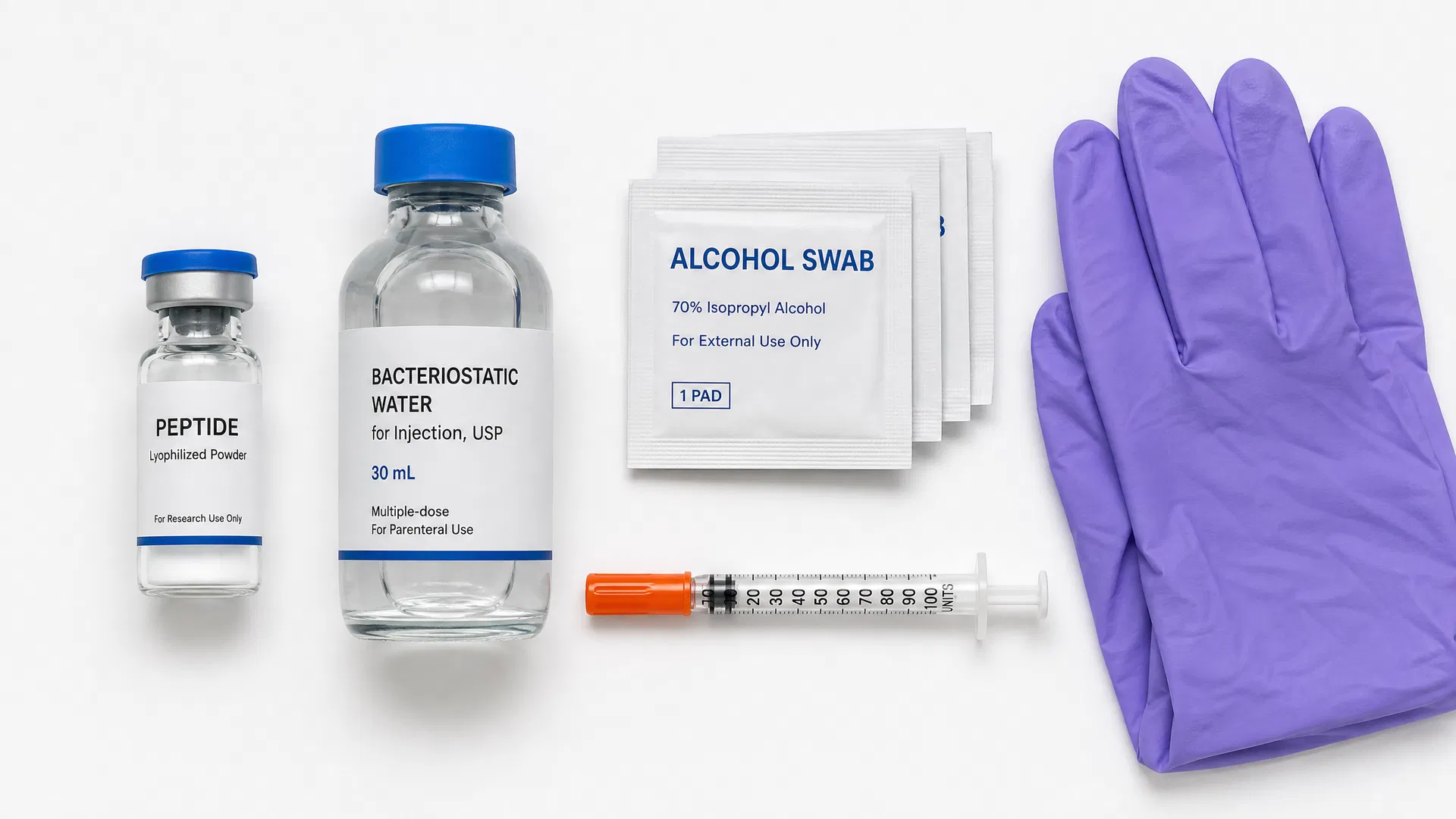
Peptide Vial
Your lyophilised peptide in a sealed glass vial with a rubber stopper and aluminium crimp cap. The label shows the peptide name and total content (e.g., "BPC-157 10mg"). Do not remove the crimp cap.
Bacteriostatic Water
Sterile water containing 0.9% benzyl alcohol as a preservative to inhibit bacterial growth. Typically comes in 10 mL or 30 mL vials. This allows the reconstituted peptide to last 25–30 days.
Insulin Syringes
U-100, 1 mL insulin syringes with 29-gauge or 30-gauge needles. The 1 mL size is ideal for reconstitution. For dosing, 0.5 mL syringes work well for smaller doses (under 50 units). Use a fresh syringe each time.
Alcohol Swabs
Individually wrapped, 70% isopropyl alcohol prep pads. Wipe the rubber stopper of both vials before each puncture. This is a non-negotiable sterility step.
Choosing Your Diluent
Not all diluents are equal. Here is what is available and when to use each:
| Diluent | Preservative | Shelf Life | Best For |
|---|---|---|---|
| Bacteriostatic Water (BAC) | 0.9% benzyl alcohol | 25–30 days | Multi-dose protocols (recommended) |
| Sterile Water | None | 24–48 hours | Single-use only |
| Normal Saline (0.9% NaCl) | None (unless bacteriostatic) | 24–48 hours | Specific protocols only |
Never use tap water, distilled water from a store, or any non-sterile liquid. These are not sterile and will introduce bacteria into the vial. Only use pharmaceutical-grade diluents designed for injection.
How Much BAC Water to Add
The amount of BAC water you add determines the concentration of the resulting solution, which determines how much liquid equals one dose. The goal is to choose a volume that produces easy, round-number syringe readings for your target dose.
The Concentration Formula
Concentration (mg/mL) = Total peptide in vial (mg) ÷ Volume of BAC water (mL)
For example: 10mg vial + 2 mL BAC water = 10 ÷ 2 = 5 mg/mL
Common BAC Water Volumes
| BAC Water | Best For | Concentration (10mg vial) |
|---|---|---|
| 1 mL | Small vials (2–3mg), fine increments | 10 mg/mL |
| 2 mL | Most common — 5mg and 10mg vials | 5 mg/mL |
| 3 mL | Larger vials, precise small doses | 3.33 mg/mL |
Tip: Using even numbers (2 mL, 4 mL) simplifies the maths significantly.
Step-by-Step Reconstitution Process
Follow these steps carefully. The entire process takes approximately 5 minutes.
Prepare Your Workspace
Work on a clean, flat surface. Lay out your peptide vial, BAC water vial, syringe, and alcohol swabs. Wash your hands thoroughly or wear clean nitrile gloves. Allow the peptide vial to reach room temperature for a few minutes — reconstituting an ice-cold vial can slow dissolution.
Sterilise the Vial Stoppers
Tear open an alcohol swab and wipe the rubber stopper of the BAC water vial in a circular motion. Use a second swab to wipe the rubber stopper of the peptide vial. Let both air-dry for a few seconds (alcohol evaporates quickly). Do not blow on them or wipe them dry.
Draw BAC Water Into the Syringe
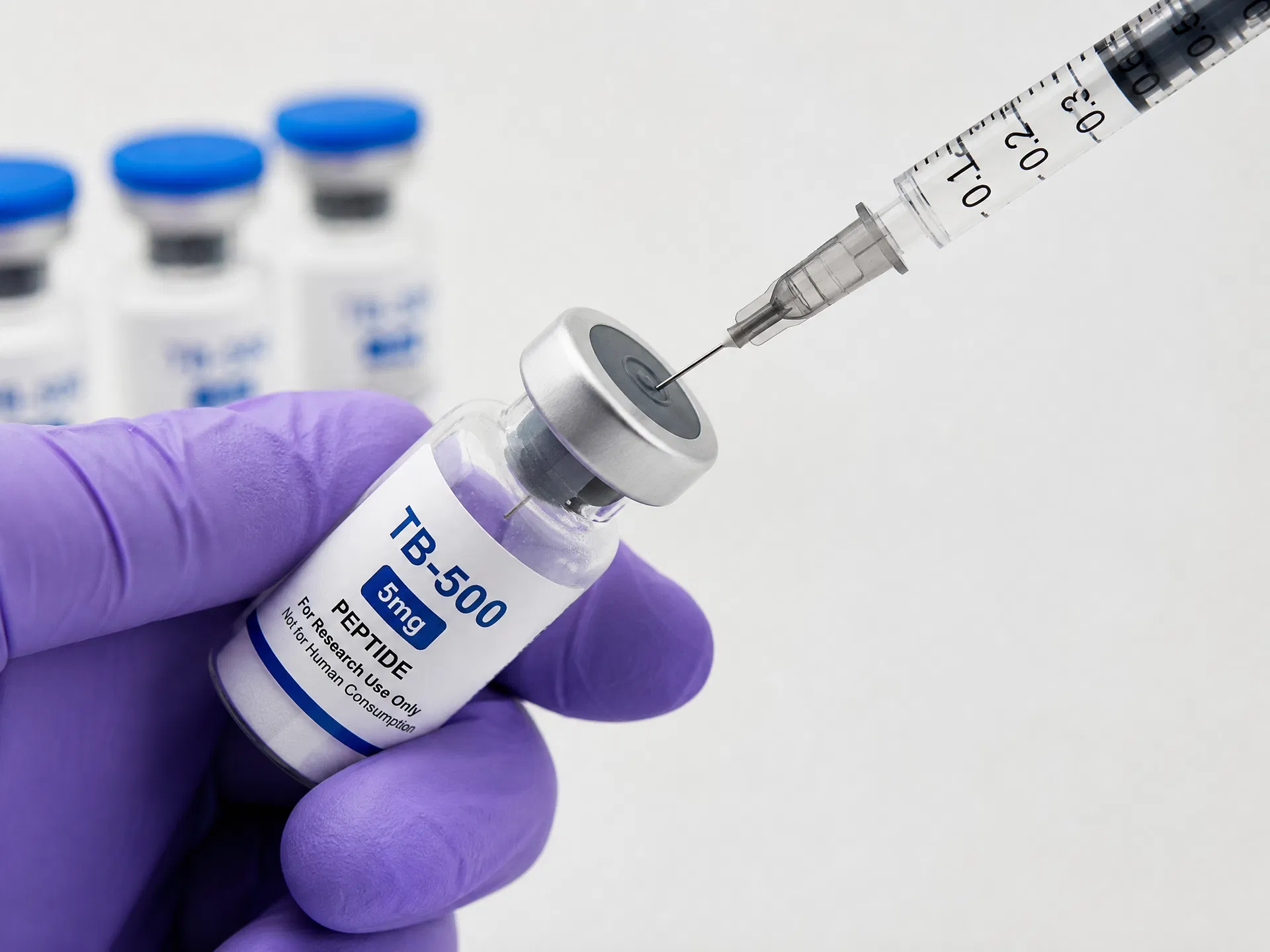
Remove the cap from a fresh insulin syringe. Insert the needle through the rubber stopper of the BAC water vial. Invert the vial so it is upside down with the syringe pointing up. Pull back on the plunger slowly to draw the desired amount of BAC water (e.g., 2 mL = 200 units on a U-100 syringe). If you see air bubbles, flick the syringe barrel gently and push the air back into the vial, then re-draw to the correct volume.
Inject BAC Water Into the Peptide Vial
This is the most important step. Insert the needle through the rubber stopper of the peptide vial. Aim the needle tip at the glass wall of the vial, not directly at the powder. Depress the plunger slowly, letting the BAC water trickle down the inside wall of the vial. This gentle approach prevents damaging the peptide structure. Never squirt the water directly onto the powder cake with force.
Let the Powder Dissolve
Remove the syringe. The BAC water will begin dissolving the lyophilised powder on contact. Do not shake the vial. Instead, gently swirl by rotating the vial between your fingers, or simply let it sit. Most peptides dissolve completely within 1–3 minutes. Some may take up to 10 minutes. The solution should become clear and colourless when fully dissolved.
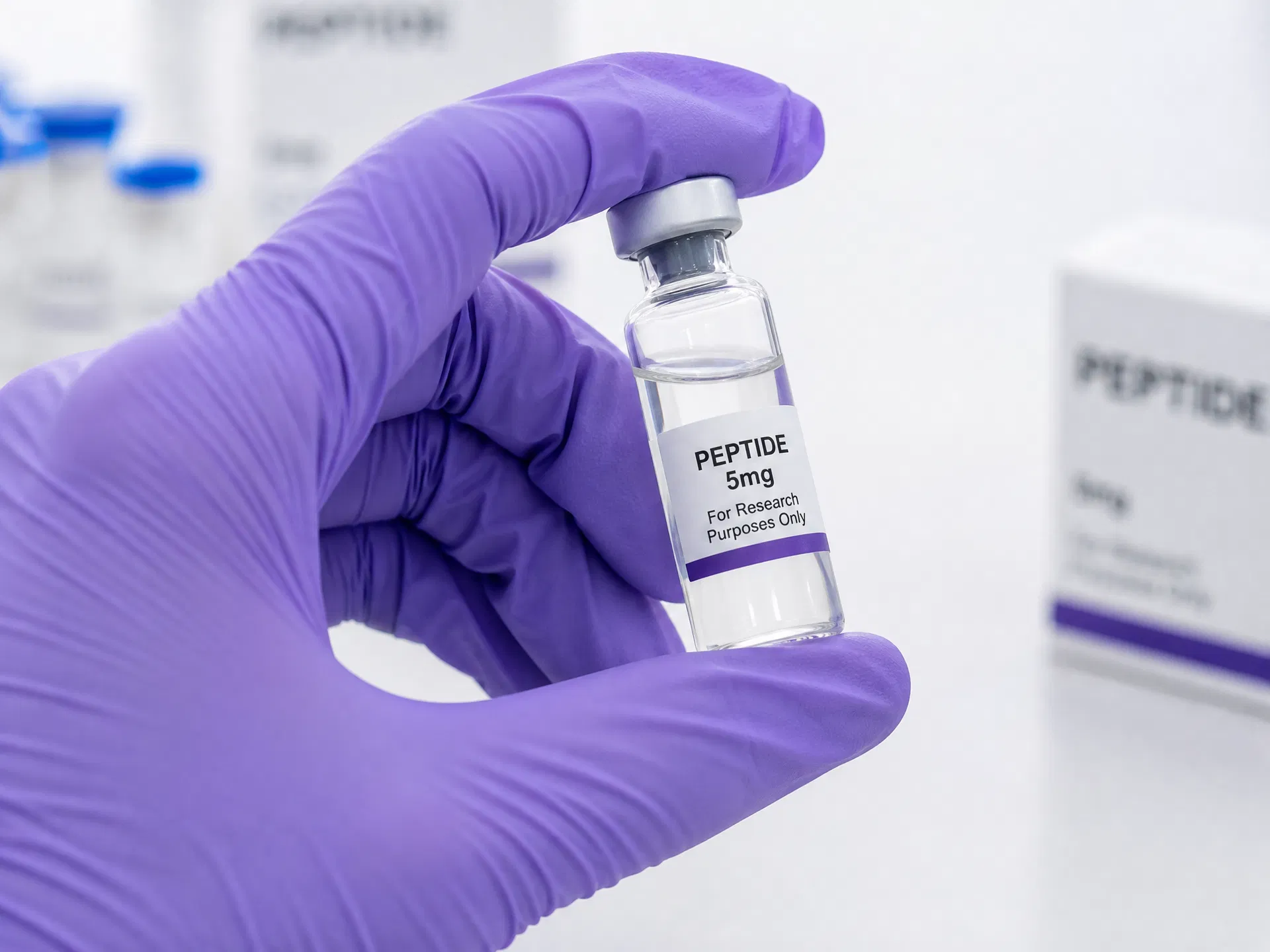
Inspect the Solution
Hold the vial up to a light source. The solution should be clear with no visible particles, clumps, or cloudiness. If you see undissolved particles, swirl gently again and wait. If the solution remains cloudy or discoloured after 15 minutes of gentle swirling, the peptide may be compromised — do not use it.
Label and Refrigerate
Write the reconstitution date and the BAC water volume used on a small piece of tape and attach it to the vial (e.g., "5/8 — 2 mL BAC"). Place the vial upright in the refrigerator immediately. The reconstituted peptide is now ready for use in test subjects.
Key Reminders
- •Always aim the needle at the glass wall — never directly at the powder
- •Gently swirl — never shake the vial
- •Use a fresh syringe for each dose — never re-use needles
- •Always sterilise stoppers with alcohol before each puncture
Concentration Math: Worked Examples
The formula is always the same. Once you understand it, you can calculate the correct dose for any peptide at any concentration.
The Dose Formula
Dose volume (mL) = Target dose (mg) ÷ Concentration (mg/mL)
Syringe units (U-100) = Dose volume (mL) × 100
Disclaimer: The dosage figures used below are fictional examples only, created solely to demonstrate how the reconstitution maths works. They are not dosage guidelines, recommendations, or protocols.
1Example 1 — 10mg vial with 2 mL BAC water
Vial: 10 mg
BAC water: 2 mL
Concentration: 10 ÷ 2 = 5 mg/mL
Target dose: 250 mcg (0.25 mg)
Dose volume: 0.25 ÷ 5 = 0.05 mL
Syringe units: 5 units
Total doses per vial: 40
2Example 2 — 10mg vial with 2 mL BAC water
Vial: 10 mg
BAC water: 2 mL
Concentration: 10 ÷ 2 = 5 mg/mL
Target dose: 2.5 mg
Dose volume: 2.5 ÷ 5 = 0.50 mL
Syringe units: 50 units
Total doses per vial: 4
3Example 3 — 10mg blend with 2 mL BAC water
Vial: 10 mg total (5mg + 5mg blend)
BAC water: 2 mL
Concentration: 10 ÷ 2 = 5 mg/mL
Target dose: 300 mcg total (0.3 mg)
Dose volume: 0.3 ÷ 5 = 0.06 mL
Syringe units: 6 units
Total doses per vial: 33
4Example 4 — 10mg vial with 2 mL BAC water
Vial: 10 mg
BAC water: 2 mL
Concentration: 10 ÷ 2 = 5 mg/mL
Target dose: 2 mg
Dose volume: 2 ÷ 5 = 0.40 mL
Syringe units: 40 units
Total doses per vial: 5
Storage & Shelf Life
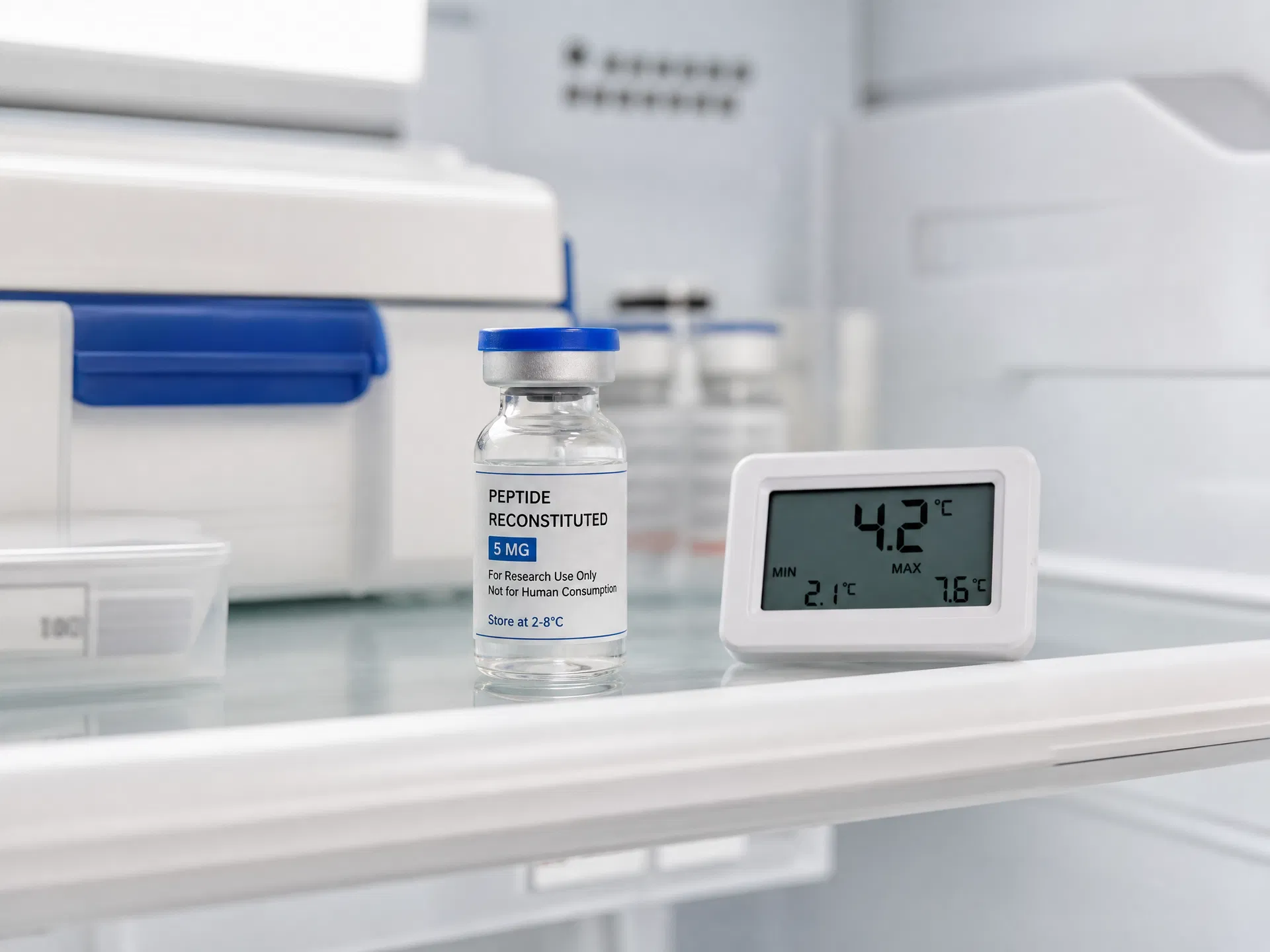
Proper storage is critical to maintaining peptide integrity after reconstitution. Once dissolved, peptides are sensitive to temperature, light, and bacterial contamination.
Temperature: 2–8°C
Store upright in the refrigerator. Never freeze reconstituted peptides.
With BAC water: 25–30 days
The benzyl alcohol preservative inhibits bacterial growth for this period.
With sterile water: 24–48 hours
No preservative means bacteria can grow rapidly. Use immediately.
Unreconstituted (Lyophilised) Peptide Storage
| Condition | Stability |
|---|---|
| Room temperature (below 25°C) | Up to 90 days |
| Refrigerated (2–8°C) | Up to 2 years |
| Frozen (−20°C) | Indefinite (recommended for long-term) |
Troubleshooting
Powder not dissolving after 5 minutes
Continue gently swirling. Some larger peptides can take up to 10–15 minutes. If still undissolved after 15 minutes, the peptide may have been damaged during shipping or storage. Do not use force or heat.
Solution is cloudy or has particles
A properly reconstituted peptide should be crystal clear. Cloudiness may indicate degradation, contamination, or incompatibility with the diluent. Do not use a cloudy solution in test subjects.
Air bubbles in the syringe
Flick the syringe barrel with your finger to move bubbles to the top (near the needle). Push the plunger slightly to expel the air back into the vial, then re-draw to the correct volume. Small bubbles are cosmetic but can affect dose accuracy.
Accidentally added too much BAC water
This is not a problem — it simply means your solution is more dilute. Recalculate the concentration using the actual amount of BAC water added and adjust your syringe units accordingly. Use our calculator to find the new dose volume.
Frequently Asked Questions
How much bacteriostatic water do I add to a peptide vial?
Can I use sterile water instead of bacteriostatic water?
How long does a reconstituted peptide last?
Why should I not shake the peptide vial?
How do I calculate my dose in syringe units?
What if I added the wrong amount of BAC water?
Use Our Mixing Calculator
Skip the maths. Enter your vial size, BAC water amount, and target dose — our calculator gives you the exact syringe units instantly with a visual syringe diagram.
Disclaimer: All information provided on this page is for research and educational purposes only. This content is not intended to diagnose, treat, cure, or prevent any disease. All peptides sold by Peak Peptides Australia are for research purposes only and are not for human consumption. Always consult with a qualified healthcare professional before making any decisions involving peptides. Information sourced from peer-reviewed academic literature.