ARA 290 is cibinetide
ARA 290, ARA-290 and cibinetide are names for the same synthetic 11-amino-acid peptide. PubChem lists cibinetide as C51H84N16O21 with a molecular weight of 1,257.3 g/mol and the sequence XEQLERALNSS, where X is pyroglutamate.
ARA 290 (Innate Repair Receptor Ligand)
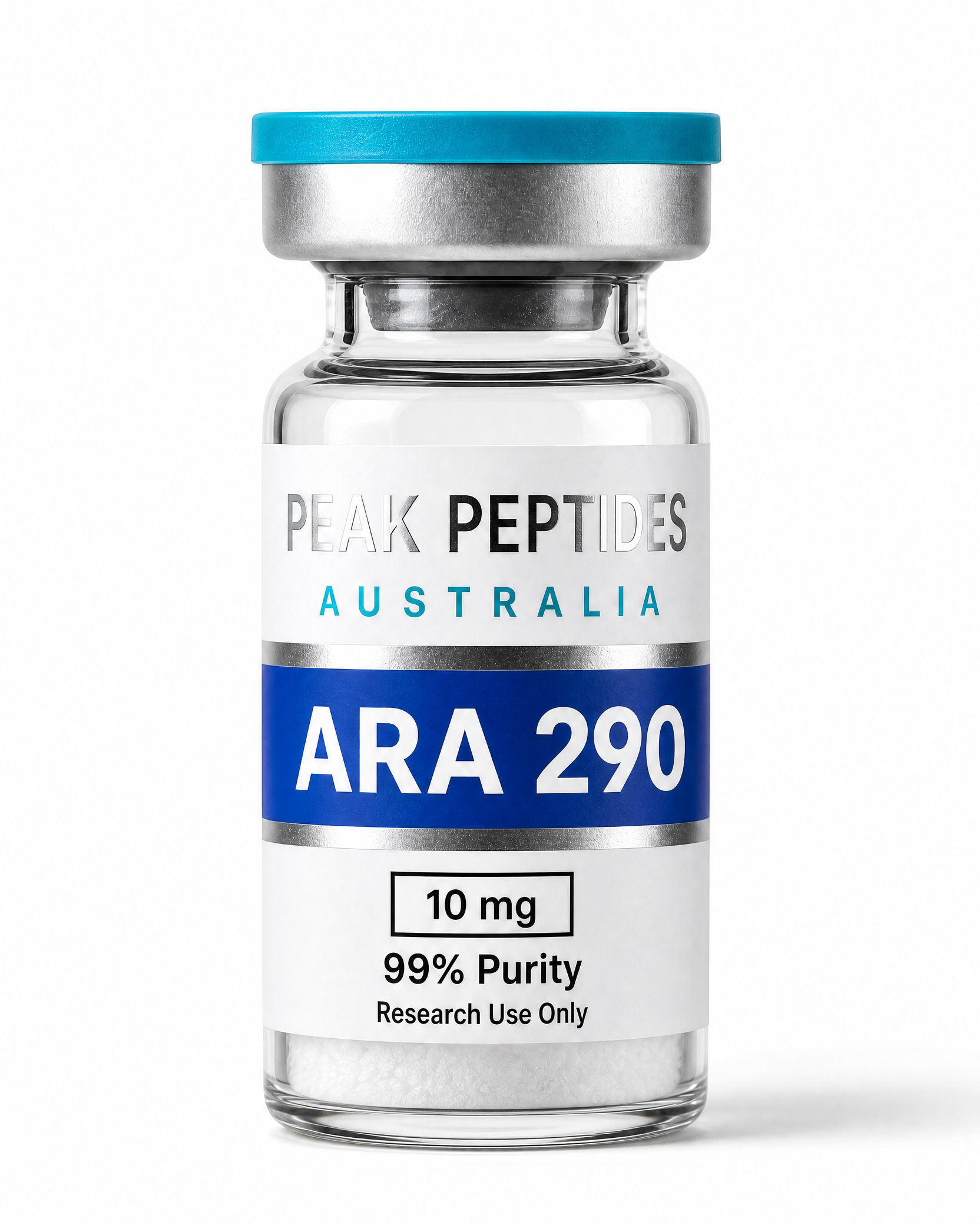
ARA 290 10mg (cibinetide) is a lyophilised, erythropoietin-derived 11-amino-acid peptide used in innate repair receptor research. LabDoc report LD-24XK records confirmed identity, 99.3% HPLC purity and 9.47mg measured content for its tested sample. In-stock orders receive same-day dispatch from Victoria after payment confirmation, with tracked Australia Post Express shipping Australia-wide.
This product is sold strictly for in-vitro laboratory research purposes only. It is not intended for human or animal consumption, injection, or any diagnostic or therapeutic use.
Cibinetide · erythropoietin-derived peptide research · LabDoc LD-24XK
ARA 290, also called ARA-290 or cibinetide, is an 11-amino-acid peptide derived from a surface region of erythropoietin (EPO). Researchers study it as a ligand for the innate repair receptor, an injury-response signalling system. Its design is intended to separate this research pathway from EPO’s classical red-blood-cell-stimulating activity. This vial is labelled ARA 290 10mg and contains freeze-dried powder. LabDoc report LD-24XK records confirmed identity by LC-MS, 99.3% purity by HPLC and 9.47mg measured content for the tested sample. This page explains the peptide, the human research endpoints, its sequence, the sample documentation, BAC-water concentration maths and a photo mixing guide. Peak Peptides Australia supplies this material for in-vitro research only.
Also referred to in research or catalogue references as ARA-290, ARA 290, ARA290, cibinetide, Cibinetide peptide, pHBSP, PHBSP, pyroglutamate helix B surface peptide, 1208243-50-8.
ARA 290, ARA-290 and cibinetide are names for the same synthetic 11-amino-acid peptide. PubChem lists cibinetide as C51H84N16O21 with a molecular weight of 1,257.3 g/mol and the sequence XEQLERALNSS, where X is pyroglutamate.
Cibinetide was designed from erythropoietin rather than being erythropoietin itself. The research aim is to activate the innate repair receptor pathway without the classical EPO response that stimulates red-blood-cell production.
The innate repair receptor is the signalling context used in ARA 290 research. Scientific literature describes it with erythropoietin-receptor and beta-common-receptor components. Researchers measure pathway, nerve-fibre, symptom, metabolic and function endpoints in defined study settings.
Published controlled studies examined selected people with sarcoidosis-associated small-fibre nerve loss or type 2 diabetes. They measured outcomes such as corneal nerve-fibre area or density, symptom questionnaires, metabolic markers and walking capacity. These are different endpoints.
The label’s 10mg is the nominal mass of dry ARA 290 in the vial, not a concentration. Adding 2 mL of BAC water produces 5 mg/mL. On a U-100 syringe, 10 units equals 0.10 mL and holds 0.5 mg at that concentration.
LabDoc report LD-24XK, tested 02 October 2026, records LC-MS identity confirmed, 99.3% purity by HPLC and 9.47mg content by HPLC against the 10mg claim (94.7%). The report’s overall assessment is Pass and covers the submitted sample.
Identity, purity, content, sterility and stability are different questions. LD-24XK gives identity, purity and content findings for its submitted sample. It is not a sterility test, a stability study or a clinical-outcome study.
ARA 290 is investigational. FDA’s orphan-drug record for cibinetide states ‘Not FDA Approved for Orphan Indication’. The TGA’s ARTG is Australia’s public database for therapeutic goods approved for supply; ARA 290 is not a TGA-approved medicine and this listing is supplied for in-vitro research only.
ARA 290 is cibinetide, a short synthetic peptide made from 11 amino acids. It was designed from the helix-B surface region of erythropoietin, often shortened to EPO. It is not EPO itself, and it is not a blend. The names ARA 290, ARA-290, ARA290 and cibinetide point to the same molecular entity.
The research question behind ARA 290 is whether a short EPO-derived peptide can interact with the innate repair receptor. That receptor is part of an injury-response signalling model. Researchers use this model to examine inflammatory messenger pathways, tissue-protection signals and small-fibre nerve measurements in controlled experimental and clinical-study settings.
This listed vial is labelled ARA 290 10mg and contains lyophilised, or freeze-dried, powder. The figure is a nominal total mass before liquid is added. It does not describe a liquid concentration. Concentration comes from dividing the vial amount by the final measured preparation volume. Peak Peptides Australia supplies the material for in-vitro research only.
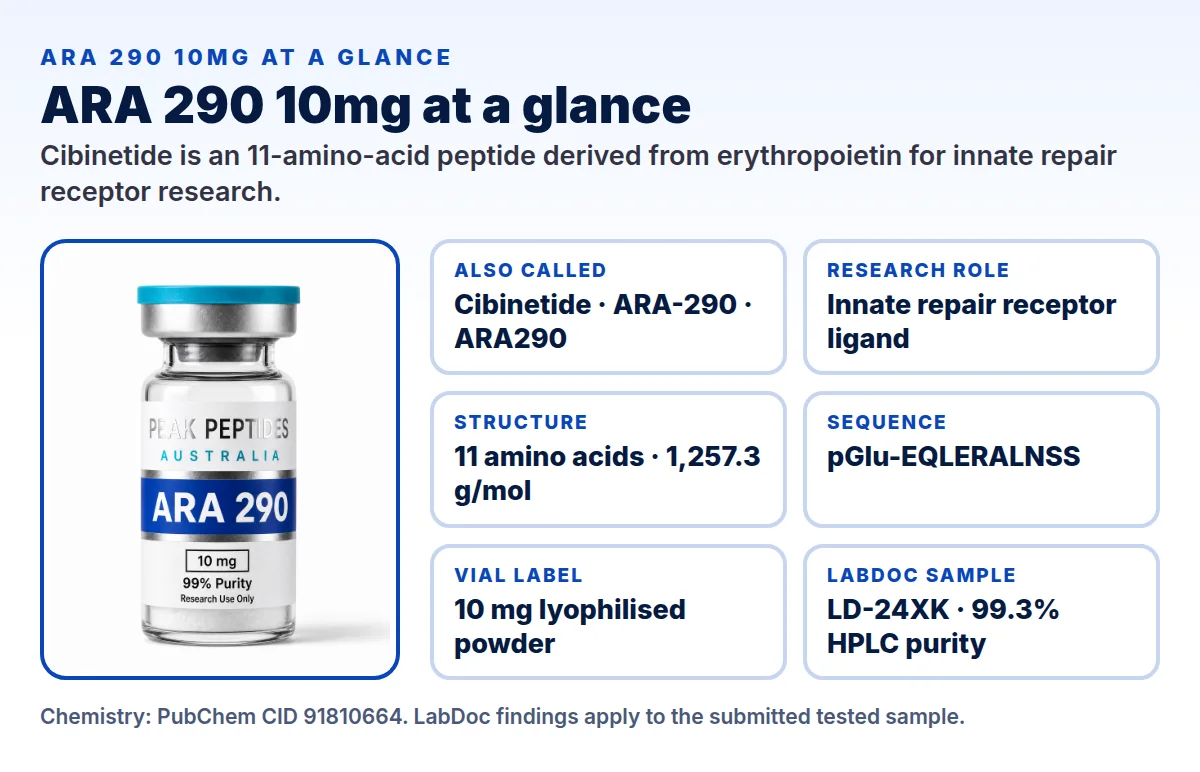
ARA 290 is studied as an innate repair receptor ligand. In plain English, a ligand is a molecule that binds to, or signals through, a receptor. The innate repair receptor is described in the literature as involving erythropoietin-receptor and beta-common-receptor components. It is not the same research target as the classical EPO receptor response used for red-blood-cell production.
The pathway model begins with a cell sensing injury or stress. A receptor signal can influence the release of messenger molecules, including cytokines. Cytokines are small proteins cells use to send inflammatory and immune messages. Researchers then use defined read-outs to see what changed: a cell marker, a nerve-fibre image, a symptom questionnaire, a blood measure or a functional test.
This is why it matters to read each study endpoint precisely. A corneal microscopy result is a visual measure of small nerve fibres in the cornea. A questionnaire reports what participants recorded. A metabolic measure comes from blood testing. Each one is useful for its own question, but none automatically answers every question about symptoms, nerve structure or a separately supplied vial.
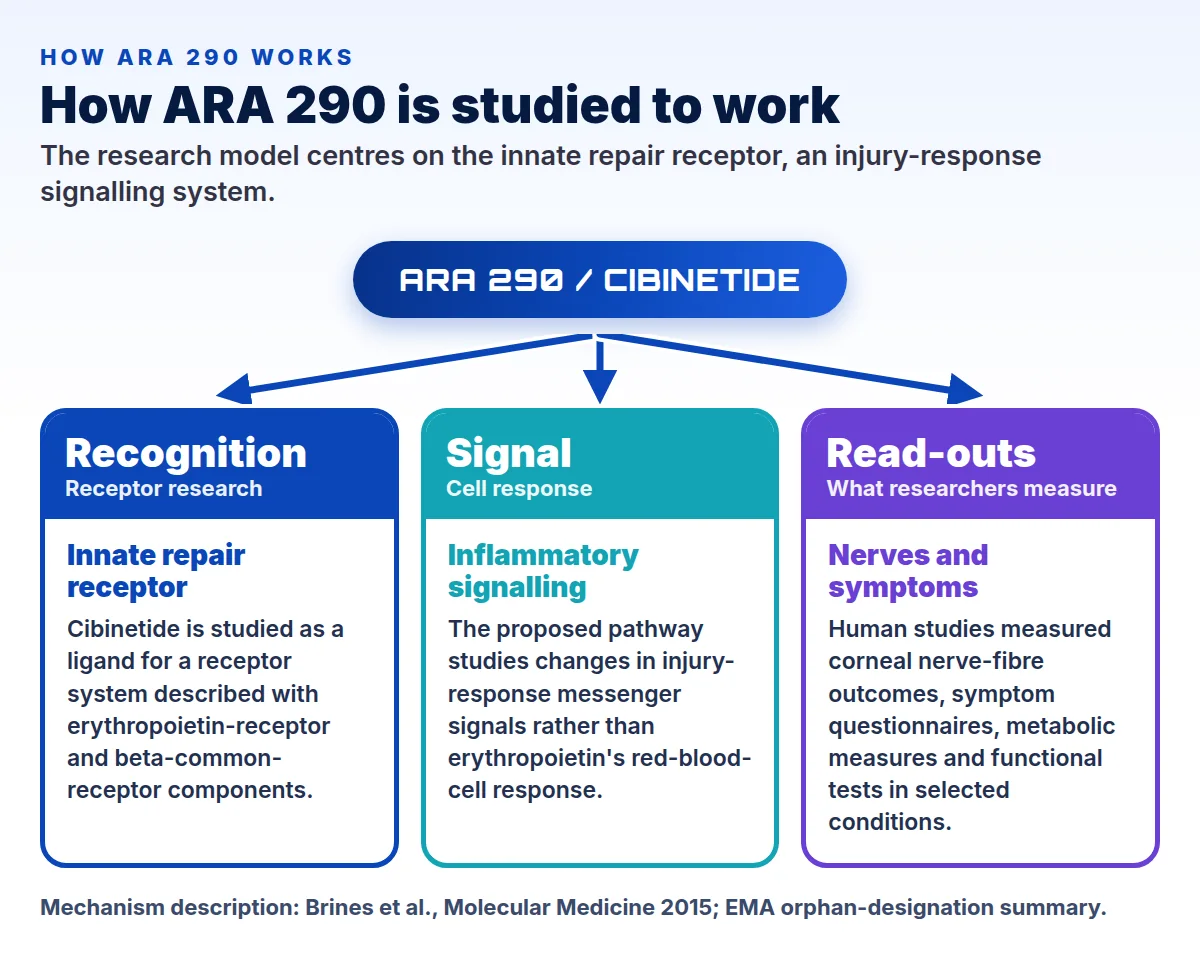
ARA 290 human research has centred on small-fibre-neuropathy-related measures in selected sarcoidosis and type 2 diabetes populations. The 2012 sarcoidosis pilot was a four-week randomised, double-blind study of 22 participants. It used the small-fibre-neuropathy screening list, pain and quality-of-life questionnaires, fatigue and depressive-symptom measures. At week 4, the screening-list change was −11.5 in the ARA 290 group compared with −2.9 with placebo; mean pain-intensity and fatigue scores improved in both groups.
A 2015 Phase 2 study enrolled 24 people with impaired glucose tolerance, impaired fasting glucose or early type 2 diabetes. Its published report examined HbA1c, lipid measures, PainDetect neuropathic symptoms and corneal nerve-fibre density. The paper reported an improvement in PainDetect in the ARA 290 group compared with placebo and a corneal-density increase in participants whose starting density was substantially below normal.
The 2017 multicentre Phase 2b trial enrolled 64 participants with sarcoidosis-associated small nerve-fibre loss and neuropathic pain. The primary endpoint was corneal nerve-fibre area at day 28. The placebo-corrected mean change was 109 μm² in the 1 mg group, 697 μm² in the 4 mg group and 431 μm² in the 8 mg group; only the 4 mg result had a confidence interval entirely above zero. The research paper also reported a rise in GAP-43-positive intraepidermal fibres in that group.
These details explain why the page does not collapse every study into a single claim. The studies used distinct participant groups, study material, measured endpoints and time periods. Corneal nerve-fibre area is a surrogate endpoint: it is a measurement used to study a biological change, not the same thing as a broad claim about lasting clinical benefit.
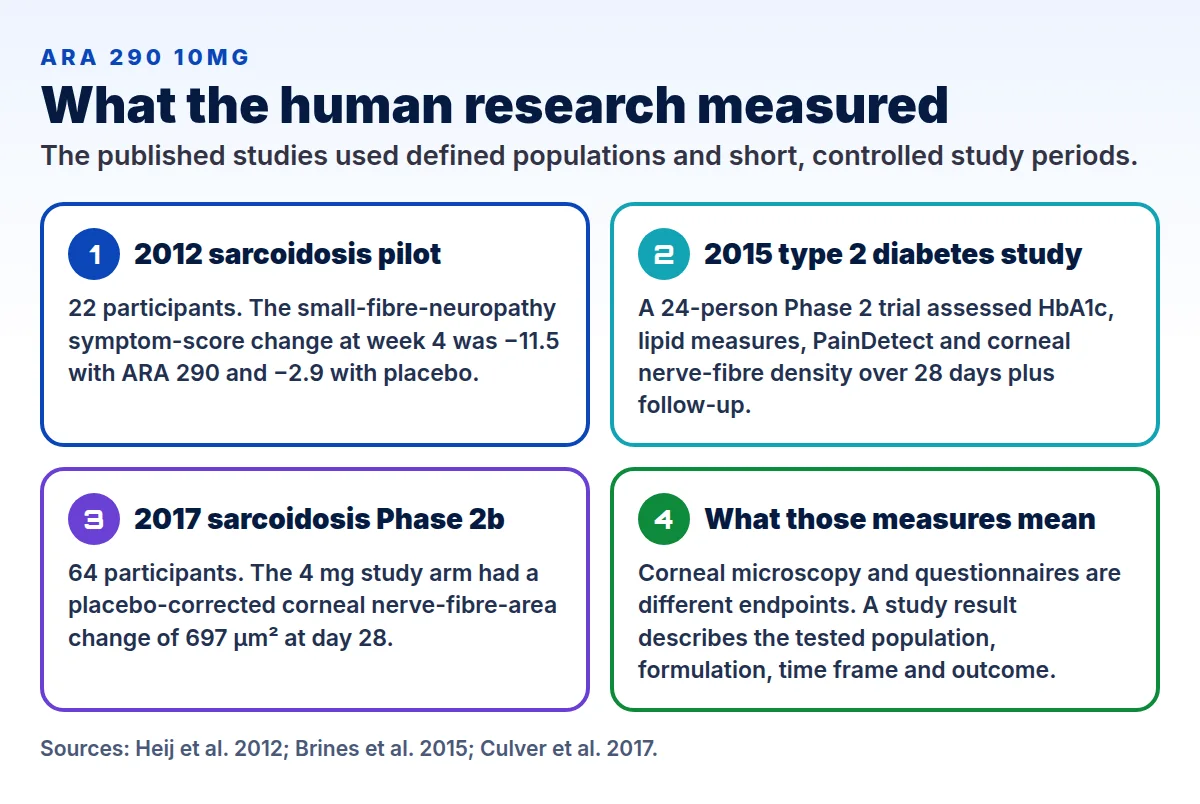
| Study | Participants and length | Main endpoints | Reported result |
|---|---|---|---|
| Heij et al., 2012 | 22 people with sarcoidosis; 4 weeks | SFN screening list, pain, quality of life, fatigue | SFN screening-list change: −11.5 versus −2.9 with placebo |
| Brines et al., 2015 | 24 people with early type 2 diabetes or impaired glucose regulation; 28 days plus follow-up | HbA1c, lipids, PainDetect, corneal nerve-fibre density | Reported changes in metabolic measures and PainDetect; density finding in a lower-baseline subgroup |
| Culver et al., 2017 | 64 people with sarcoidosis-associated small nerve-fibre loss; 28 days | Corneal nerve-fibre area, skin fibres, pain, 6-minute walk | 4 mg group: placebo-corrected corneal-area change 697 μm²; 95% CI 159 to 1,236 |
Each row reports the paper’s study-specific population and endpoints.
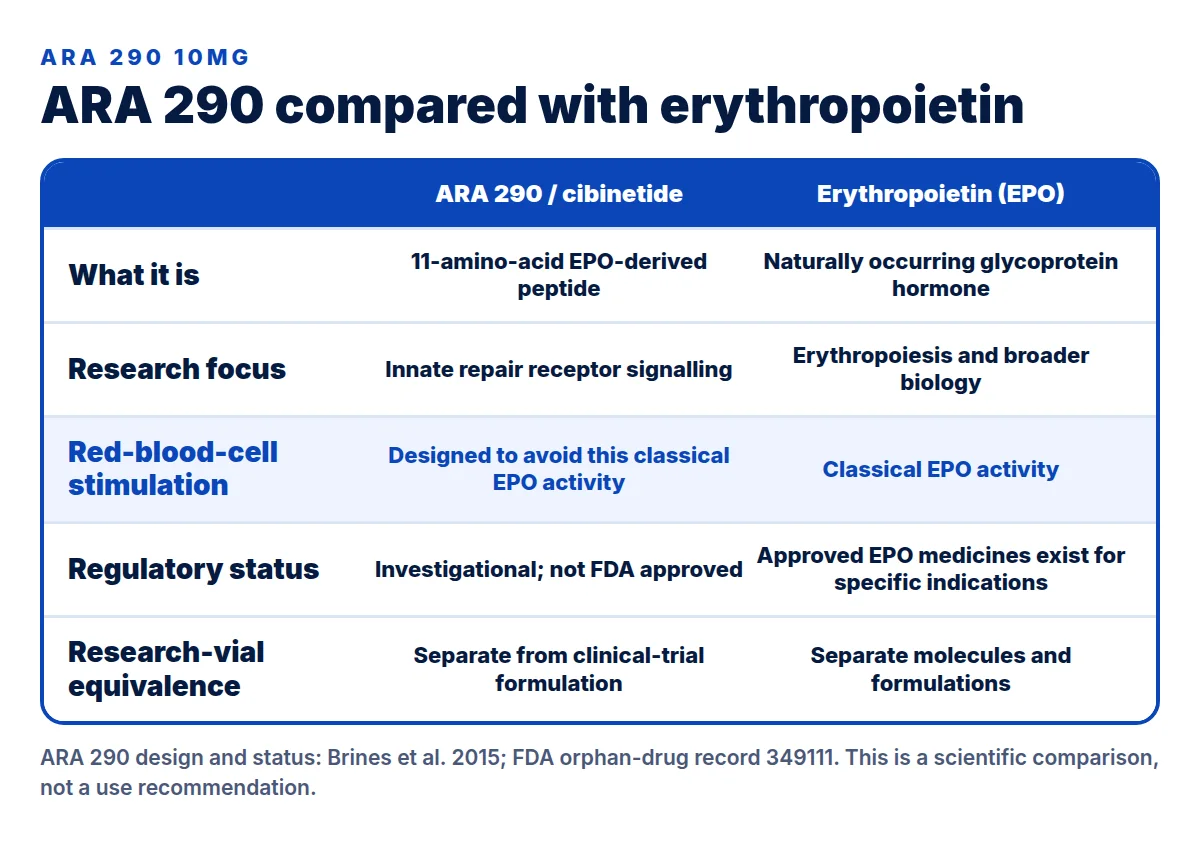
ARA 290 comes from EPO research, but ARA 290 and erythropoietin are not the same molecule. EPO is a naturally occurring glycoprotein hormone. Cibinetide is a synthetic 11-amino-acid peptide. The difference in size and structure changes the research questions, receptor context, manufacturing and analytical identity checks.
The key design idea is non-erythropoietic signalling. EPO’s classical biology includes stimulation of red-blood-cell production. ARA 290 was designed to investigate tissue-protective and innate-repair-receptor signalling without that classical EPO effect.
The regulatory records also need separating. FDA’s substance record lists cibinetide and several orphan-drug designations. FDA’s designation record for neuropathic pain in sarcoidosis says the product is not FDA approved for the orphan indication. EMA’s orphan-designation summary also says that an orphan designation is not a marketing authorisation.
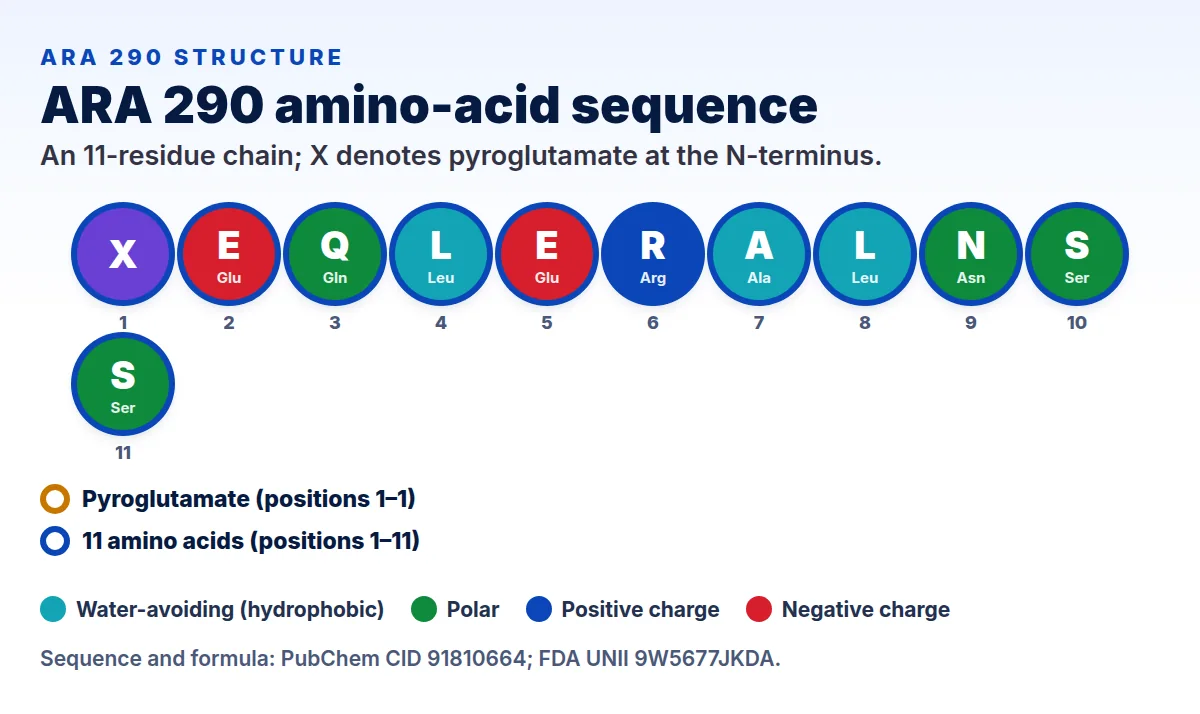
Cibinetide has 11 amino acids. PubChem gives the one-letter sequence XEQLERALNSS. The first character, X, represents pyroglutamate, a modified amino acid at the N-terminus. Written out, the chain is pyroglutamate–glutamate–glutamine–leucine–glutamate–arginine–alanine–leucine–asparagine–serine–serine.
The formula is C51H84N16O21 and the molecular weight is 1,257.3 g/mol. Its PubChem compound identifier is 91810664, the FDA UNII is 9W5677JKDA, and its CAS number is 1208243-50-8. These identifiers help distinguish the named molecule from different peptides, different formulations and different product labels.
A molecular name or sequence alone does not verify a supplied sample. That is why the LabDoc result is presented separately below. LC-MS checks molecular identity by mass pattern; HPLC reports a purity profile and can quantify content under the report method. Together, these methods answer different analytical questions.
ARA 290 10mg is backed by LabDoc report LD-24XK. The report records a submitted ARA 290 lyophilised-powder sample received on 09 September 2026 and tested on 02 October 2026. It reports identity as confirmed by LC-MS, purity of 99.3% by HPLC and measured content of 9.47mg by HPLC against the 10mg label claim, or 94.7% of claim. Its overall assessment is Pass.
The terms on the report describe separate analytical jobs. Identity confirmation by LC-MS asks whether the material produces the expected molecular mass signature. Purity by HPLC measures the main ARA 290 peak against related components. Content measures how much peptide the report method found in the submitted vial. Open the LabDoc verification page and match LD-24XK when checking the record.
The report is specific to the sample that went to the laboratory. It does not test sterility or set a stability period, and it is not a clinical trial. The distinction is useful: a strong page says exactly what a test establishes instead of turning a purity number into a wider claim.
ARA 290 10mg is supplied by Peak Peptides Australia for in-vitro research only. The product label shows ARA 290, 10 mg, 99% Purity and Research Use Only. For a documented analytical record, use the LabDoc link on this page and match the report ID LD-24XK to the tested-sample result.
For in-stock orders, Peak Peptides Australia provides same-day dispatch from Victoria once payment is confirmed. Parcels are sent by tracked Australia Post Express and a tracking number is emailed. The related bacteriostatic water listing and reconstitution calculator are included below for laboratory measurement planning.
ARA 290 is not a TGA-approved medicine. The Australian Register of Therapeutic Goods is the public TGA database for therapeutic goods approved for supply. This listing should be understood as a research-material page, with the science, sample documentation and measurement information kept separate from clinical-trial claims.
Step-by-step guide · About 10 minutes
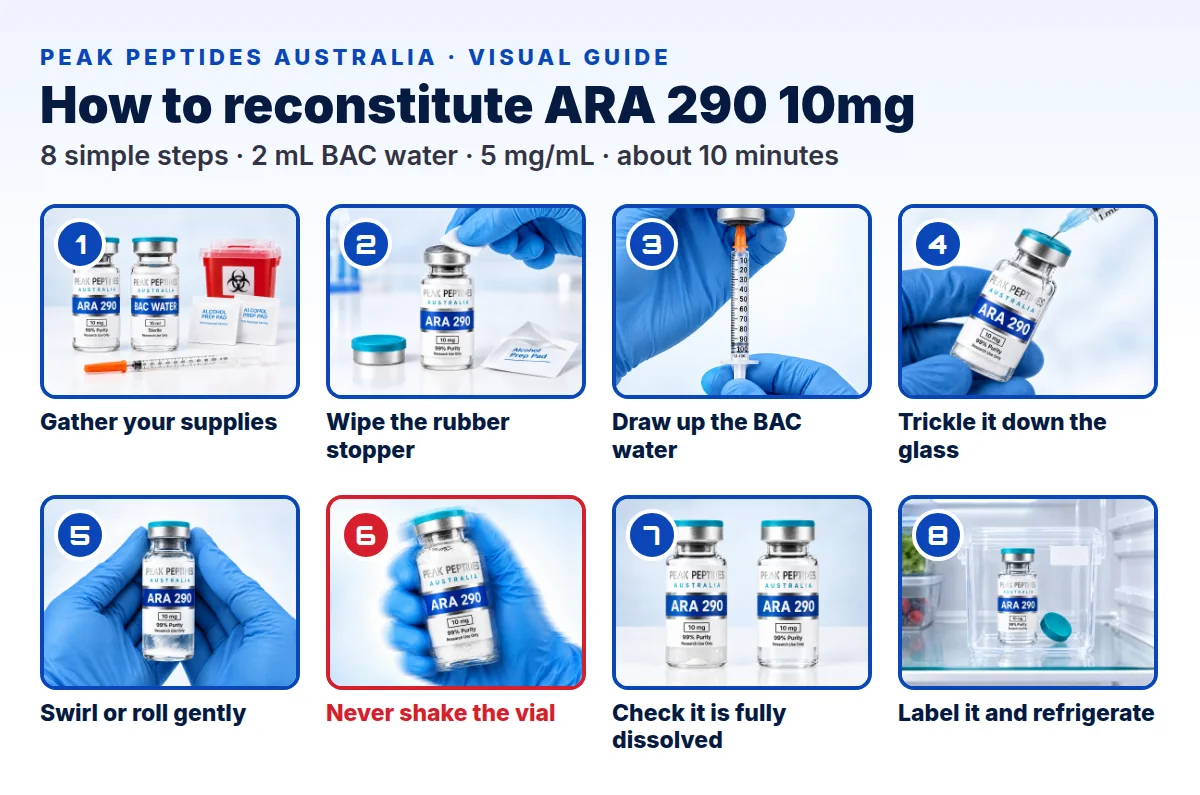
ARA 290 10mg arrives as freeze-dried powder. Reconstitution means adding a measured diluent to make a liquid preparation with a known concentration. This visual guide uses BAC water and highlights a 2 mL mix, which gives 5 mg/mL and simple U-100 measurement maths. Once mixed, keep it upright at 2–8 °C, away from light, use within about 4 weeks (28 days) and never freeze it. Write the date and strength on the vial. The photo sequence takes about 10 minutes.
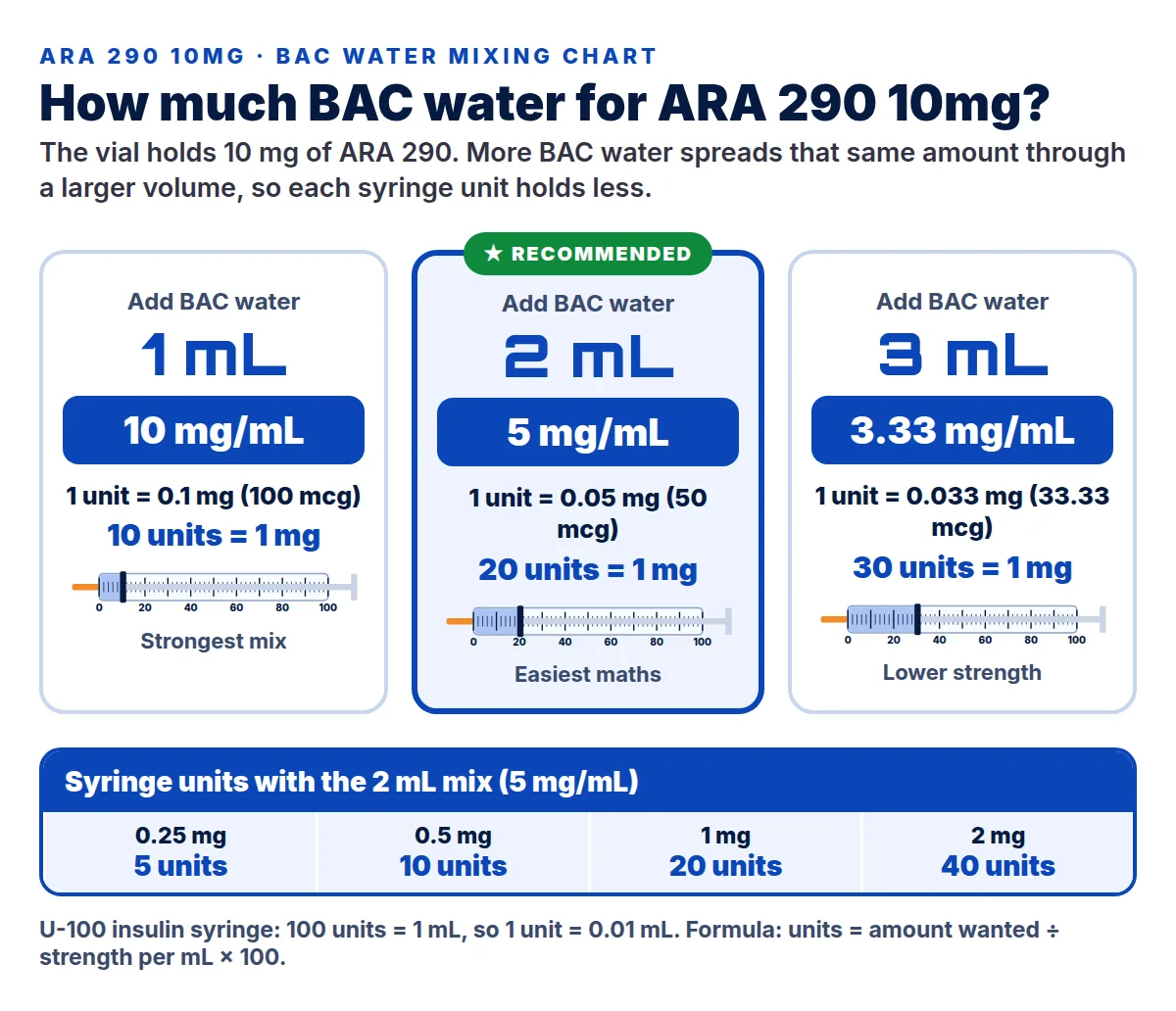
The vial has 10 mg of ARA 290 before preparation. Adding 1 mL produces 10 mg/mL, adding 2 mL produces 5 mg/mL, and adding 3 mL produces 3.33 mg/mL. More water does not add peptide; it lowers the concentration and increases the total liquid volume.
The 2 mL option is highlighted because it makes the clearest arithmetic: 1 U-100 unit holds 0.05 mg (50 mcg); 10 units hold 0.5 mg; 20 units hold 1 mg; and 40 units hold 2 mg. The conversion formula is units = amount wanted ÷ strength per mL × 100.
| BAC water added | Strength | 1 unit holds | Units for 1 mg | Whole vial |
|---|---|---|---|---|
| 1 mL | 10 mg/mL | 0.1 mg (100 mcg) | 10 units | 100 units |
| 2 mL | 5 mg/mL | 0.05 mg (50 mcg) | 20 units | 200 units |
| 3 mL | 3.33 mg/mL | 0.033 mg (33.33 mcg) | 30 units | 300 units |
2 mL is highlighted because it gives the simplest numbers.
| Amount | Units on a U-100 syringe | Volume |
|---|---|---|
| 0.25 mg | 5 units | 0.05 mL |
| 0.5 mg | 10 units | 0.1 mL |
| 1 mg | 20 units | 0.2 mL |
| 2 mg | 40 units | 0.4 mL |
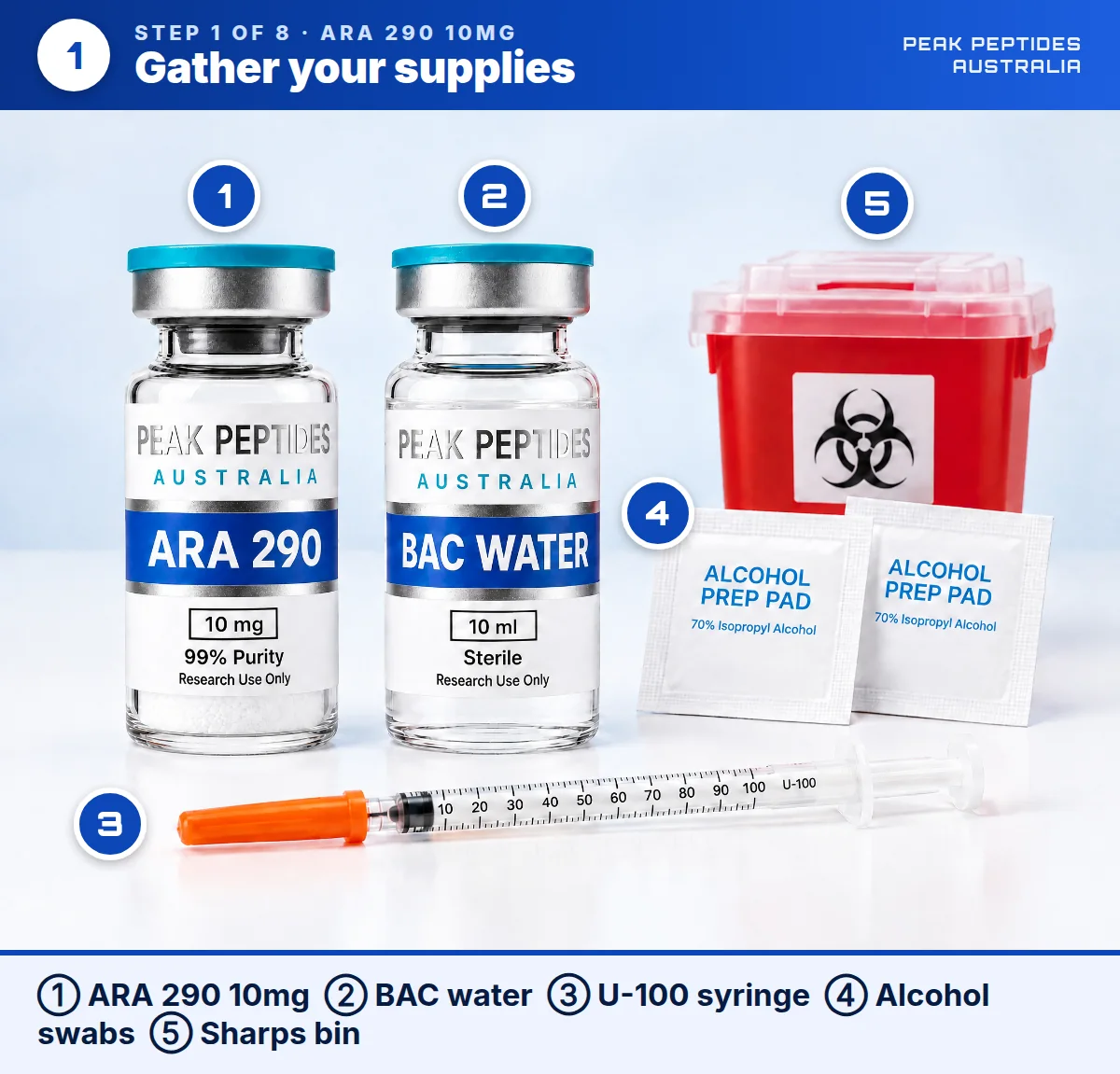
Place the ARA 290 10mg vial, BAC water, a new 1 mL U-100 syringe, alcohol swabs and a sharps container on a clean work surface. Confirm the vial label, the diluent and the required final volume before beginning. Keep the vial sealed until you are ready to disinfect the stopper.
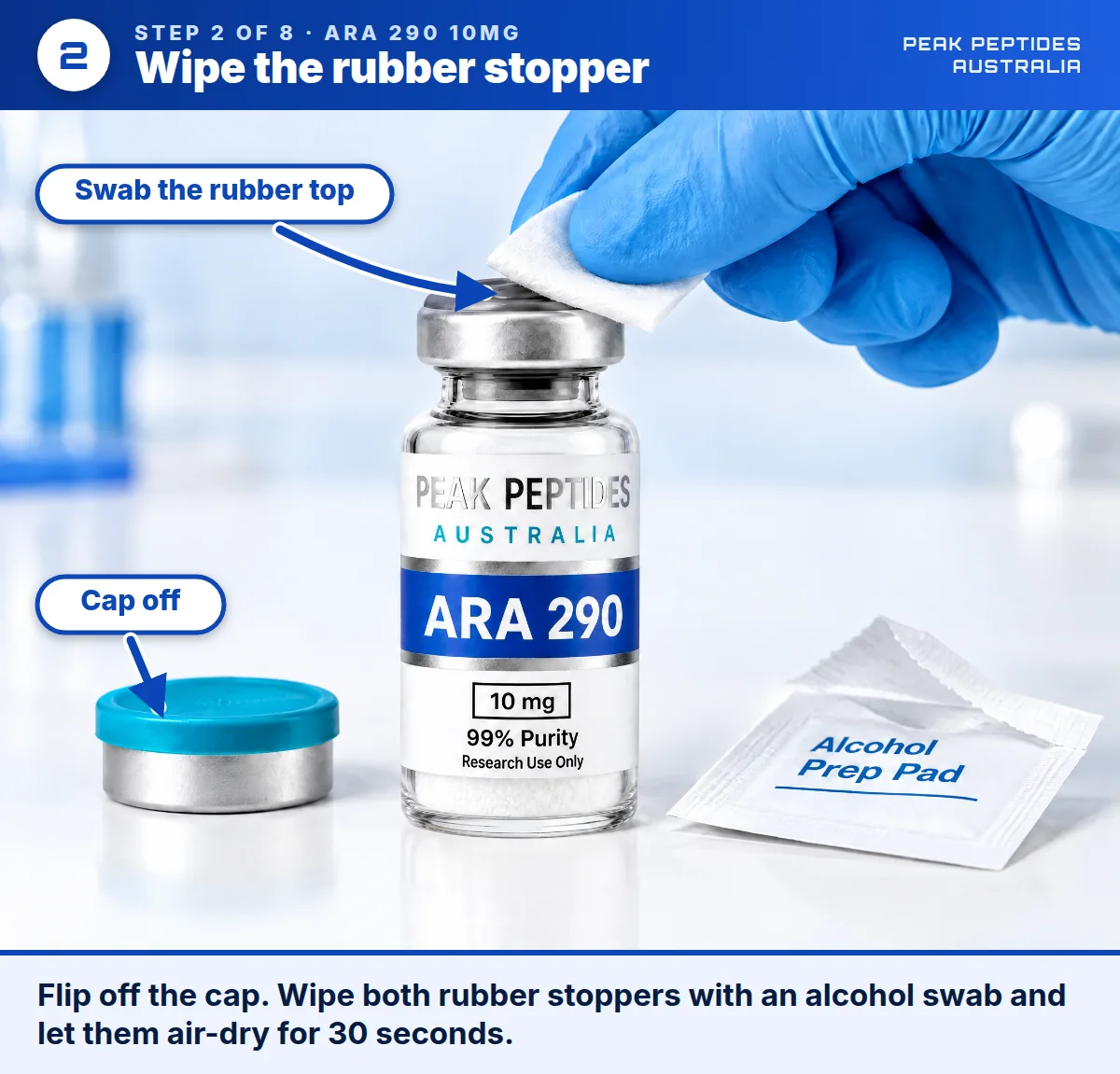
Remove the flip-off caps without disturbing the rubber stoppers. Wipe the stopper on the ARA 290 vial and the stopper on the BAC-water vial with separate alcohol swabs. Let both surfaces air-dry before entry. Do not touch the cleaned stopper surfaces or the needle shaft after disinfection.
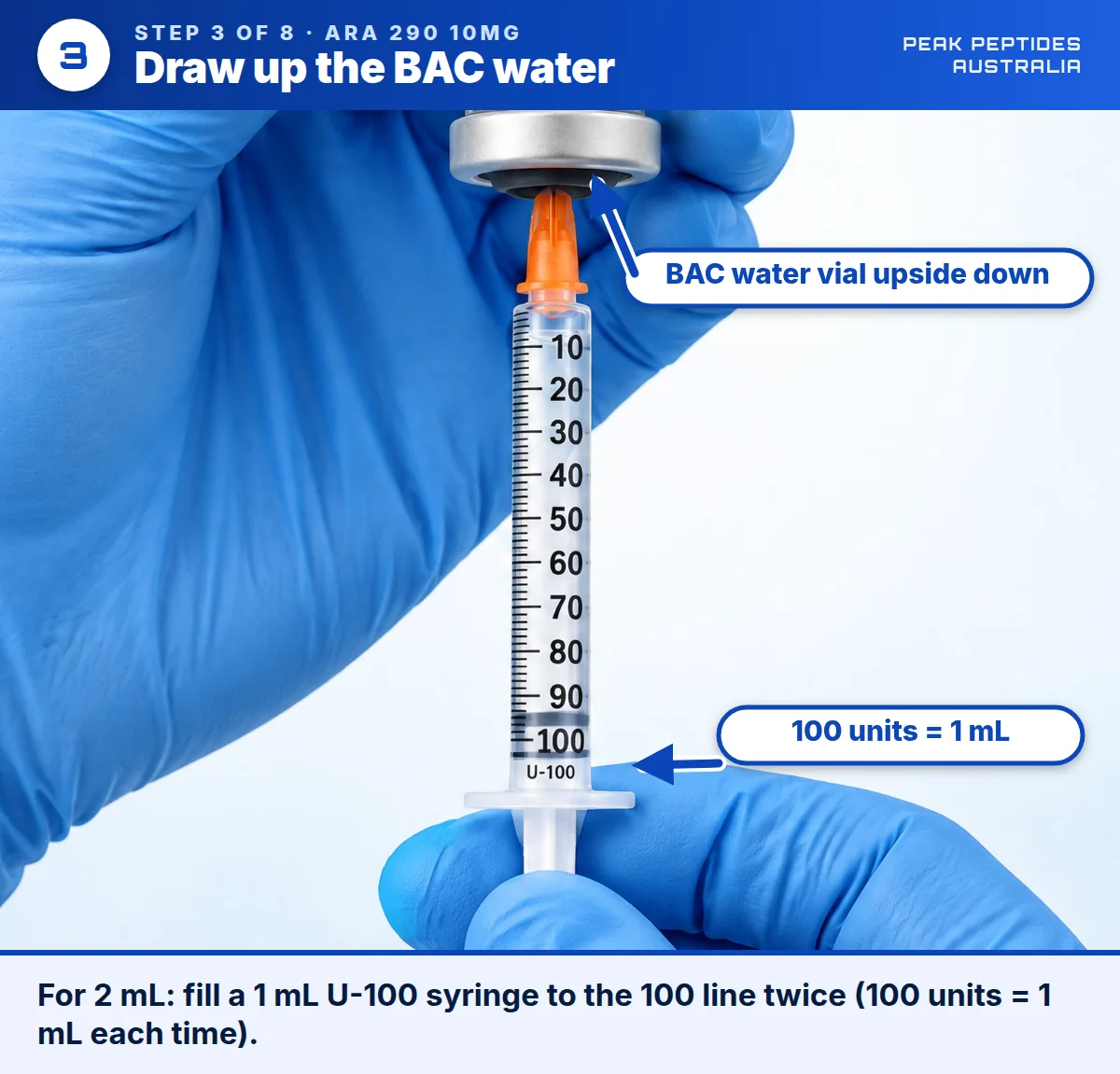
For the highlighted 2 mL mix, measure 1 mL of BAC water to the 100-unit line on a U-100 syringe, then repeat for a second measured transfer. Check the liquid level at eye height and remove large air bubbles. Do not pull beyond the syringe’s marked capacity.
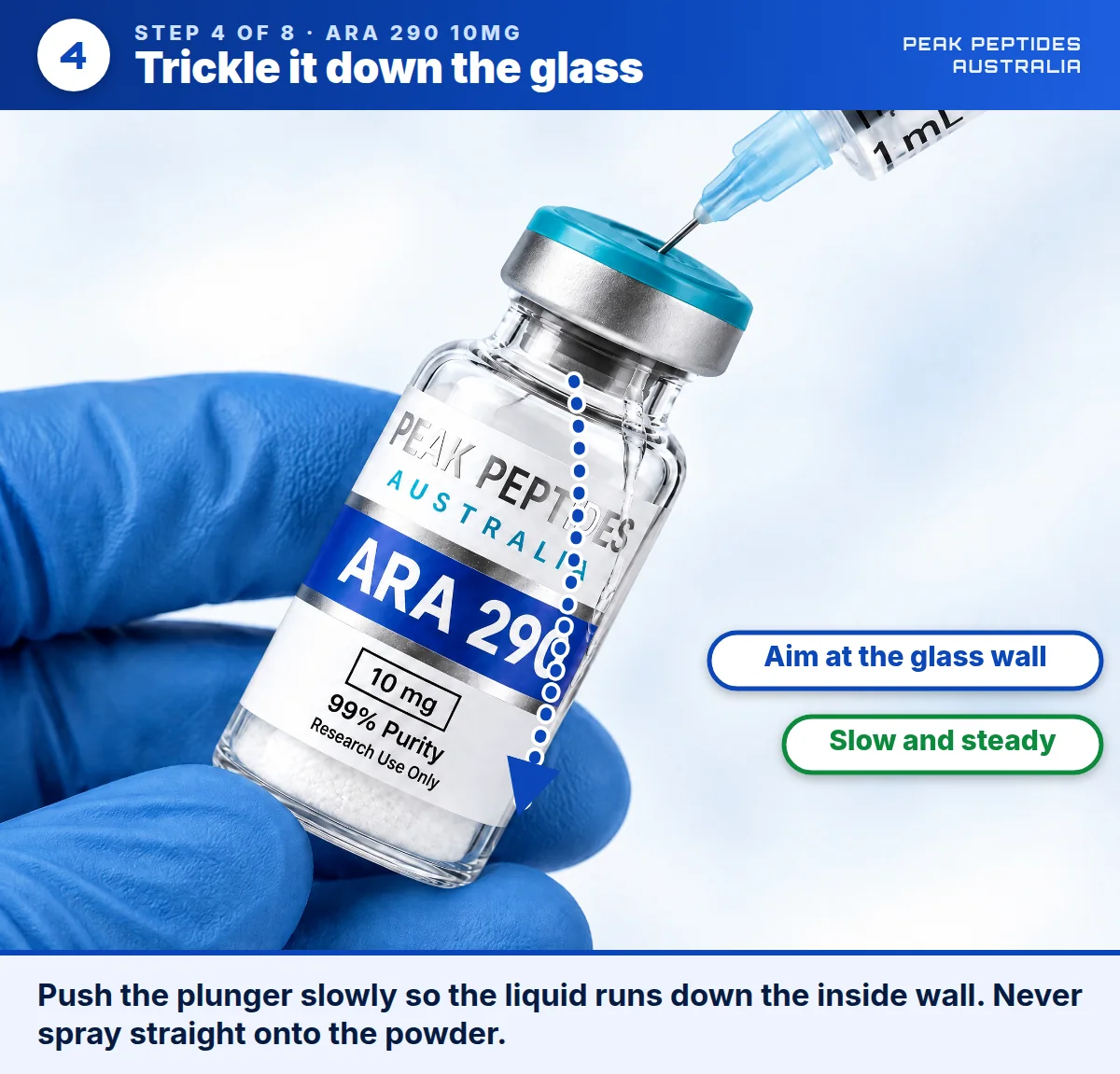
Insert the needle through the ARA 290 stopper and aim the tip toward the inside wall of the vial. Press the plunger slowly so the liquid runs down the glass instead of striking the powder in a forceful stream. Repeat the measured transfer until the selected total volume is in the vial.
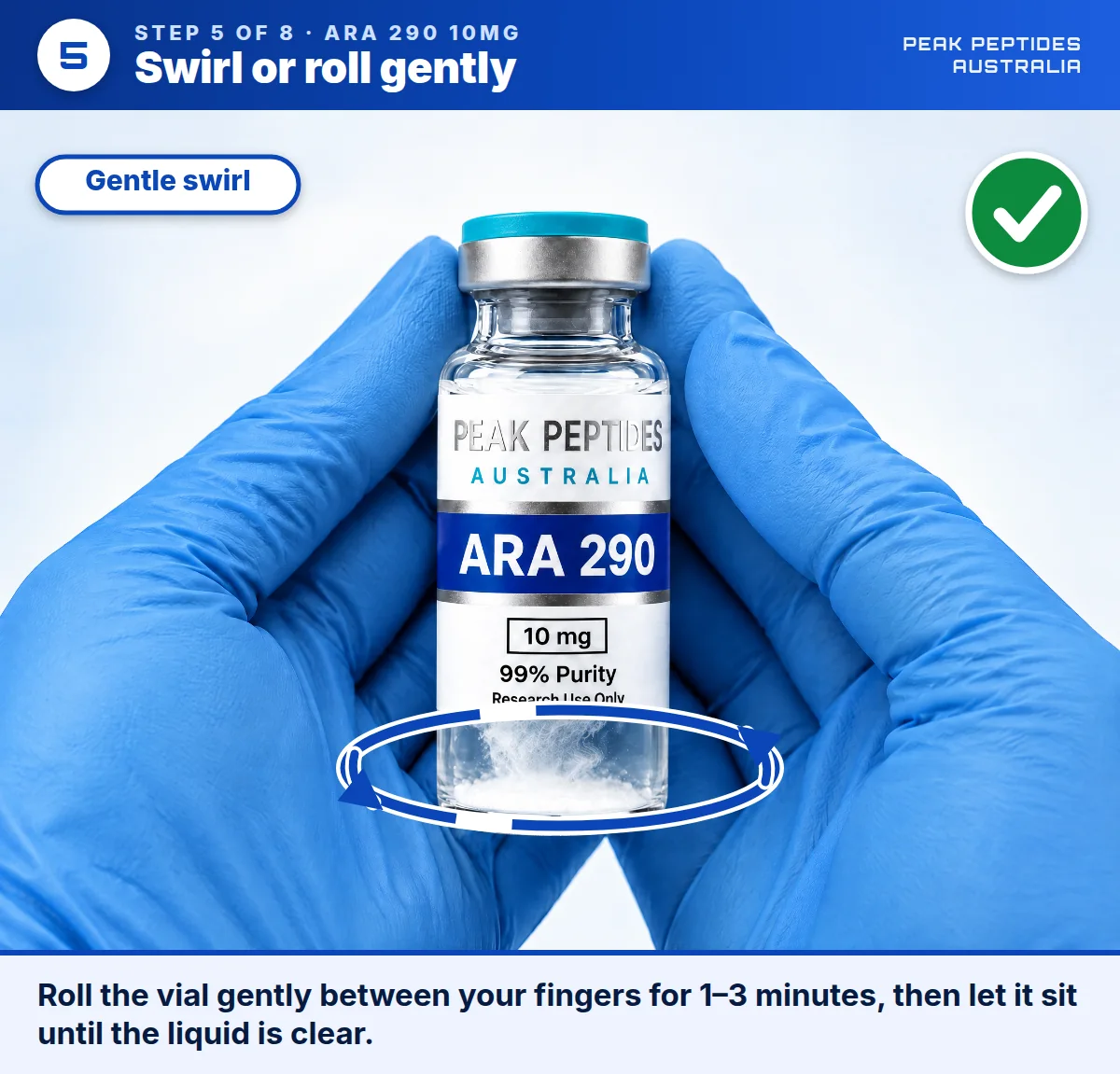
Let the vial stand briefly, then roll it gently between your fingers or swirl it in slow circles. Gentle movement helps the powder dissolve while avoiding unnecessary foam. Do not use a vigorous shake. Inspect the bottom of the vial under good light as the white powder disappears.
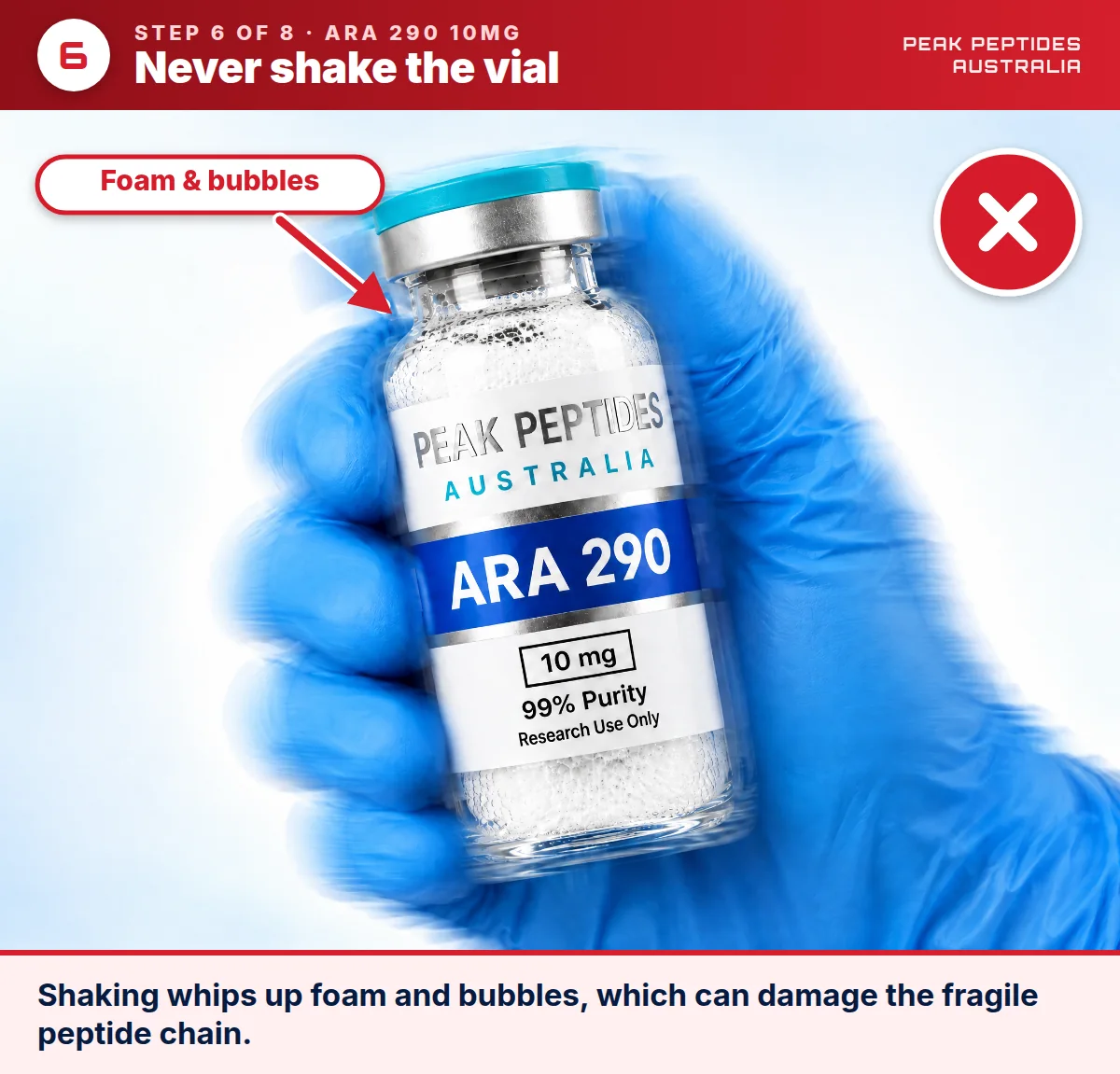
Do not shake the vial. Vigorous agitation can create foam and particles in susceptible peptide preparations. If foam appears, set the vial upright and allow it to settle before inspecting it again. Continue only with the gentle mixing method specified for the preparation, not forceful movement.
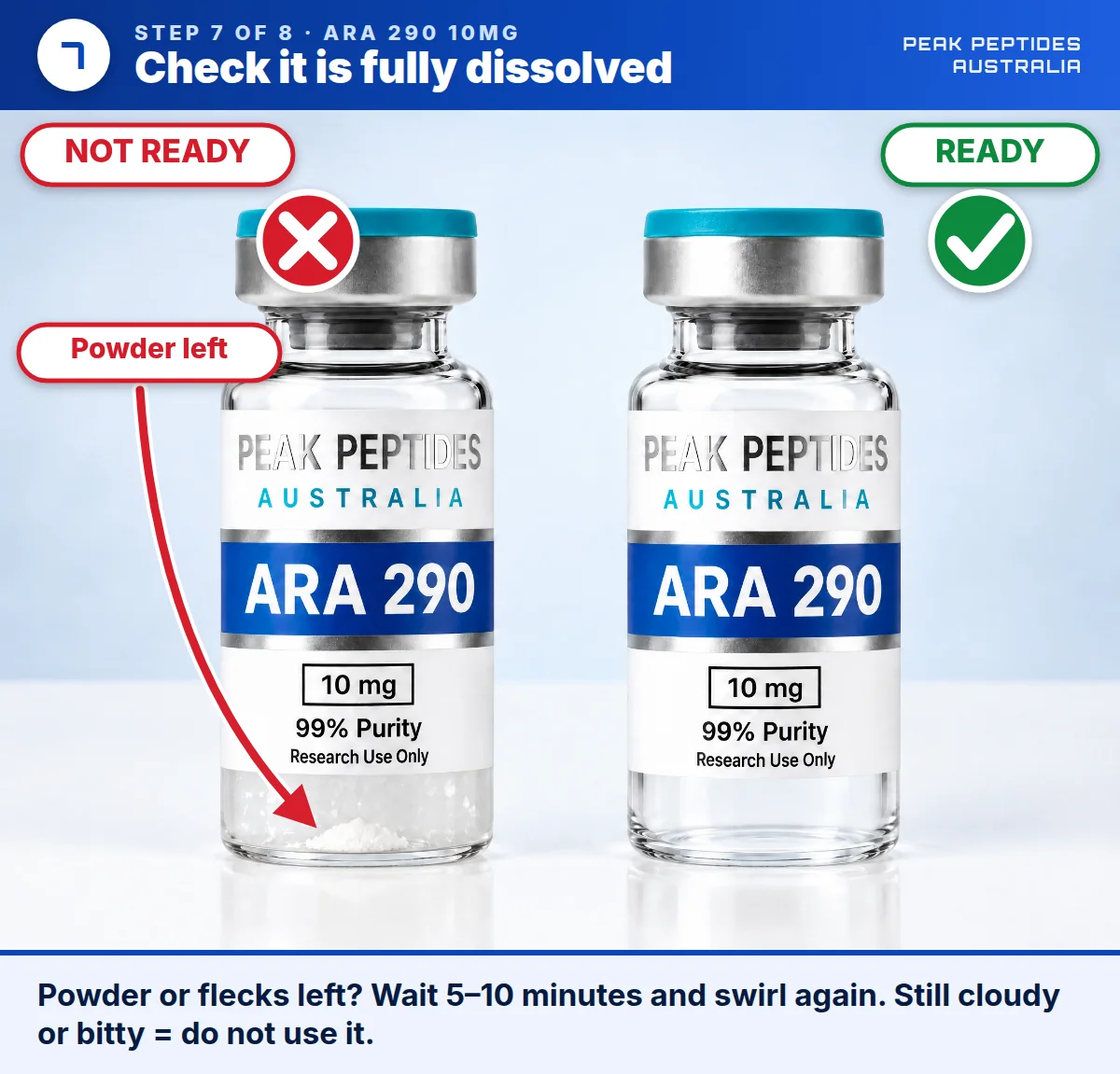
Hold the ARA 290 vial up to good light. The visual target is a clear, colourless solution without remaining powder, cloudiness or visible particles. If material is still present, allow more standing time and use gentle swirling only. Isolate a preparation with persistent cloudiness, unexpected colour, particles, damage or leakage.
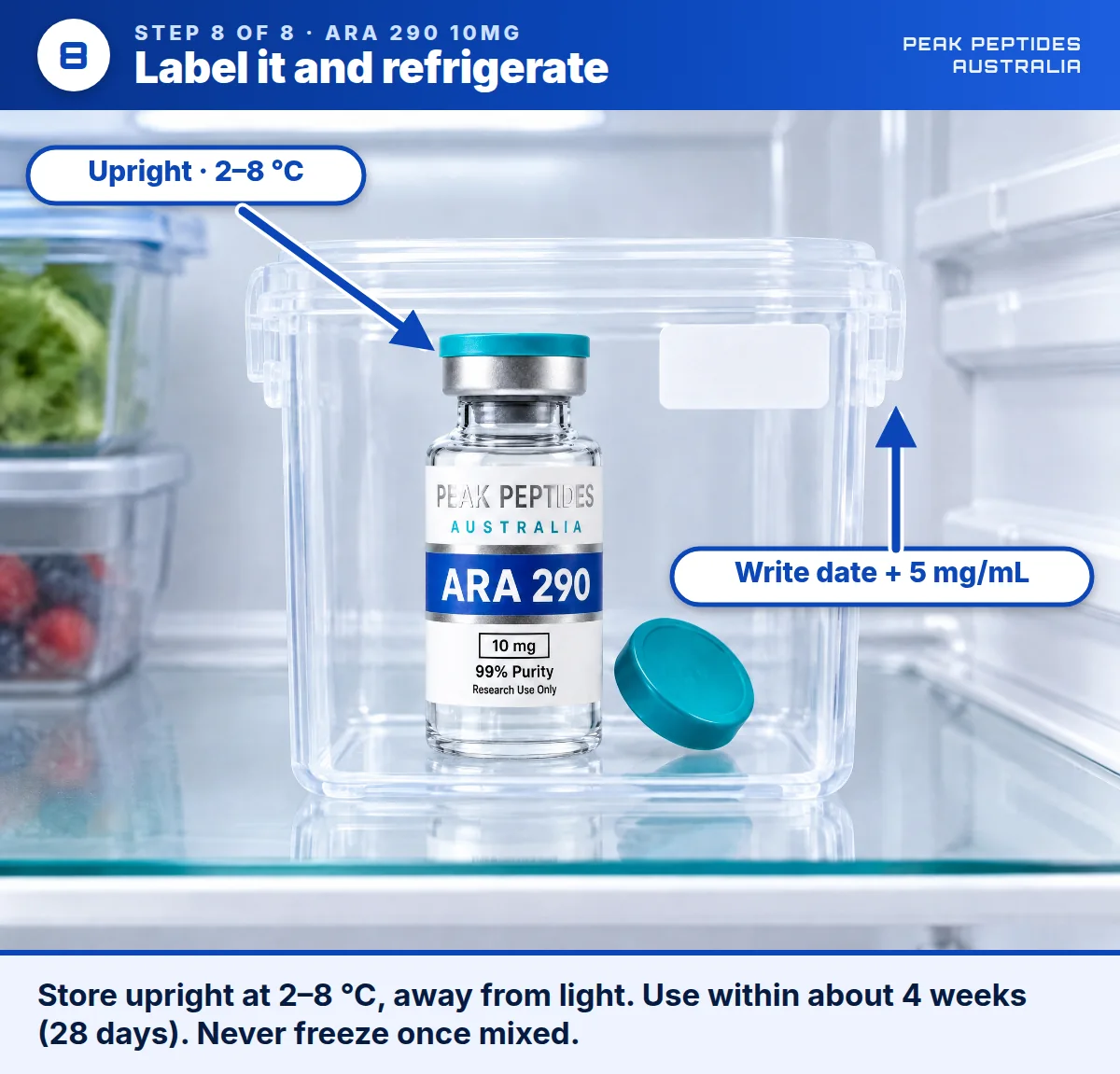
Label the vial with the preparation date, the diluent, the volume added and the resulting concentration. For the highlighted 2 mL mix, write 5 mg/mL. Store the mixed vial upright in the fridge at 2–8 °C, away from light. Use within about 4 weeks (28 days). Never freeze it.
| Stage | Where to keep it | Key rule |
|---|---|---|
| Unopened lyophilised vial | Store unopened powder at 2–8 °C, away from light and moisture. | Until the printed expiry |
| Unopened lyophilised vial | Refrigerate when the product instructions specify refrigeration | Keep sealed in its original protected container. |
| Unopened lyophilised vial | Never freeze it once mixed. | Avoid temperature cycling and condensation. |
| Mixed ARA 290 vial | Upright in the fridge at 2–8 °C, protected from light; never freeze. | Record the preparation details; refrigeration alone does not create a generic use-by date. |
| Mixed ARA 290 vial | Do not freeze | Freeze-thaw stress can damage a dissolved peptide preparation. |
Once mixed with BAC water, keep it upright in the fridge at 2–8 °C, away from light. Use within about 4 weeks (28 days) and never freeze it. Write the date and strength on the vial.
ARA 290 is cibinetide, a synthetic 11-amino-acid peptide derived from erythropoietin. Researchers study it as a ligand for the innate repair receptor, an injury-response signalling system. ARA-290, ARA 290 and ARA290 are spelling variants for the same named peptide.
Cibinetide is the official common name for ARA 290. FDA’s substance record lists cibinetide as the official name and lists ARA 290, ARA-290 and ARA290 as codes. PubChem identifies it as an 11-mer peptide with a pyroglutamate N-terminus.
ARA 290 is used in research on innate repair receptor signalling, inflammatory response pathways and small-fibre neuropathy-related measurements. Published human studies evaluated corneal nerve-fibre measures, symptom questionnaires, metabolic markers and walking capacity in defined sarcoidosis or type 2 diabetes groups.
ARA 290 is studied as an innate repair receptor ligand. The model describes receptor signalling involving erythropoietin-receptor and beta-common-receptor components. In this research model, receptor activation is linked with injury-response and inflammatory messenger pathways. That mechanism is different from erythropoietin’s classical red-blood-cell-stimulating activity.
No. Erythropoietin is a much larger glycoprotein hormone, while ARA 290 is an 11-amino-acid peptide designed from one EPO surface region. ARA 290 research specifically examines tissue-protective signalling without the classical erythropoietic activity associated with EPO.
Non-erythropoietic describes the design goal: researchers designed ARA 290 to investigate innate repair receptor signalling without EPO’s red-blood-cell-production response. It does not turn a research vial into an approved medicine or establish a general clinical outcome.
The 2012 randomised, double-blind pilot enrolled 22 people with sarcoidosis and small-fibre-neuropathy symptoms. At week 4, the small-fibre-neuropathy screening-list change was −11.5 in the ARA 290 group and −2.9 with placebo. Mean pain-intensity and fatigue scores improved in both groups.
The Phase 2 study assessed a selected group with type 2 diabetes and painful neuropathy over a 28-day treatment period plus follow-up. The paper reported changes in HbA1c, lipid profiles, PainDetect neuropathic-symptom scores and corneal nerve-fibre density in a subgroup with reduced baseline density.
The 2017 randomised Phase 2b trial enrolled 64 people with sarcoidosis-associated small nerve-fibre loss and neuropathic pain. Its primary endpoint was corneal nerve-fibre area at day 28. The 4 mg study arm had a placebo-corrected mean change of 697 μm², with a 95% confidence interval of 159 to 1,236.
No. The studies measured selected surrogate and symptom endpoints in specific short trials. Corneal nerve microscopy, skin fibre markers, questionnaires and pain scores each answer different questions. The studies used a controlled clinical formulation and a defined participant group.
The 2012 sarcoidosis pilot reported no safety concerns from clinical or laboratory assessments over four weeks. The 2015 diabetes Phase 2 report stated that it identified no potential safety issues during its study window. Those reports describe their controlled trial material, participants and observation periods.
This page does not state a half-life because I did not identify a reliable opened source establishing one for cibinetide in the supplied vial’s formulation. Molecular half-life depends on the material, route and study conditions, so an unsupported number would be misleading.
PubChem records the sequence as XEQLERALNSS: pyroglutamate, glutamate, glutamine, leucine, glutamate, arginine, alanine, leucine, asparagine, serine and serine. It is an 11-amino-acid chain with the formula C51H84N16O21 and molecular weight 1,257.3 g/mol.
ARA 290 and SS-31 are different peptides. ARA 290 is cibinetide, an 11-amino-acid EPO-derived innate repair receptor ligand. SS-31 is a mitochondria-targeted tetrapeptide. Their structures, research targets, analytical documentation and concentration calculations are separate.
No. FDA’s orphan-drug designation record for cibinetide says ‘Not FDA Approved for Orphan Indication’. In Australia, the TGA ARTG is the public register of therapeutic goods approved for supply; ARA 290 is not a TGA-approved medicine. This listing is supplied for in-vitro research only.
ARA 290 10mg can be ordered online from Peak Peptides Australia when it is available. In-stock orders receive same-day dispatch from Victoria once payment is confirmed, tracked Australia Post Express, and a tracking number is emailed. The material is supplied for in-vitro research only.
For in-stock orders, Peak Peptides Australia dispatches the same day from Victoria once payment is confirmed. Orders travel by tracked Australia Post Express and the tracking number is emailed. Transit timing is determined by Australia Post and the destination.
Check the independent report details rather than relying on a label alone. LabDoc report LD-24XK records identity confirmed by LC-MS, 99.3% purity by HPLC and 9.47mg HPLC content for a submitted ARA 290 sample. Open the LabDoc verification page to match the report ID.
LD-24XK states that the ARA 290 sample was received 09 September 2026 and tested 02 October 2026. It records LC-MS identity as confirmed, HPLC purity of 99.3%, HPLC content of 9.47mg against the 10mg claim, and an overall assessment of Pass.
The page chart uses 1 mL, 2 mL and 3 mL options. The 2 mL option is highlighted because it makes 5 mg/mL: 1 mg equals 20 U-100 units. One mL makes 10 mg/mL, while 3 mL makes 3.33 mg/mL. Adding water changes concentration, not total peptide mass.
It depends on the final volume. With 2 mL of BAC water in a 10mg vial, the concentration is 5 mg/mL and 1 mg is 20 units on a U-100 syringe. With 1 mL, 1 mg is 10 units; with 3 mL, 1 mg is 30 units.
With the highlighted 2 mL mix, 10 U-100 units is 0.10 mL and holds 0.5 mg. With a 1 mL mix, 10 units holds 1 mg. With a 3 mL mix, 10 units holds about 0.333 mg. These are concentration calculations only.
Prepare the vial, BAC water, a new U-100 syringe, alcohol swabs and a sharps container. Disinfect stoppers, add measured BAC water slowly down the vial wall, then gently swirl or roll until clear. Label preparation details, date and strength. Store upright at 2–8 °C, away from light; use within about 4 weeks (28 days). Never freeze.
Do not use tap water. Sterile water and bacteriostatic water are different materials: BAC water includes a preservative, while sterile water does not. This page’s chart and photo guide use BAC water as the stated diluent.
Do not add extra liquid simply to force dissolution because that changes the concentration. Allow the preparation to stand as permitted, then use gentle swirling or rolling rather than vigorous shaking. Persistent cloudiness, unexpected particles, colour change, a damaged stopper or a leak are reasons to isolate the vial.
The target appearance shown in the guide is clear and colourless. Persistent cloudiness or visible particles can indicate incomplete dissolution, aggregation, contamination or incompatibility. The LabDoc report addresses identity, purity and content for its submitted sample.
Once mixed with BAC water, keep it upright in the fridge at 2–8 °C, away from light, and use it within about 4 weeks (28 days). Never freeze it. Write the date and strength on the vial.
Keep the sealed lyophilised vial dry in the fridge at 2–8 °C, protected from light. For long-term storage, keep the unopened powder in the freezer at −20 °C.
No. The PeptideDosages storage guide says never freeze a reconstituted peptide because ice crystals and freeze-thaw stress can damage a dissolved peptide. Keep a mixed vial upright in the fridge at 2–8 °C, away from light.
An analytical report can answer specific questions about the submitted sample. LD-24XK records identity by LC-MS, purity by HPLC and measured content by HPLC. It does not substitute for a sterility test, stability programme, pharmacology study or proof that another vial is identical to the submitted sample.
Scientific background reference
Research references
Science sections summarise the published studies listed above. Test results for this product come from its own lab report.