Melanotan II 10mg is a cyclic melanocortin research peptide examined in pigmentation and receptor-signalling studies. This vial is supported by LabDoc report LD-VMH4 for identity, purity and content, with a photo reconstitution guide and BAC water concentration chart. In-stock orders receive same-day dispatch from Victoria after payment confirmation, with tracked Australia Post Express shipping Australia-wide.
Product Specifications
Full NameMelanotan II (MT-II)
Vial Size10mg
Purity99.39% HPLC (LD-VMH4, 9.76mg sample)
Legal Disclaimer
This product is sold strictly for in-vitro laboratory research purposes only. It is not a therapeutic good, is not approved by the TGA, and is not intended for human or animal consumption, injection, or any diagnostic or therapeutic use.
Primary Melanotan II research page · Updated 24 October 2026
Melanotan II 10mg — What It Is, Research Findings & Reconstitution Guide
Melanotan II, also called Melanotan 2, Melanotan-2, MT-II or MT-2, is a manufactured cyclic seven-amino-acid analogue of alpha-melanocyte-stimulating hormone (alpha-MSH). It is studied because it activates melanocortin receptors involved in pigment-cell signalling and other biological pathways. The supplied vial is labelled MELANOTAN-2 and 10 mg; that number identifies the nominal vial quantity. This guide explains the peptide’s structure, the small human studies, its relationship with PT-141 (bremelanotide), current Australian TGA status, the independent LabDoc result for this sample, and concentration maths for laboratory preparation with bacteriostatic water. Peak Peptides Australia supplies this material for in-vitro research only, not for human or animal use.
Also referred to in research or catalogue references as Melanotan II, Melanotan 2, Melanotan-2, Melanotan II peptide, Melanotan 2 peptide, MT-II, MT-2, MTII, MT2, MelanotanII, 121062-08-6, Ac-Nle-cyclo[Asp-His-D-Phe-Arg-Trp-Lys]-NH2.
Melanotan II 10mg at a glance
Name
Melanotan II (MT-II)
Label on this vial
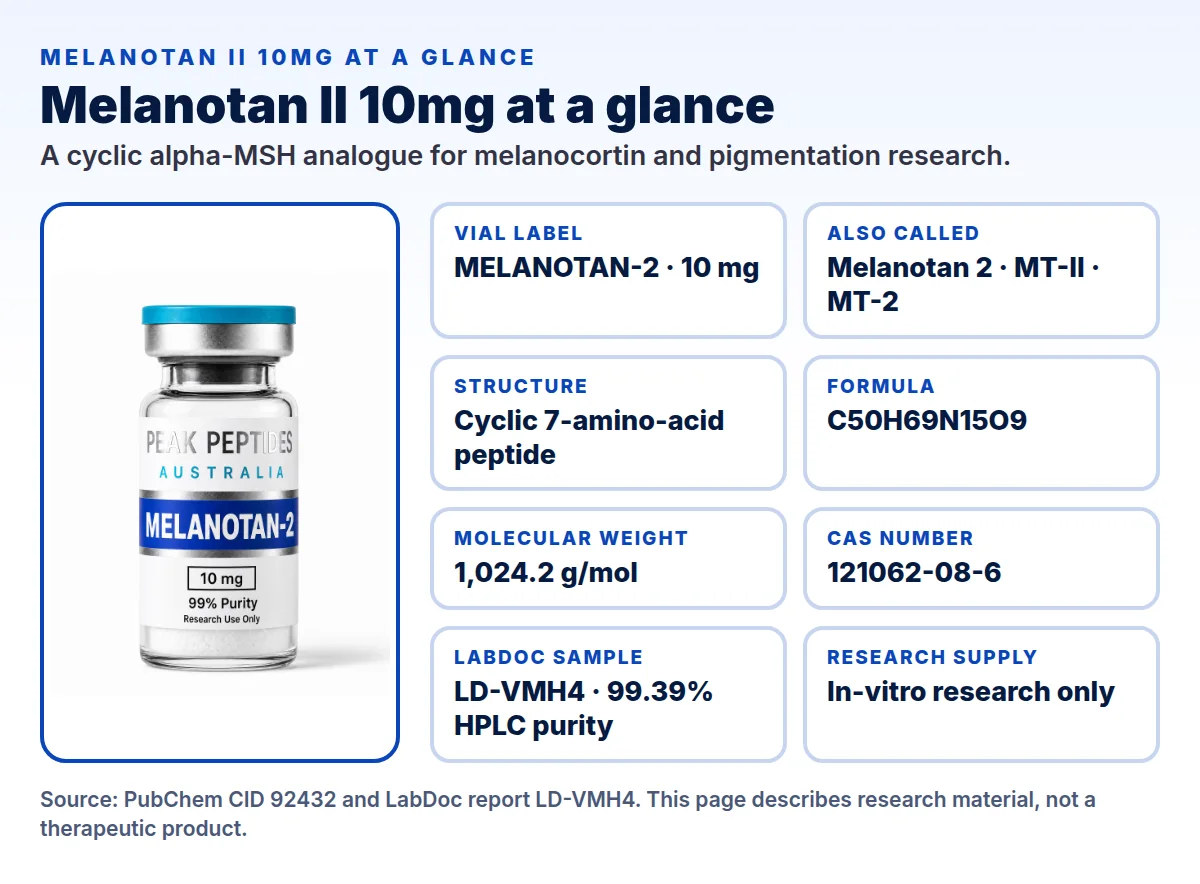
MELANOTAN-2 · 10 mg · 99% Purity · Research Use Only
Also called
Melanotan 2, Melanotan-2, MT-2, MTII, MT2
What it is
A manufactured cyclic seven-amino-acid analogue of alpha-MSH
Sequence
Ac-Nle-cyclo[Asp-His-D-Phe-Arg-Trp-Lys]-NH2
Formula and size
C50H69N15O9 · 1,024.2 g/mol
CAS number
121062-08-6
Research focus
Melanocortin receptors, melanogenesis and pigmentation signalling
9.76 mg by HPLC · 97.6% of 10 mg label claim · tested 09 October 2026
PeptideDosages reference mix
3 mL BAC water = 3.33 mg/mL · 30 U-100 units = 1 mg
Australian status
TGA: prescription-only; no Melanotan II product in the ARTG or approved for supply
Dispatch
Same-day from Victoria for in-stock orders after payment confirmation, tracked Australia Post Express
A cyclic seven-amino-acid alpha-MSH analogue
Melanotan II is a compact cyclic peptide modelled on alpha-MSH, a natural melanocortin signalling peptide. PubChem records the sequence as Ac-Nle-cyclo[Asp-His-D-Phe-Arg-Trp-Lys]-NH2, formula C50H69N15O9 and molecular weight 1,024.2 g/mol.
Broad melanocortin receptor activity
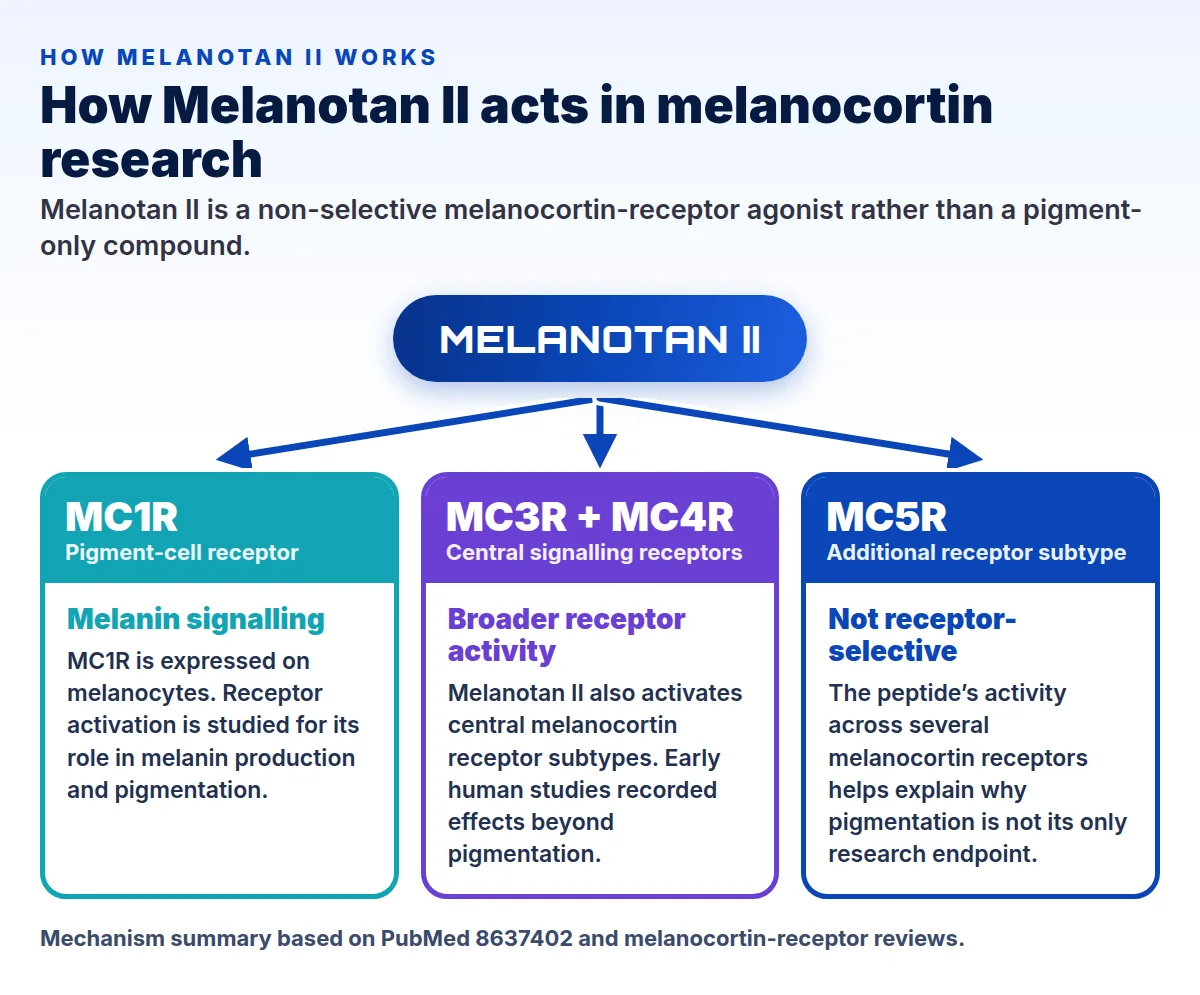
Melanotan II is a non-selective melanocortin receptor agonist. MC1R on melanocytes is central to pigmentation research, while activity at other receptor subtypes helps explain why early human experiments recorded effects beyond changes in skin pigmentation.
What the original Phase I study found
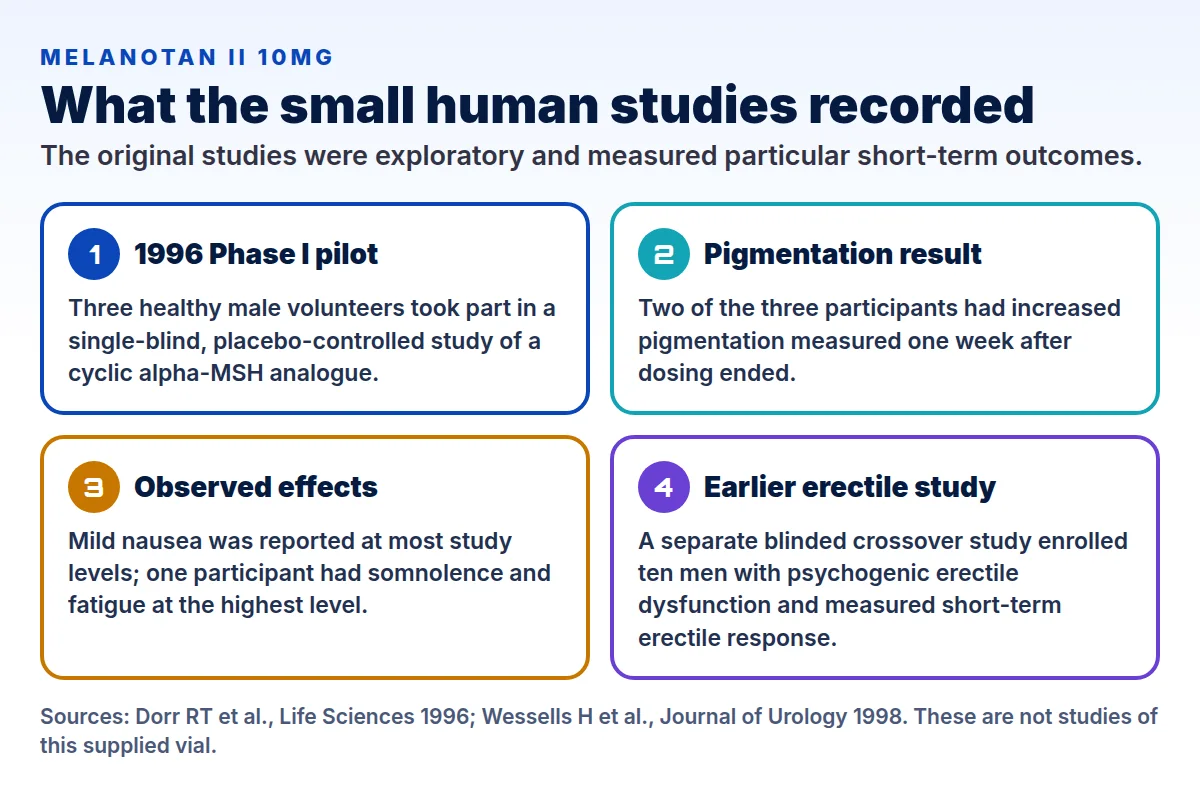
A 1996 single-blind placebo-controlled pilot enrolled three healthy male volunteers. Two showed increased pigmentation one week after study treatment ended. Mild nausea was reported at most study levels, and somnolence and fatigue occurred at the highest level in one participant.
Melanotan II and PT-141 are related, not identical
PT-141, also called bremelanotide, is a deaminated derivative and likely metabolite of Melanotan II. Both are cyclic melanocortin peptides, but they have different terminal chemistry, documentation and regulatory status. A result for one does not verify or approve the other.
Independent test for this Melanotan II 10mg sample
LabDoc report LD-VMH4, tested 09 October 2026, records confirmed identity by LC-MS, 99.39% purity by HPLC and 9.76 mg HPLC content, equal to 97.6% of the 10 mg label claim. The overall assessment is Pass.
A separate published Janoshik report
The Quality page also publishes Janoshik task #108024, dated 04 March 2026, for Melanotan 2. It records 10.83 mg and 99.958% purity. It is separate historical documentation and does not replace the current LabDoc sample report LD-VMH4.
Australia: no Melanotan II product in the ARTG
The TGA states that Melanotan II is prescription-only in Australia, is not approved as a tanning agent, and that no Melanotan II product is included in the Australian Register of Therapeutic Goods or approved for supply in Australia.
A tan is not UV protection
The TGA warns that artificially increasing pigmentation with melanotan does not protect skin from UV exposure in the way a suitable sunscreen does. Pigmentation research must not be presented as sun protection, cosmetic treatment or a therapeutic claim.
Melanotan II is a manufactured cyclic peptide based on the alpha-MSH signalling motif. Alpha-MSH is a natural melanocortin peptide. Melanotan II is its smaller, engineered analogue: a seven-amino-acid structure with a side-chain lactam bridge that makes the central portion cyclic. Its short name is MT-II, and it is also commonly searched as Melanotan 2 or Melanotan-2.
The key research feature is melanocortin receptor activation. Melanocortin receptors are cell-surface switches that receive signals from alpha-MSH-related peptides. MC1R is expressed on melanocytes, the cells that make melanin, so MC1R signalling is central to pigmentation research. Melanotan II is not limited to MC1R, however. Its broader receptor activity is why researchers distinguish a pigmentation observation from a full description of the peptide’s biology.
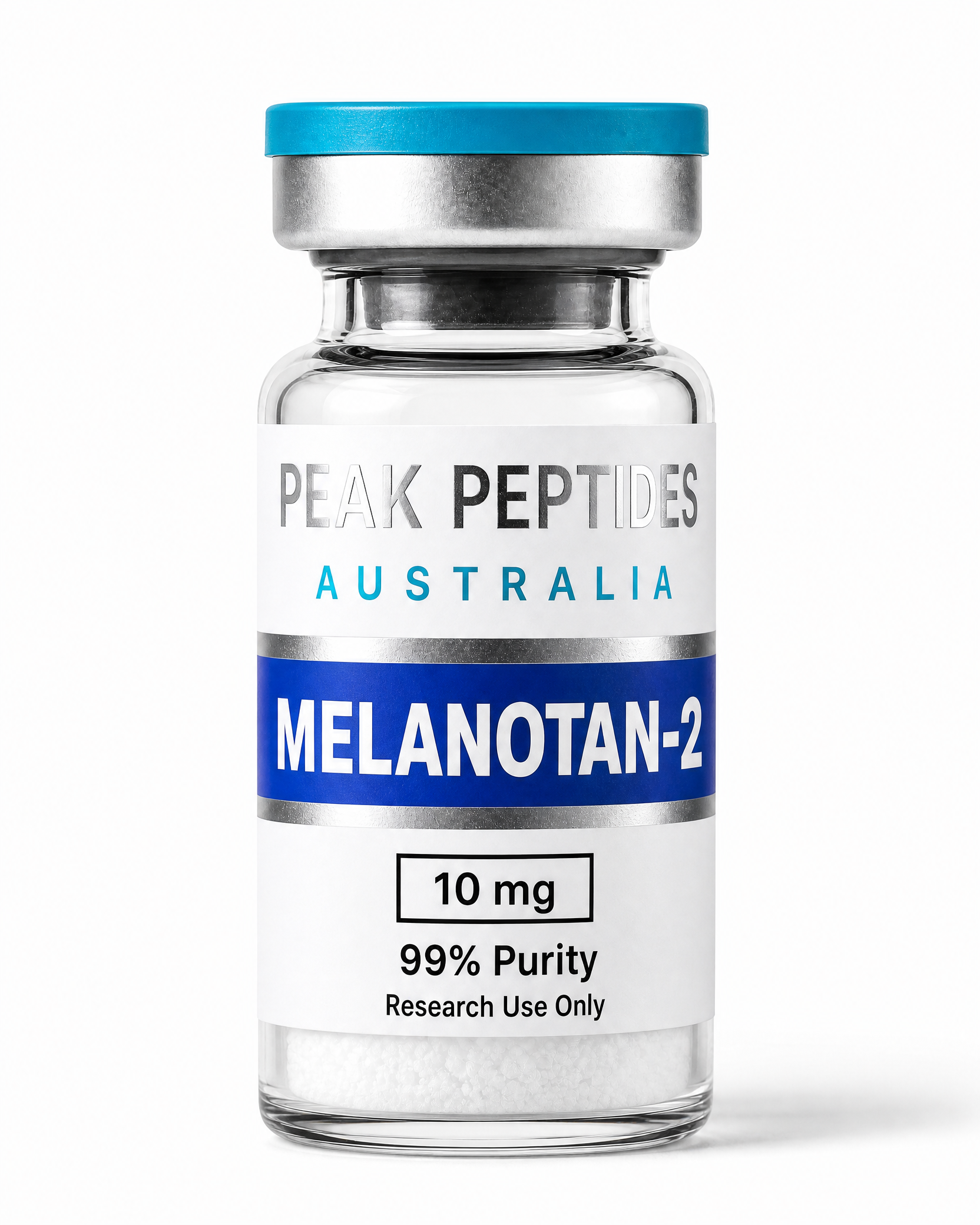
This listing is a freeze-dried 10 mg nominal vial. The supplied vial photograph shows a clear glass vial with a royal-blue MELANOTAN-2 band and boxed 10 mg strength. The label identifies research material, not a ready-made liquid concentration, sun-protection product or therapeutic medicine. Peak Peptides Australia supplies it for in-vitro research only.
Melanotan II 10mg in one view — vial identity, chemistry, independent test details and research-only context.
How does Melanotan II work in research?
Melanotan II is a melanocortin receptor agonist. An agonist is a compound that switches a receptor on. Receptors are proteins on or in cells that translate a chemical signal into a cell response. The melanocortin receptor family has several members, and Melanotan II has broad rather than single-receptor activity.
MC1R is the best-known receptor in this context because it is expressed on melanocytes. When alpha-MSH-type signalling reaches MC1R, the pathway is studied for its role in melanin synthesis and pigment distribution. This gives Melanotan II its historic place in pigmentation experiments. The original Phase I article described the molecule as having strong melanotropic activity in vitro before it was studied in a small human pilot.
The same peptide also acts at other melanocortin receptors. In particular, early human observations included nausea, fatigue, yawning and erectile effects as well as pigmentation changes. Those findings are consistent with a compound that has actions beyond pigment cells. They are research findings from defined experimental settings, not evidence of an approved benefit from this supplied vial.
Melanotan II is studied as a broad melanocortin receptor agonist; MC1R is especially relevant to pigment-cell signalling.
What did the human research find?
Melanotan II has appeared in a small number of early human experiments. The landmark 1996 report was a single-blind, alternating-day placebo-controlled Phase I pilot in three healthy male volunteers. Its main purpose was to observe the cyclic alpha-MSH analogue in a controlled setting. Two participants had increased pigmentation in the face, upper body and buttock one week after study treatment ended, assessed by reflectance and visual observation.
The same pilot documented these effects. Mild nausea occurred at most study levels. One of two participants at the highest tested level developed Grade II somnolence and fatigue. Stretching and yawning appeared alongside intermittent spontaneous erections. This compact study established a human pigmentation signal.
A 1998 double-blind placebo-controlled crossover study examined a different short-term endpoint in ten men with psychogenic erectile dysfunction. Eight participants treated with Melanotan II developed clinically apparent erections during six-hour monitoring. Mean time with tip rigidity above 80% was 38 minutes with Melanotan II and three minutes with placebo. Nausea, stretching, yawning and reduced appetite occurred more frequently after the peptide. The study used a selected group and short observation period, so its figures are not a general outcome rate.
The early human studies were small, controlled experiments with specific short-term observations.
Published Melanotan II human research highlighted on this page
Published Melanotan II human research highlighted on this page
Study
Design and group
Recorded finding
Important context
Dorr et al., 1996
Single-blind, placebo-controlled Phase I pilot; 3 healthy male volunteers
2 participants had increased pigmentation one week after study treatment ended
Mild nausea was reported; one participant had somnolence and fatigue at the highest level
Wessells et al., 1998
Double-blind, placebo-controlled crossover; 10 men with psychogenic erectile dysfunction
8 of 10 had clinically apparent erections during six-hour monitoring
Selected group and short monitoring period; nausea, yawning and reduced appetite were reported
Both publications used defined experimental preparations. Neither is a study of this supplied product vial.
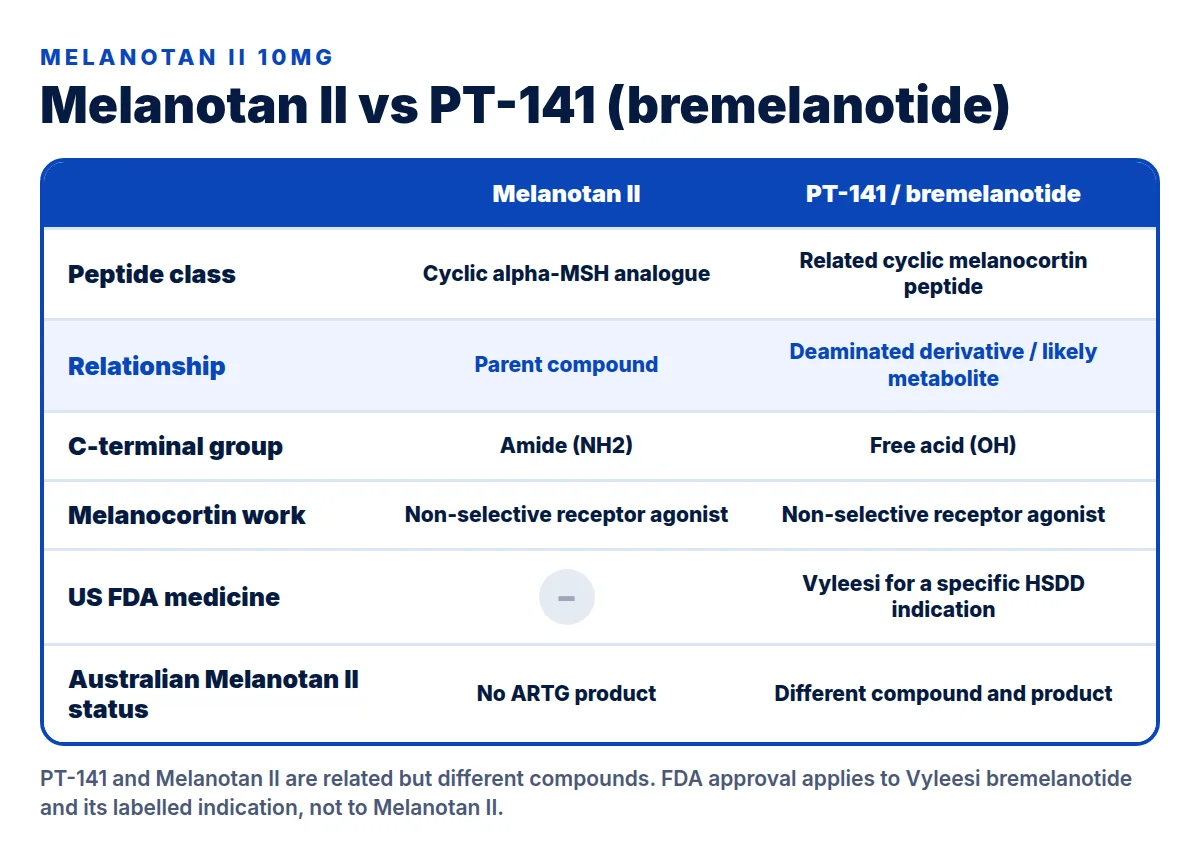
Melanotan II vs PT-141 (bremelanotide)
Melanotan II and PT-141 belong to the same melanocortin peptide family, but they are not the same molecule. PT-141 is bremelanotide. A peer-reviewed review describes it as a deaminated derivative and likely metabolite of Melanotan II. The most visible structural difference is at the C-terminus: Melanotan II ends in an amide, while bremelanotide has a free acid.
That chemical difference matters because a research name, a label claim and a laboratory report each apply to one identified compound. LabDoc LD-VMH4 covers Melanotan II. It does not verify PT-141, Melanotan I or afamelanotide. Likewise, a PT-141 report does not confirm the identity or content of Melanotan II. Treat each compound as its own analytical target.
There is also a major regulatory distinction. The FDA-approved Vyleesi product contains bremelanotide and has a specific labelled indication for acquired, generalised hypoactive sexual desire disorder in premenopausal women. The FDA label says it is not indicated to enhance sexual performance. That approval is tied to the regulated Vyleesi product; it does not make Melanotan II an approved medicine.
PT-141 is related to Melanotan II but is a separate compound with separate product and regulatory documentation.
Melanotan II and PT-141 compared
Melanotan II and PT-141 compared
Feature
Melanotan II
PT-141 / bremelanotide
Relationship
Cyclic alpha-MSH analogue
Deaminated derivative and likely Melanotan II metabolite
C-terminal chemistry
Amide (NH2)
Free acid (OH)
Research focus
Melanocortin signalling and pigmentation research
Melanocortin signalling; separately developed medicine product
This site’s linked listing
Melanotan II 10mg
PT-141 10mg
FDA product approval
No Melanotan II medicine approval
Vyleesi bremelanotide has a specific labelled indication
Approval belongs to the named medicine product and indication, not to a whole peptide family.
Melanotan II structure and sequence
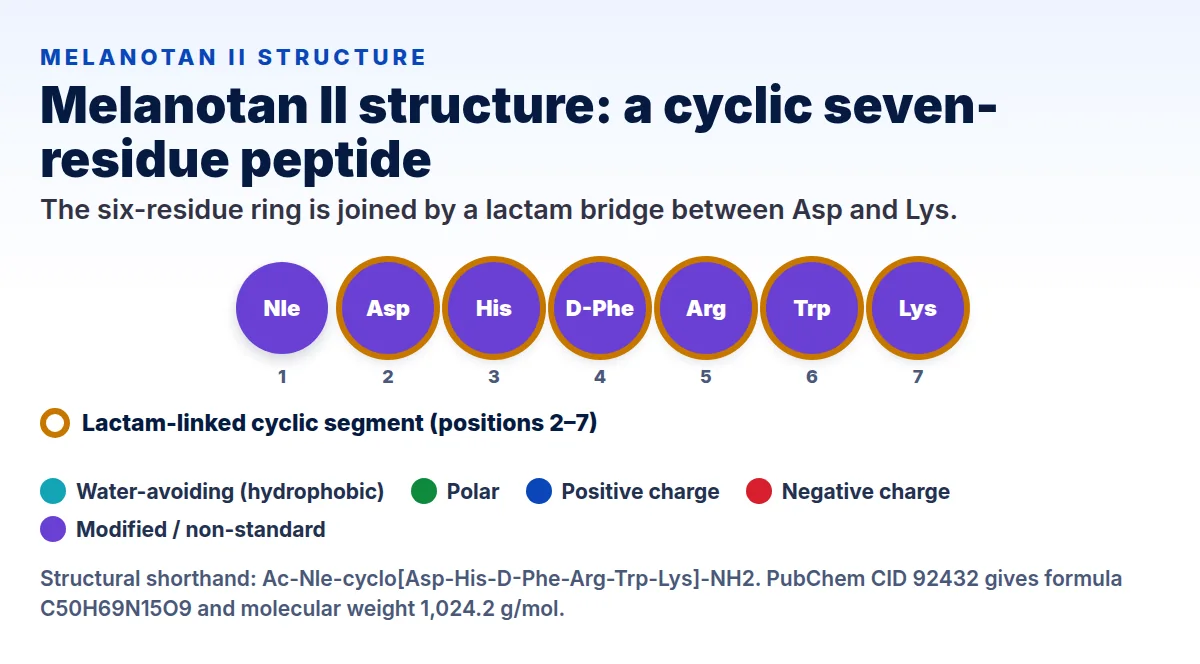
Melanotan II is a cyclic heptapeptide. PubChem gives the biological sequence as XDHFRWK, with X representing norleucine, and supplies the fuller shorthand Ac-Nle-cyclo[Asp-His-D-Phe-Arg-Trp-Lys]-NH2. The N-terminus is acetylated. The ring is formed through a lactam linkage between the Asp and Lys side chains, rather than by a simple head-to-tail peptide bond.
The sequence contains a D-phenylalanine residue, shown as D-Phe. D-amino-acid substitutions and cyclisation are deliberate design features in peptide research because they can alter shape, receptor binding and resistance to enzymatic breakdown. The 1996 study called Melanotan II a lactam-bridged molecule, while modern receptor reviews describe MT-II as a broad human melanocortin receptor agonist.
PubChem records molecular formula C50H69N15O9, molecular weight 1,024.2 g/mol, CID 92432 and CAS number 121062-08-6. These identifiers describe the molecule itself. They do not state what is present in an individual vial, which is why an identity test such as LC-MS is useful for a submitted sample.
Melanotan II is a seven-residue cyclic peptide with a lactam-linked Asp-to-Lys ring segment.
Independent lab test for this Melanotan II 10mg sample
Melanotan II 10mg is supported by independent LabDoc report LD-VMH4. The record says the sample was received on 09 September 2026 and tested on 09 October 2026, with the report compiled on 14 October 2026. It reports a Pass overall assessment, confirmed Melanotan II identity by LC-MS, 99.39% purity by HPLC, and 9.76 mg HPLC content against the 10 mg label claim. The measured content is recorded as 97.6% of claim.
Each analytical field answers a different question. LC-MS compares the material’s mass signature with the expected molecular identity. HPLC purity reports the proportion of the tested chromatographic material assigned to the target peak under the method used. HPLC content estimates the amount measured in the submitted vial. Reading all three is stronger than treating the printed 10 mg label as a laboratory result.
The report’s batch field is Not stated, so the findings are correctly described as applying to the tested sample. The Quality page also lists an earlier Janoshik task, #108024, dated 04 March 2026, with a reported Melanotan 2 result of 10.83 mg and 99.958% purity. That historical result is separate evidence; it must not be substituted for LD-VMH4 or treated as a result for every vial.
LabDoc report ID: LD-VMH4, with a direct verification record at labdoc.org.
Identity: confirmed by LC-MS for the submitted Melanotan II sample.
Purity: 99.39% by HPLC, exactly as recorded by LabDoc.
Content: 9.76 mg by HPLC, or 97.6% of the 10 mg label claim.
Dates: sample received 09 September 2026; tested 09 October 2026.
Historical separate record: Janoshik task #108024 dated 04 March 2026 lists 10.83 mg and 99.958% purity.
Melanotan II in Australia: TGA status and research supply
Melanotan II is not an approved tanning medicine in Australia. The TGA states that it is prescription-only, that it is not approved for use as a tanning agent, and that there are currently no products containing Melanotan II in the ARTG or approved for supply in Australia. The TGA’s 2026 advisory also warns that products sold online can be fake, may contain undisclosed ingredients, may not contain the labelled ingredient and may not meet Australian quality, safety or efficacy standards.
The TGA’s August 2026 investigation illustrates why an individual laboratory record matters. Its testing found Melanotan II in five seized nasal spray bottles labelled with the same strength, yet estimated amounts ranged from 22 mg to 54 mg across bottles based on the stated volume. The agency said inconsistent content increased the chance of adverse events. LabDoc LD-VMH4 provides transparent data for the submitted vial; it does not change the TGA position or turn the material into a therapeutic product.
For the research listing, same-day dispatch from Victoria applies to in-stock orders once payment is confirmed. Delivery is tracked Australia Post Express and the tracking number is emailed. The supplied material is for in-vitro research only.
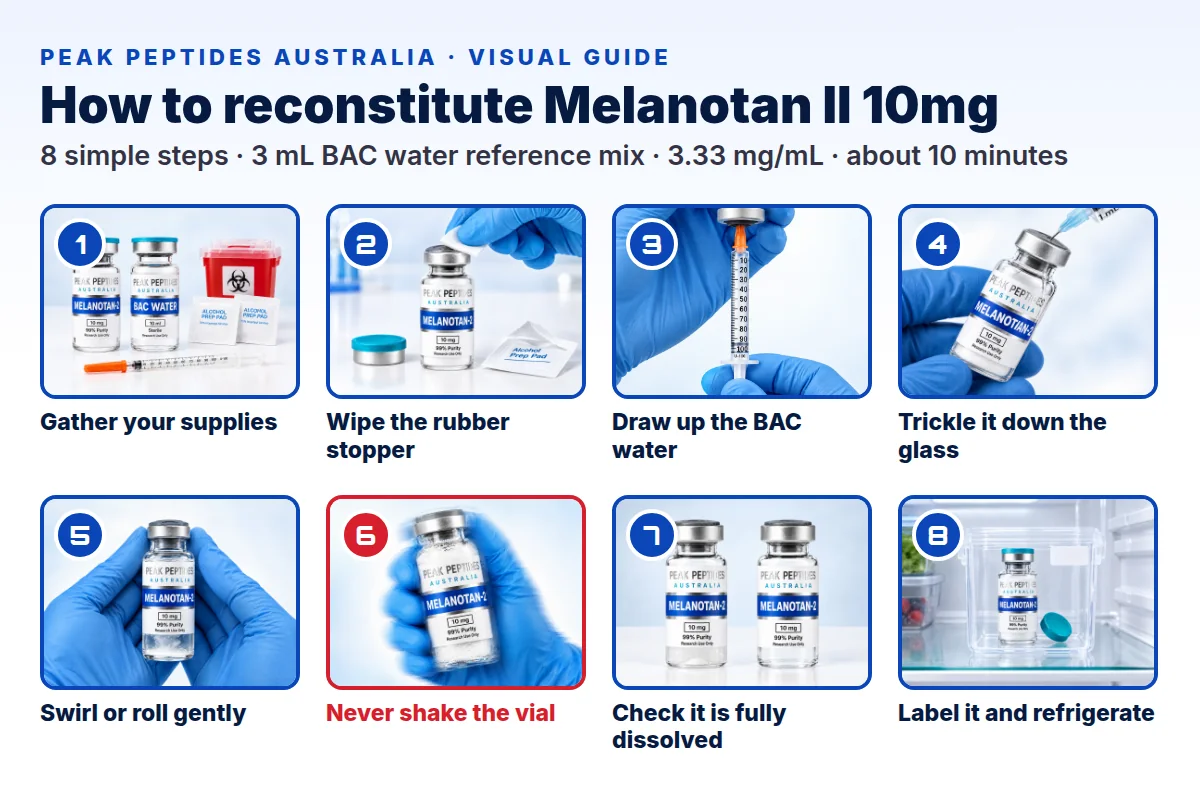
Step-by-step guide · About 10 minutes
How to reconstitute Melanotan II 10mg for laboratory preparation (8 steps with photos)
Melanotan II 10mg arrives as freeze-dried powder. Reconstitution means adding a selected volume of bacteriostatic water to prepare a measurable laboratory solution. PeptideDosages uses 3 mL BAC water as its reference mix for a nominal 10 mg vial, which calculates to 3.33 mg/mL. These are preparation and concentration calculations for in-vitro research. Follow the method for the experiment and use clean technique throughout.
The preparation workflow at a glance — eight visual steps for a Melanotan II 10mg laboratory solution.
What you need
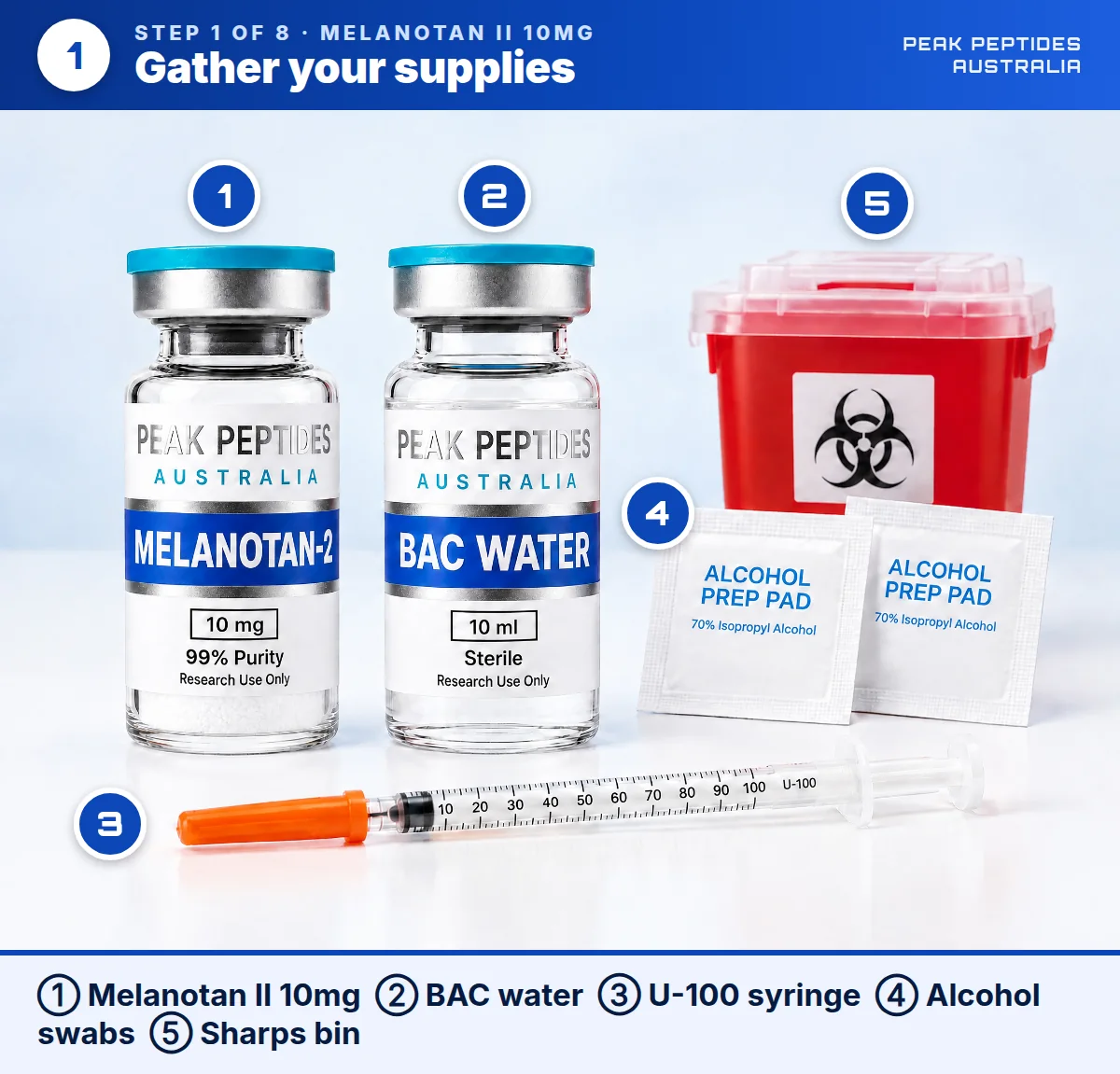
Melanotan II 10mg vialFreeze-dried material in the supplied clear glass vial labelled MELANOTAN-2.
Bacteriostatic waterA commonly used preserved water for multi-use laboratory preparation.
1 mL U-100 syringeFor volume measurement: 100 units equals 1 mL and 1 unit equals 0.01 mL.
Alcohol swabsFor wiping rubber stoppers before the preparation sequence.
Sharps containerFor disposal of used sharp laboratory items.
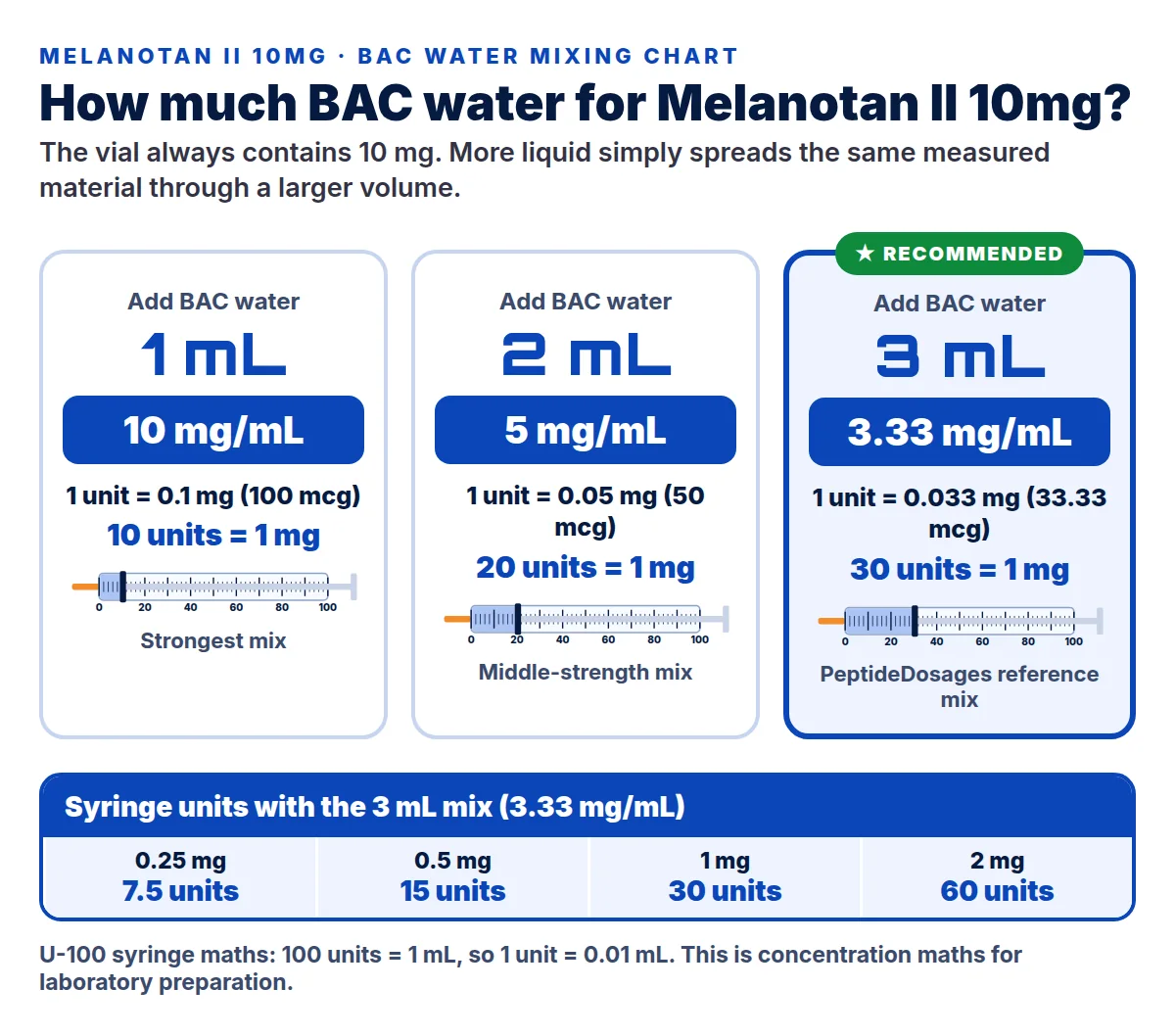
How much BAC water for Melanotan II 10mg?
A nominal 10 mg vial contains the same nominal amount whichever preparation volume is selected. Changing the volume changes the calculated concentration, not the labelled amount. The chart compares 1 mL, 2 mL and 3 mL BAC water examples using a U-100 syringe, where 100 units equals 1 mL.
PeptideDosages uses 3 mL as its Melanotan II 10 mg vial reference mix. That calculates to 3.33 mg/mL. With this mix, 1 unit holds about 0.033 mg (33 mcg), 10 units holds about 0.33 mg (333 mcg), and 30 units represents 1 mg. For comparison, 1 mL produces 10 mg/mL and 1 mg is 10 units; 2 mL produces 5 mg/mL and 1 mg is 20 units. These are nominal concentration calculations for laboratory preparation.
The underlying calculation is: units = amount required divided by concentration in mg/mL, multiplied by 100. If a method uses the LabDoc measured 9.76 mg content rather than a nominal 10 mg input, calculate from that measured value and the final verified volume.
Nominal Melanotan II 10mg concentration maths: the 3 mL PeptideDosages reference mix calculates to 3.33 mg/mL.
Melanotan II 10mg reconstitution chart (U-100 syringe, 1 unit = 0.01 mL)
Melanotan II 10mg reconstitution chart (U-100 syringe, 1 unit = 0.01 mL)
BAC water added
Strength
1 unit holds
Units for 1 mg
Whole vial
1 mL
10 mg/mL
0.1 mg (100 mcg)
10 units
100 units
2 mL
5 mg/mL
0.05 mg (50 mcg)
20 units
200 units
3 mL
3.33 mg/mL
0.033 mg (33.33 mcg)
30 units
300 units
3 mL is highlighted because it gives the simplest numbers.
Syringe units with the 3 mL mix (3.33 mg/mL)
Syringe units with the 3 mL mix (3.33 mg/mL)
Amount
Units on a U-100 syringe
Volume
0.25 mg
7.5 units
0.075 mL
0.5 mg
15 units
0.15 mL
1 mg
30 units
0.3 mL
2 mg
60 units
0.6 mL
The 8 steps
1Step 1: Gather your supplies
Set out the Melanotan II 10mg vial, bacteriostatic water, a new 1 mL U-100 syringe, alcohol swabs and a sharps container on a clean working surface. Check the vial label and record the selected preparation volume before starting. If the vial is cold, allow it to reach room temperature before opening.
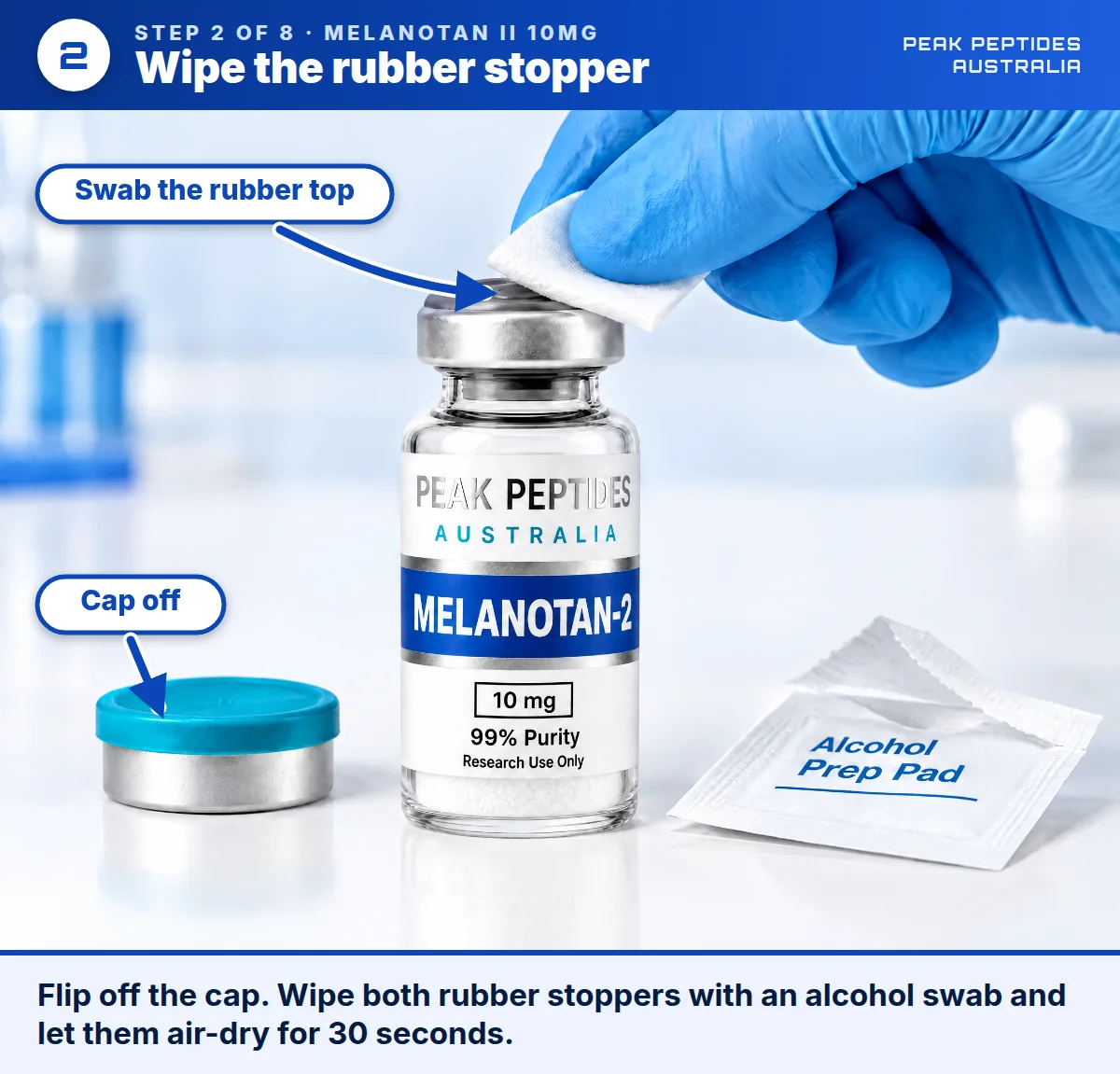
2Step 2: Wipe the rubber stopper
Remove the flip-off cap from each vial without touching the rubber stoppers. Wipe each stopper with a fresh alcohol swab and let it air-dry for about 30 seconds. After wiping, avoid touching the prepared rubber surface. Good stopper preparation reduces the chance of carrying surface debris into the vial.
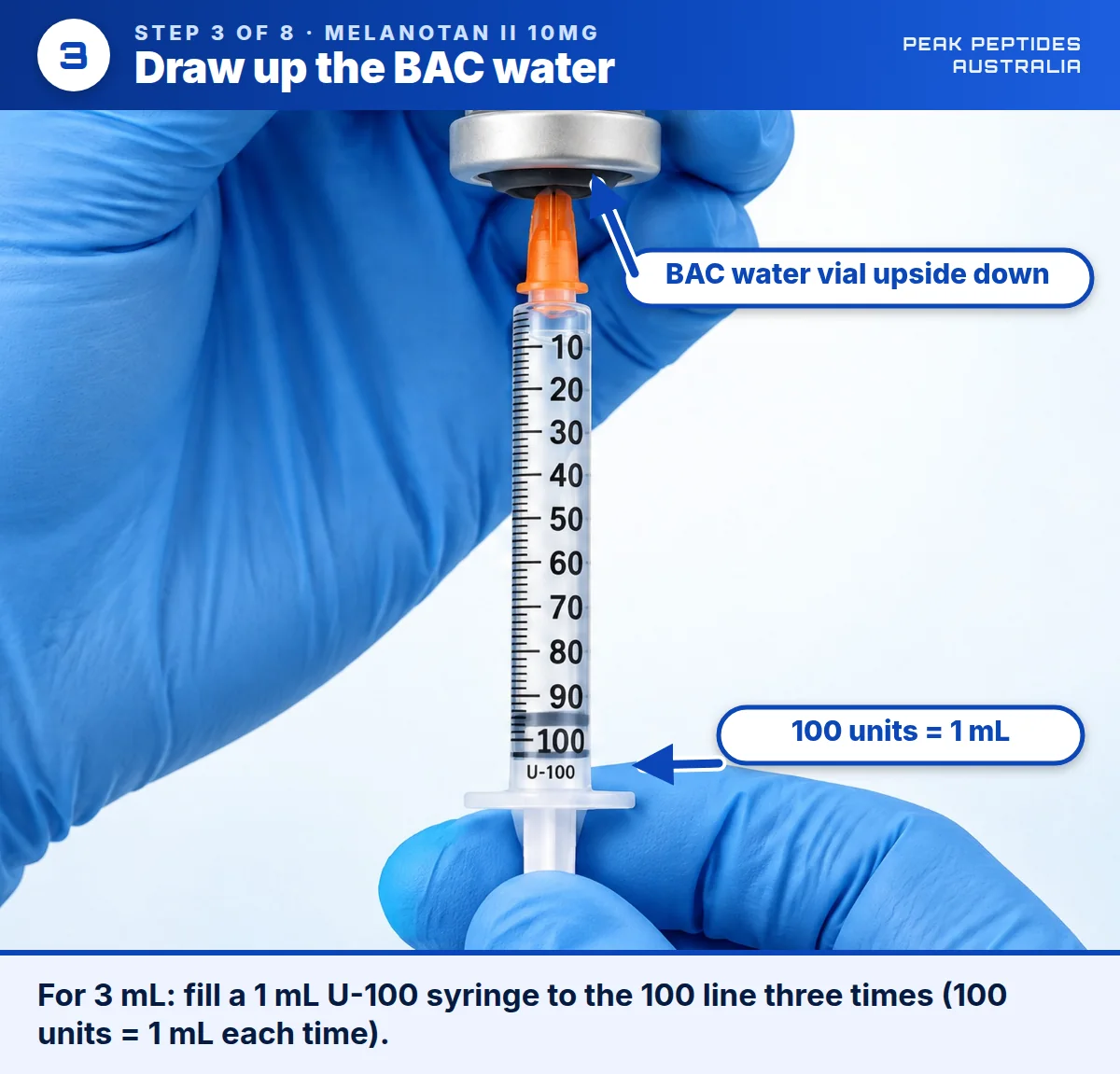
3Step 3: Draw up the BAC water
Measure the selected volume of BAC water with the U-100 syringe. The 3 mL reference mix requires three separate 1 mL fills because a 1 mL U-100 syringe reaches 100 units at full volume. Check that large air bubbles are cleared before transferring the liquid to the peptide vial.
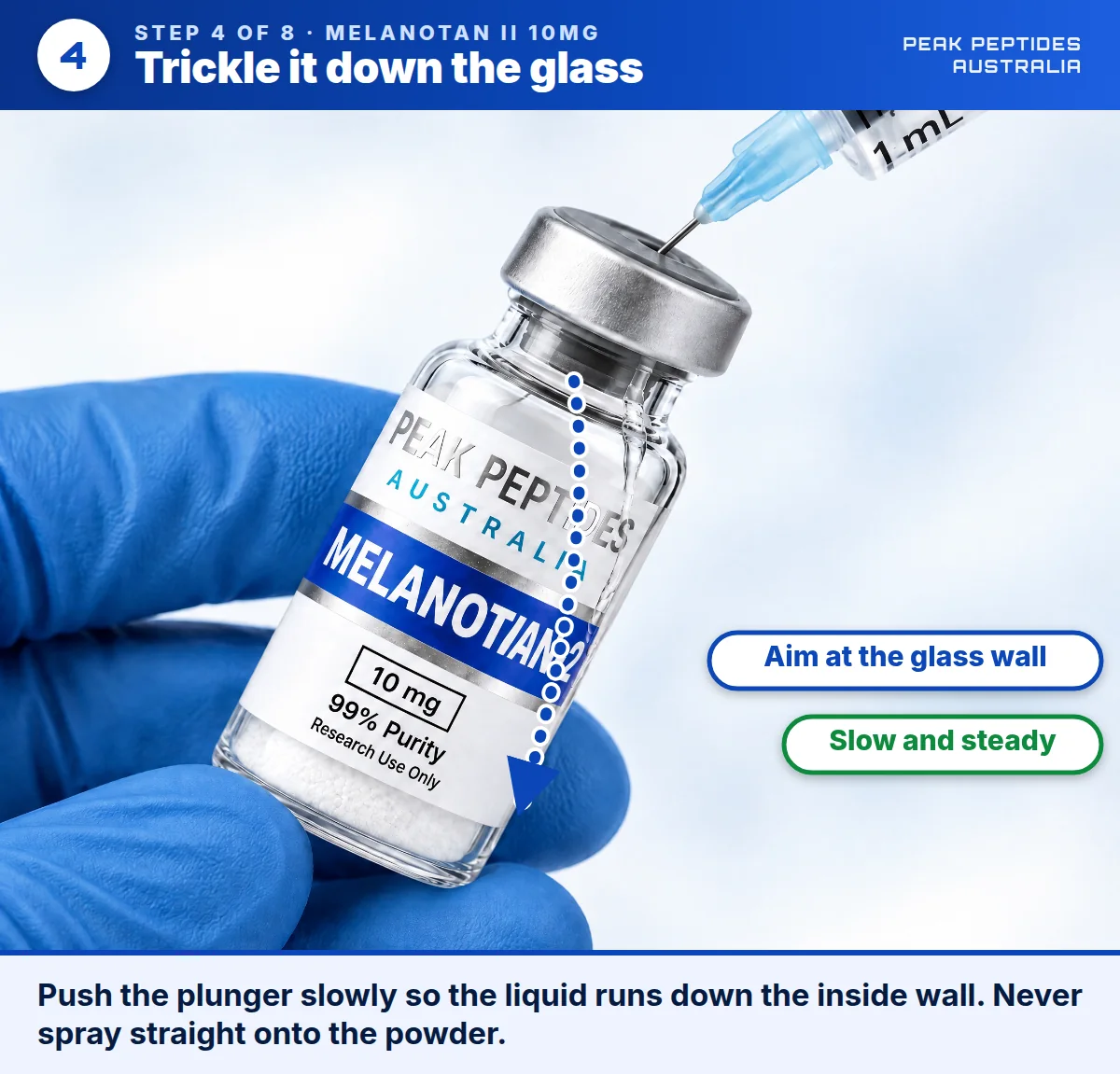
4Step 4: Trickle it down the glass
Hold the Melanotan II vial at an angle and position the needle tip against the inside glass wall. Transfer the water slowly so it runs down the glass instead of hitting the dry cake directly. For a 3 mL reference preparation, repeat the measured transfer until the final volume has been added.
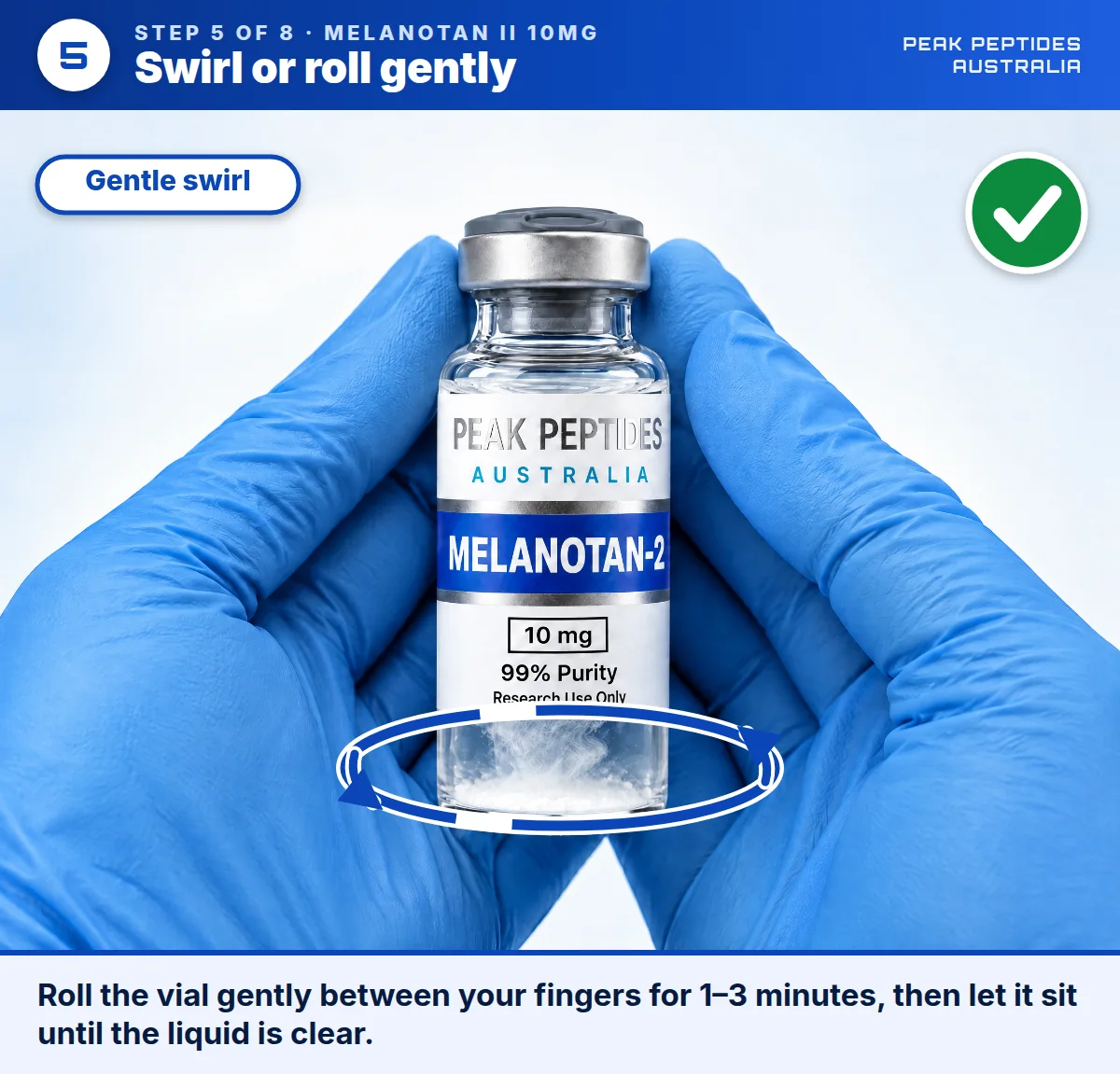
5Step 5: Swirl or roll gently
Gently roll the vial between gloved fingers or swirl it in slow circles. This lets the liquid contact the powder without vigorous agitation. A little undissolved material can remain initially, so allow time for dissolution and continue with gentle movement until the preparation clears. Do not force the process by shaking.
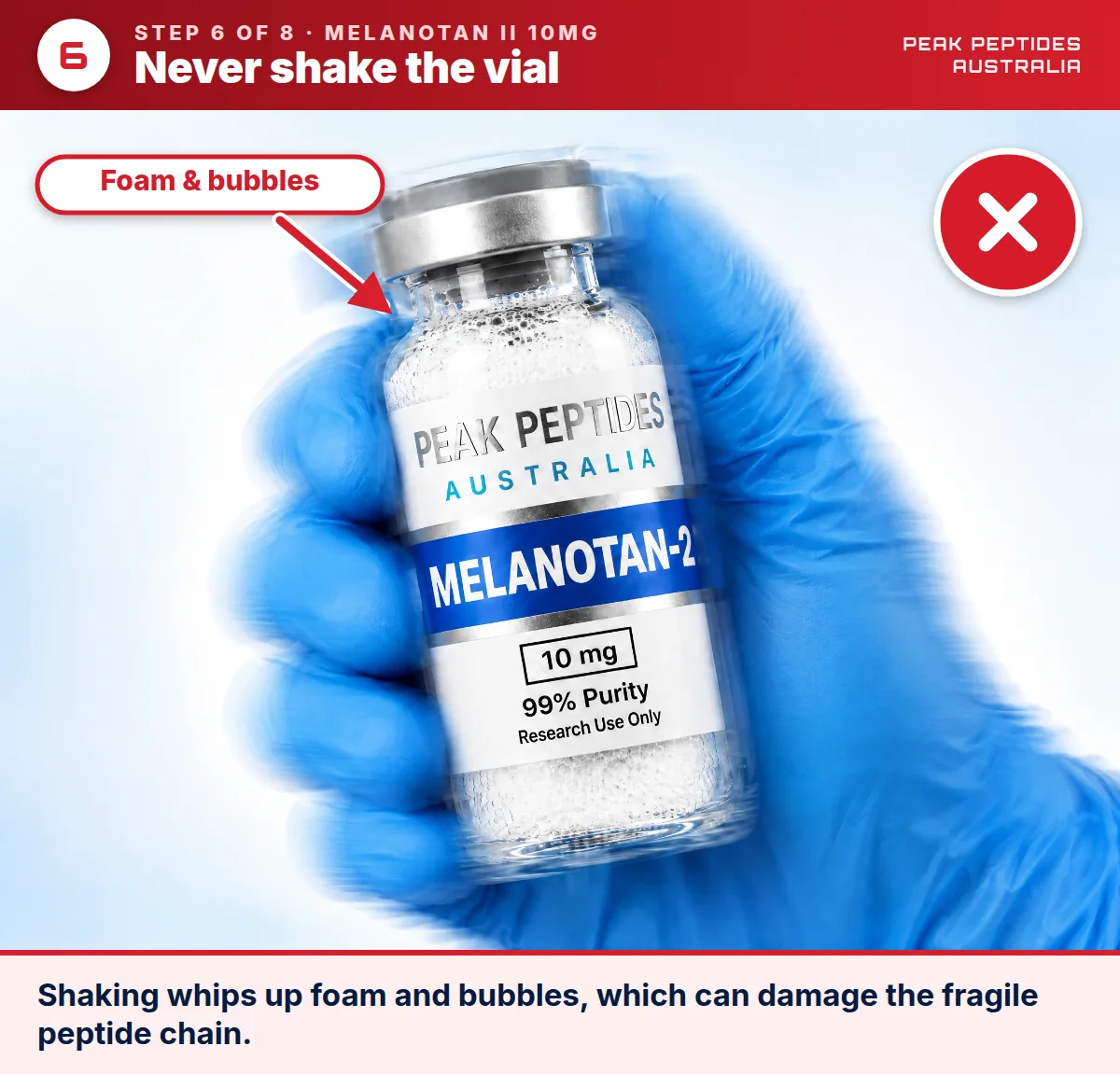
6Step 6: Never shake the vial
Do not shake the vial. Vigorous shaking introduces foam and bubbles, making visual inspection less clear and applying unnecessary mechanical stress to a peptide preparation. If bubbles appear, stand the vial upright and allow them to settle before continuing the observation. Gentle swirling is the appropriate movement in this workflow.
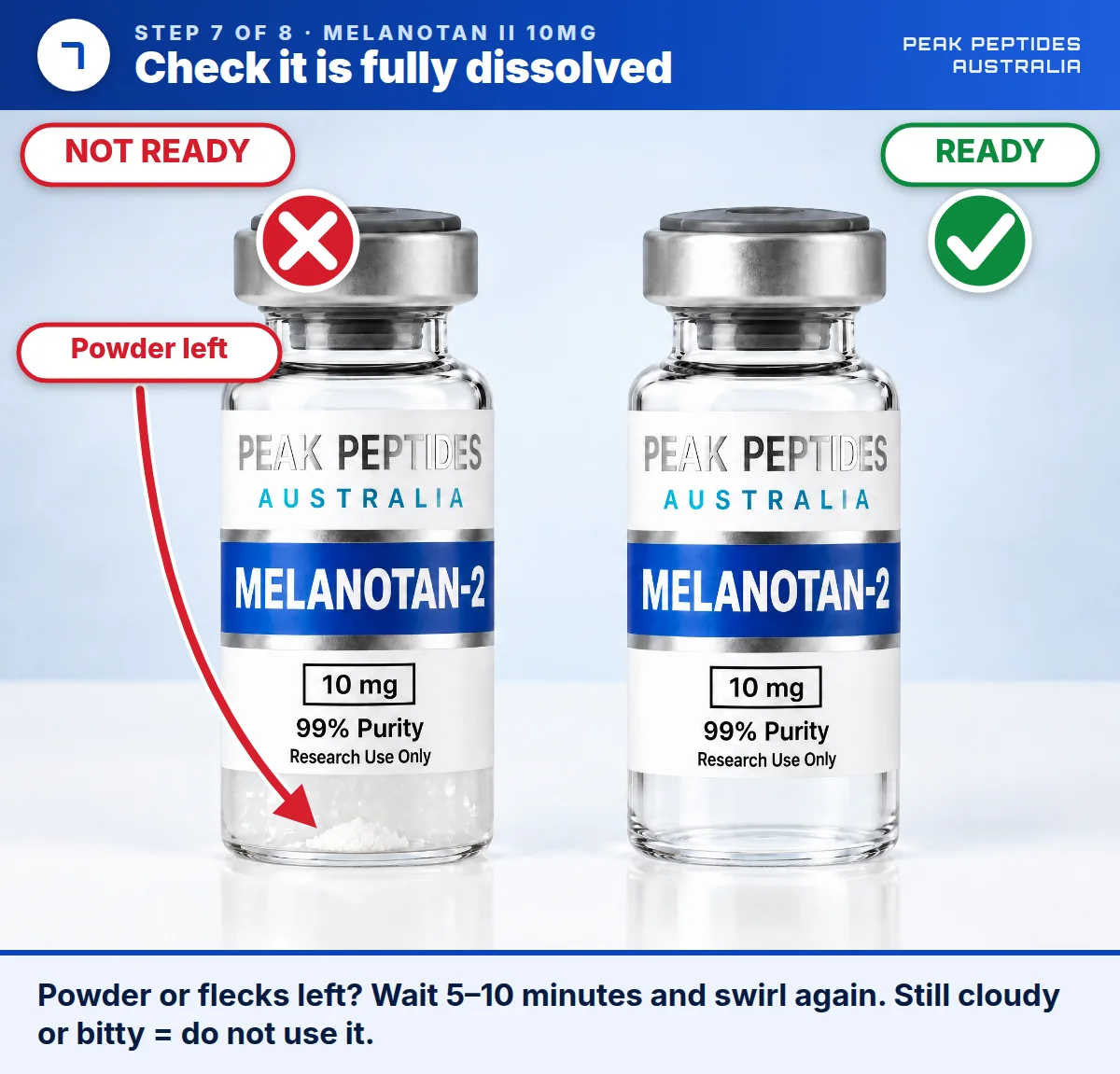
7Step 7: Check it is fully dissolved
Inspect the vial against a good light source. A fully dissolved preparation should look clear and free of visible powder, flecks or cloudiness. If material remains at the bottom, allow a few more minutes and swirl gently again. If cloudiness or particles persist, isolate the preparation and investigate.
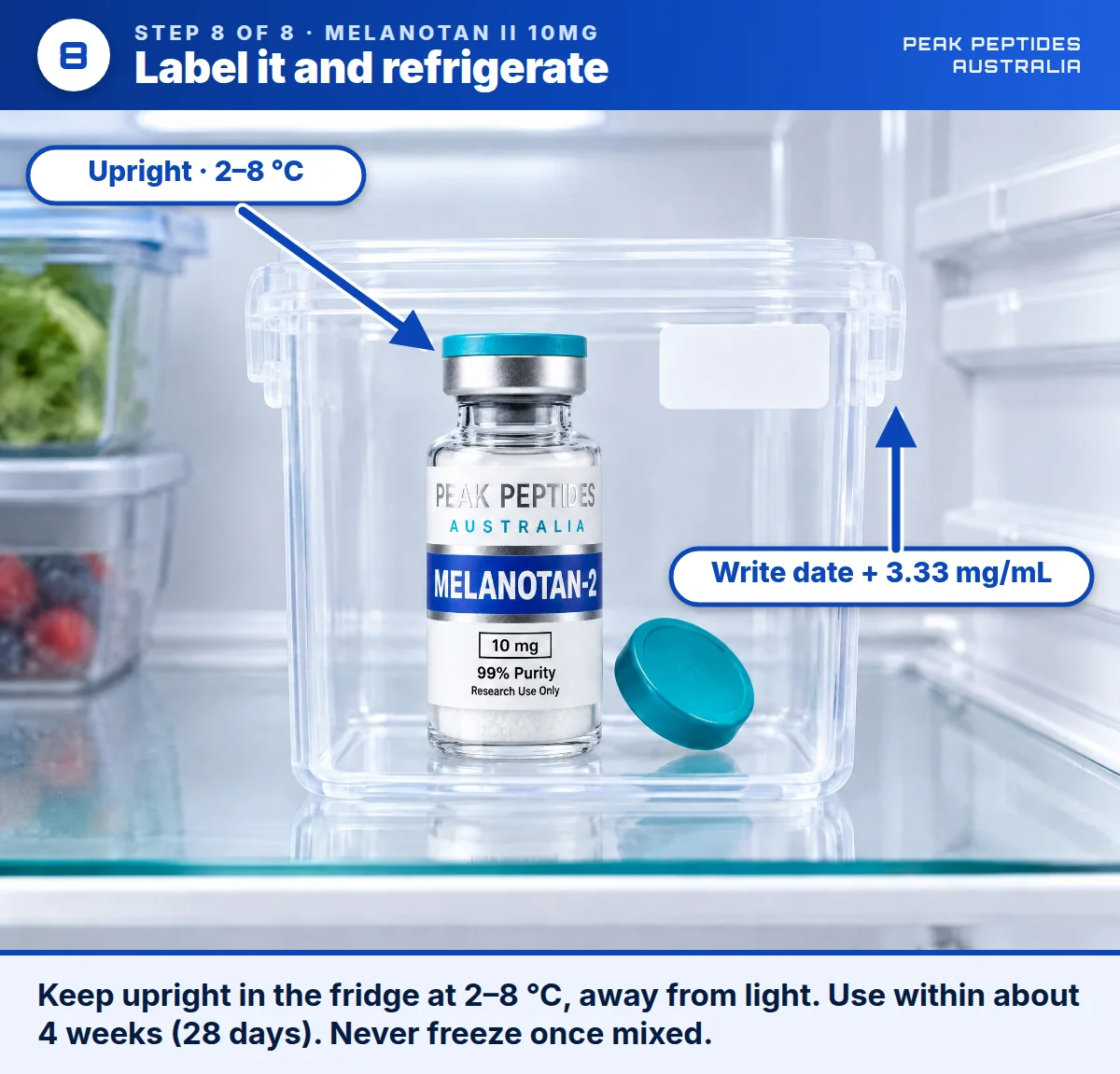
8Step 8: Label it and refrigerate
Label the container with the preparation date, final volume, calculated concentration and laboratory identifier. Store it upright in the fridge at 2–8 °C, away from light, use it within about 4 weeks (28 days) and never freeze it. Keep the storage record with the experiment record.
How to store Melanotan II laboratory material
Melanotan II 10mg storage framework
Melanotan II 10mg storage framework
Form
Storage condition
Record or control
Unopened freeze-dried material
Unopened powder in the fridge at 2–8 °C in the dark (freezer −20 °C for long-term).
Keep the vial sealed and record receipt condition
Long-term dry material
PeptideDosages lists frozen, dry and dark storage for lyophilised material
Keep at 2–8 °C and use within about 4 weeks (28 days)
Mixed laboratory preparation
Refrigerated at 2–8 °C, upright and protected from light
Within about 4 weeks (28 days)
Mixed preparation
Never freeze once mixed.
Never freeze it once mixed
Once mixed with bacteriostatic water, keep it upright in the fridge at 2–8 °C, away from light. Use within about 4 weeks (28 days) and never freeze it. Write the date and strength on the vial.
Melanotan II 10mg FAQs — Research, Lab Testing & Preparation
What is Melanotan II?
Melanotan II is a manufactured cyclic seven-amino-acid analogue of alpha-melanocyte-stimulating hormone, usually shortened to alpha-MSH. It is a melanocortin receptor agonist studied in pigmentation and receptor-signalling experiments. The supplied Melanotan II 10mg material is for in-vitro research only.
What is Melanotan II 10mg also called?
Common search names are Melanotan 2, Melanotan-2, MT-II, MT-2, MTII and MT2. PubChem also lists CAS number 121062-08-6. These spellings refer to Melanotan II, not to Melanotan I, afamelanotide or PT-141.
What is Melanotan II studied for in research?
Melanotan II is studied for melanocortin receptor signalling, melanogenesis and pigmentation. MC1R on melanocytes is particularly relevant to pigment-cell research. Early human experiments also recorded effects outside pigmentation, which reflects its activity across more than one melanocortin receptor subtype.
How does Melanotan II work?
Melanotan II activates melanocortin receptors. At MC1R, a receptor expressed on melanocytes, this signalling is studied for its role in melanin production. It also has broad activity at other melanocortin receptors, so it is not a pigment-only research compound.
What did the human studies find about Melanotan II?
In a 1996 Phase I pilot, three healthy male volunteers received Melanotan II or placebo in a single-blind study. Two participants had increased pigmentation one week after treatment ended. A separate 1998 double-blind crossover study enrolled ten men with psychogenic erectile dysfunction and measured short-term erectile response.
What effects were reported in Melanotan II studies?
The 1996 pilot reported mild nausea at most study levels, plus somnolence and fatigue at the highest level in one participant. The 1998 crossover study reported nausea, stretching, yawning and reduced appetite more often after Melanotan II than placebo. These are study observations, not product claims.
Is Melanotan II approved by the TGA or FDA?
No. The TGA says Melanotan II is prescription-only in Australia, is not approved as a tanning agent, and has no product in the ARTG or approved for supply in Australia. FDA materials treat Melanotan products promoted for body effects as unapproved drugs.
What is the TGA warning about Melanotan II?
The TGA warns consumers against using Melanotan II tanning products. Its August 2026 advisory says seized nasal-spray products had inconsistent estimated amounts, ranging from 22 mg to 54 mg across five bottles with the same label. The agency says such products have not been assessed for quality, safety or efficacy.
Does Melanotan II provide sun protection?
No. The TGA states that artificially increased pigmentation from melanotan does not protect against UV exposure in the way suitable sunscreen does. A change in colour is not evidence of protection against sunburn, DNA damage or skin cancer.
What is the difference between Melanotan II and PT-141?
PT-141 is bremelanotide, a deaminated derivative and likely metabolite of Melanotan II. Both are cyclic melanocortin peptides, but Melanotan II has a C-terminal amide and bremelanotide has a free acid. They are separate compounds.
Is PT-141 an approved version of Melanotan II?
No. PT-141 is a different compound. The FDA-approved Vyleesi product contains bremelanotide and has a specific indication for acquired, generalised hypoactive sexual desire disorder in premenopausal women. That approval does not apply to Melanotan II or to a Melanotan II research vial.
What does the 10mg label mean?
The 10 mg label is the nominal quantity for the dry material in this vial. For laboratory work, concentration depends on the measured content and final preparation volume.
How is this Melanotan II 10mg sample verified?
LabDoc report LD-VMH4 records confirmed identity by LC-MS, 99.39% purity by HPLC, 9.76 mg HPLC content and a Pass assessment. The sample was received on 09 September 2026 and tested on 09 October 2026; the report was compiled on 14 October 2026 and lists the batch as Not stated. The report applies to the tested sample.
What does LabDoc LD-VMH4 show?
LD-VMH4 is the independent LabDoc report for the submitted Melanotan II 10mg-labelled sample. It records 97.6% of the 10 mg label claim as measured HPLC content, 99.39% HPLC purity and confirmed LC-MS identity. The batch field is recorded as Not stated.
What is Janoshik report 108024?
Janoshik task #108024 is a separate published report listed on the Quality page. Dated 04 March 2026, it records Melanotan 2 at 10.83 mg and 99.958% purity. It is historical supporting documentation, while LD-VMH4 is the current product-specific LabDoc report.
How do I know a Melanotan II sample is real?
A product label alone cannot establish identity or content. Check an independent report that identifies the tested material, names the laboratory, shows the test method and can be verified at the laboratory. For this listing, open LabDoc report LD-VMH4 and compare the reported identity, purity and content fields.
What does a COA show for a peptide?
A certificate of analysis reports findings for the submitted sample. For Melanotan II, useful fields include LC-MS identity, HPLC purity, HPLC content, test date, label claim and the laboratory report identifier. A report supports the tested sample; it is not a therapeutic approval or a performance guarantee.
Can I buy Melanotan II 10mg online in Australia?
This listing is supplied for in-vitro research only and is not a therapeutic good. The TGA says Melanotan II is prescription-only, no Melanotan II product is included in the ARTG, and no such product is approved for supply in Australia. It must not be represented as a tanning medicine.
How fast is Melanotan II 10mg dispatched in Australia?
Same-day dispatch from Victoria for in-stock orders once payment is confirmed, tracked Australia Post Express, with the tracking number emailed. This dispatch information applies to the supplied research material and does not alter its research-only status or the TGA regulatory position.
How much BAC water for Melanotan II 10mg?
PeptideDosages uses 3 mL bacteriostatic water as its 10 mg vial reference mix. That makes 3.33 mg/mL, so 1 mg is 30 units on a U-100 syringe. This page shows concentration maths for laboratory preparation.
How many units is 1 mg of Melanotan II with 3 mL BAC water?
With 3 mL added to a nominal 10 mg vial, the calculated concentration is 3.33 mg/mL. On a U-100 syringe, 1 mg corresponds to 30 units, which is 0.30 mL. The chart on this page shows the same calculation alongside the 1 mL and 2 mL examples.
How many mg are in 10 units with the 3 mL mix?
With the 3 mL reference mix, 10 units equals 0.10 mL and holds about 0.33 mg, or 333 mcg, by nominal concentration maths. The exact concentration in an analytical experiment should use the measured content and the final verified volume.
How do I reconstitute Melanotan II 10mg for laboratory preparation?
Use clean laboratory handling. Wipe vial stoppers, draw the selected preparation volume of bacteriostatic water, let it travel slowly down the inside glass wall and swirl gently until clear. Do not shake. The eight-step photo sequence on this page shows the preparation workflow.
Can sterile or tap water be used instead of bacteriostatic water?
Do not use tap water. Sterile water and bacteriostatic water are different materials: bacteriostatic water contains 0.9% benzyl alcohol preservative. Once mixed with BAC water, keep it upright in the fridge at 2–8 °C, away from light, use it within about 4 weeks (28 days) and never freeze it.
What if the Melanotan II powder does not dissolve?
Allow the vial to stand briefly, then swirl or roll gently again. Do not shake it, because foam makes inspection harder and rough handling can stress peptides. If a preparation remains cloudy, contains visible particles or has not dissolved as expected, isolate it and follow the laboratory deviation process.
Should a mixed Melanotan II preparation be cloudy?
No. A preparation intended to be dissolved should be visually clear and free from visible flecks or undissolved material. Cloudiness can mean that dissolution is incomplete or that the preparation has a handling problem. Record the observation and do not treat a cloudy sample as fully dissolved.
How should dry Melanotan II powder be stored?
Keep the unopened freeze-dried material dry, in the fridge at 2–8 °C and protected from light, or in the freezer at −20 °C for long-term storage. PeptideDosages lists frozen, dry and dark storage for lyophilised material.
How long does reconstituted Melanotan II last?
Once mixed with bacteriostatic water, keep it upright in the fridge at 2–8 °C, away from light. Use it within about 4 weeks (28 days) and never freeze it.
Can a reconstituted Melanotan II sample be frozen?
Never freeze a preparation mixed with BAC water. Keep it upright in the fridge at 2–8 °C, away from light, and use it within about 4 weeks (28 days). Repeated freezing and thawing can affect peptide preparations. Store unopened powder in the fridge at 2–8 °C in the dark (freezer −20 °C for long-term).