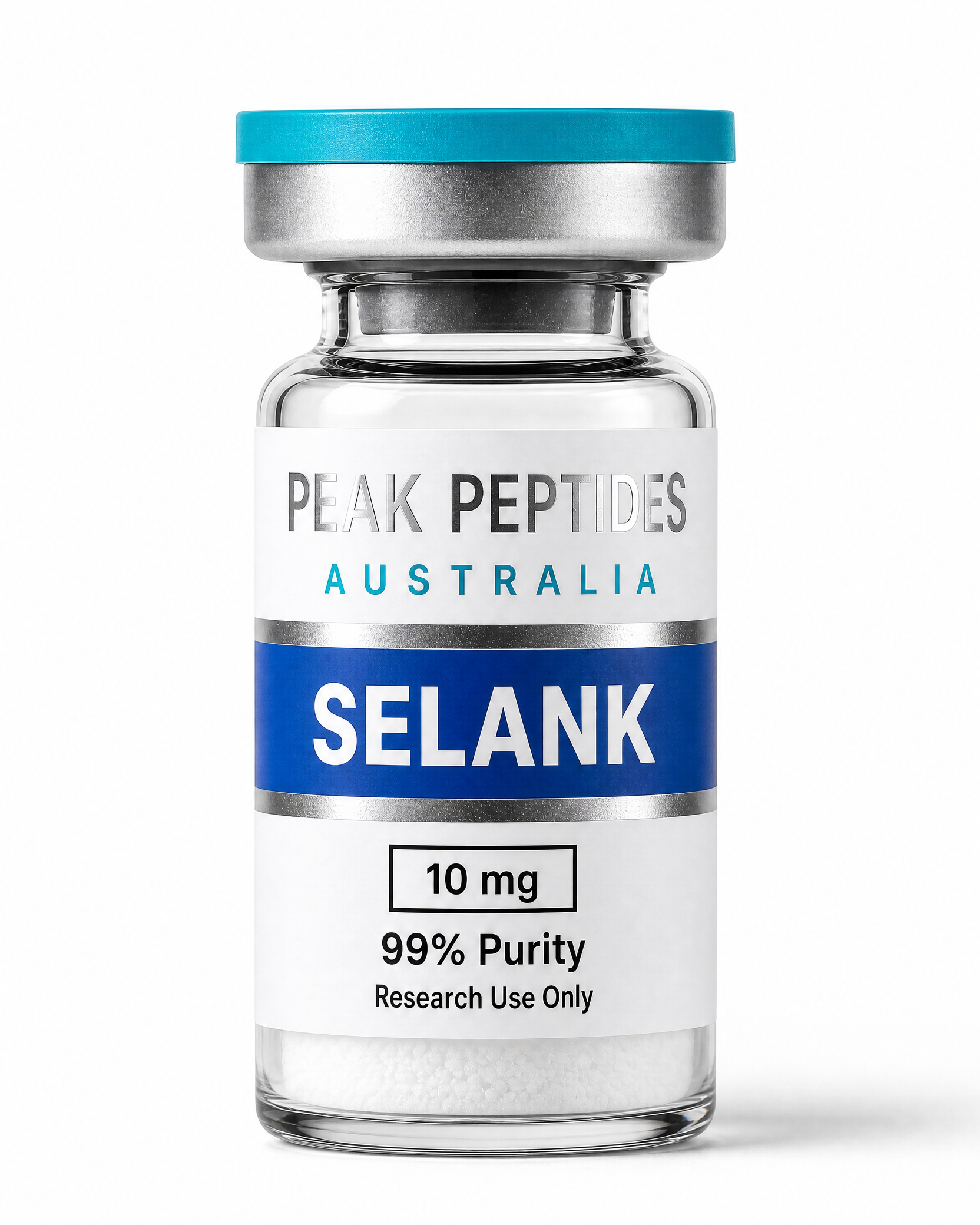
Selank 10mg is a nominal freeze-dried synthetic heptapeptide research vial based on tuftsin. LabDoc report LD-866B records confirmed LC-MS identity, 98.27% HPLC purity and 9.16mg measured content for its submitted sample. In-stock orders receive same-day dispatch from Victoria after payment confirmation, with tracked Australia Post Express shipping Australia-wide.
Product Specifications
Full NameSelank (TKPRPGP)
Vial Size10mg
Purity98.27% HPLC (LD-866B, 9.16mg sample)
Legal Disclaimer
This product is sold strictly for in-vitro laboratory research purposes only. It is not a therapeutic good, is not approved by the TGA, and is not intended for human or animal consumption, injection, or any diagnostic or therapeutic use.
Synthetic heptapeptide · tuftsin-analogue research
Selank 10mg — What It Is, Research Findings & Reconstitution Guide
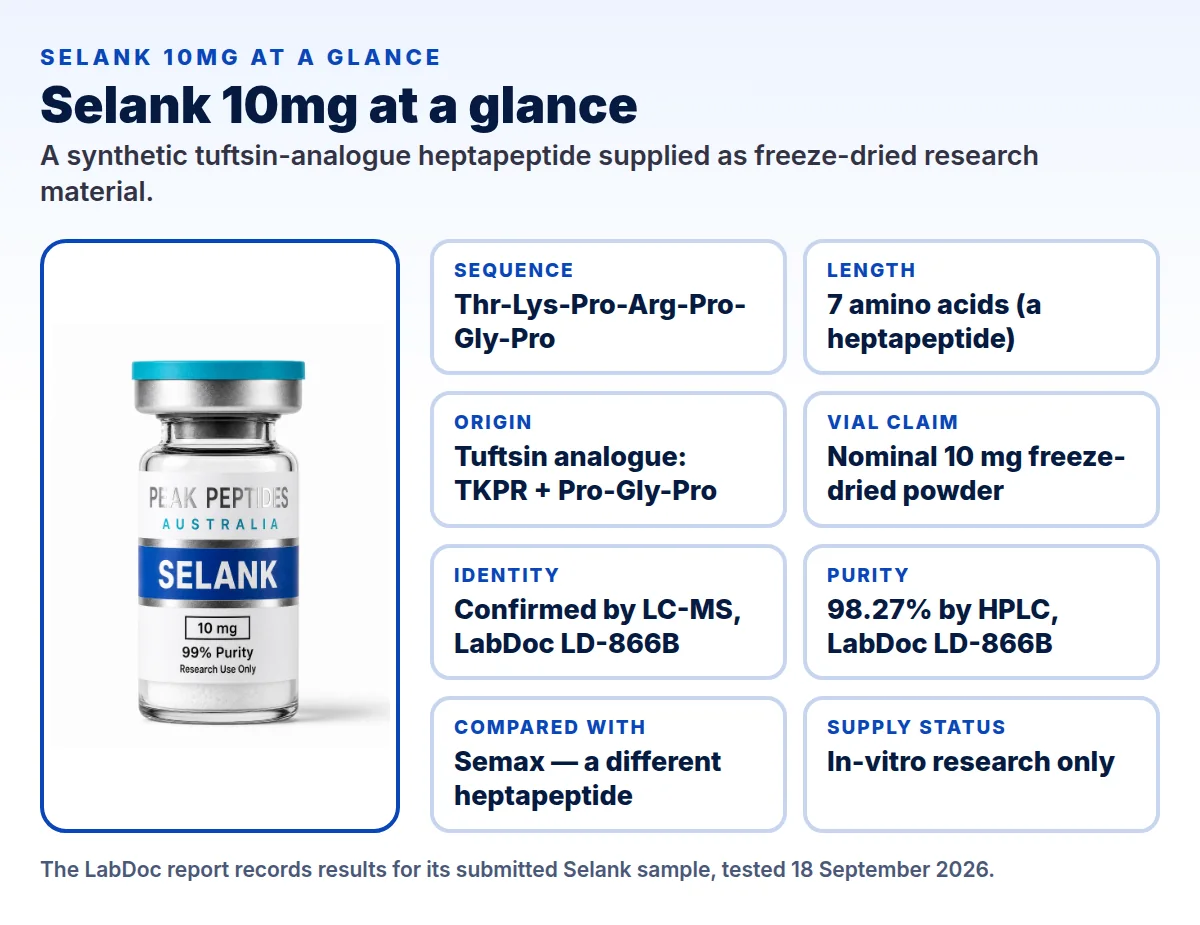
Selank is a synthetic seven-amino-acid peptide, called a heptapeptide, built from the immune-related peptide tuftsin. Its sequence is Thr-Lys-Pro-Arg-Pro-Gly-Pro, usually shortened to TKPRPGP. This listing is a nominal 10mg vial of freeze-dried Selank powder. The guide explains the published GABA-related and enzyme research, separates small human comparisons from laboratory findings, and compares Selank with Semax. It also records the product-specific LabDoc result and provides a photo-led concentration chart for a 10mg vial. Peak Peptides Australia supplies this material for in-vitro research only.
Also referred to in research or catalogue references as Selank peptide, Selank 10mg, Selank 10 mg, Selank heptapeptide, Selank TP-7, Selank acetate, TP7, TP-7, TKPRPGP, Thr-Lys-Pro-Arg-Pro-Gly-Pro, Thr Lys Pro Arg Pro Gly Pro, tuftsin analogue peptide.
2mL BAC water = 5mg/mL nominal concentration · 20 U-100 units = 1mg
Regulatory status
Not an approved medicine by TGA or FDA; supplied for in-vitro research only
Dispatch
Same-day from Victoria for in-stock orders after payment confirmation, tracked Australia Post Express
A defined seven-amino-acid peptide
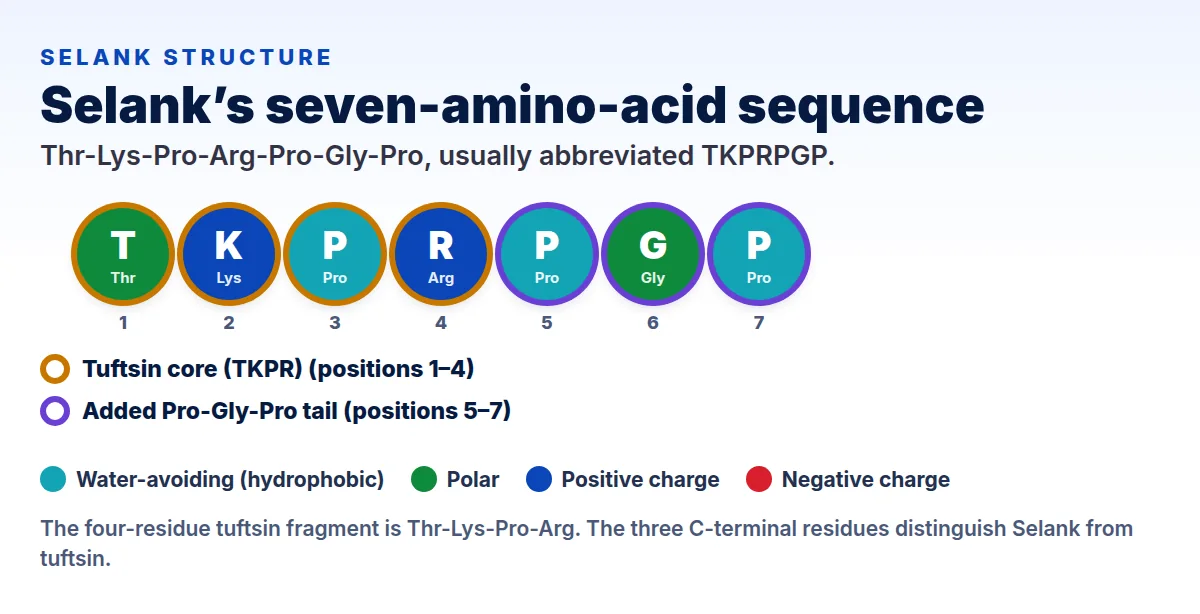
Selank is a synthetic heptapeptide with the sequence Thr-Lys-Pro-Arg-Pro-Gly-Pro. The first four residues, Thr-Lys-Pro-Arg or TKPR, are tuftsin; the added Pro-Gly-Pro tail makes Selank a distinct compound. A sequence identifies the molecule’s building blocks.
What Selank is studied for
Selank appears in anxiety-related, neurotransmission, gene-expression and enkephalin-metabolism research. “Anxiolytic” means intended to reduce anxiety, while “nootropic” is a label used for cognition-related research. These words describe the questions researchers tested. They do not turn this nominal 10mg research vial into an approved medicine or prove a result for a particular preparation.
GABA-related signalling is a laboratory finding
A 2016 Frontiers in Pharmacology experiment assessed 84 neurotransmission-related genes in rat frontal cortex one and three hours after Selank or GABA exposure. The study found changes in 45 genes at one hour and 22 genes at three hours. Its authors proposed GABAergic allosteric modulation as one possible molecular mechanism. This is a tissue gene-expression result, not a measurement of anxiety relief in people.
Small human comparisons exist
A 2008 paper compared 30 people receiving Selank with 32 receiving medazepam for generalised anxiety disorder or neurasthenia; its abstract described similar anxiolytic effects. A separate 2014 comparative study involved 60 people with phobic-anxiety and somatoform disorders. These were active-medicine comparisons, not a large independently replicated placebo programme, so the reported results cannot be treated as universal response rates.
Selank and Semax are different
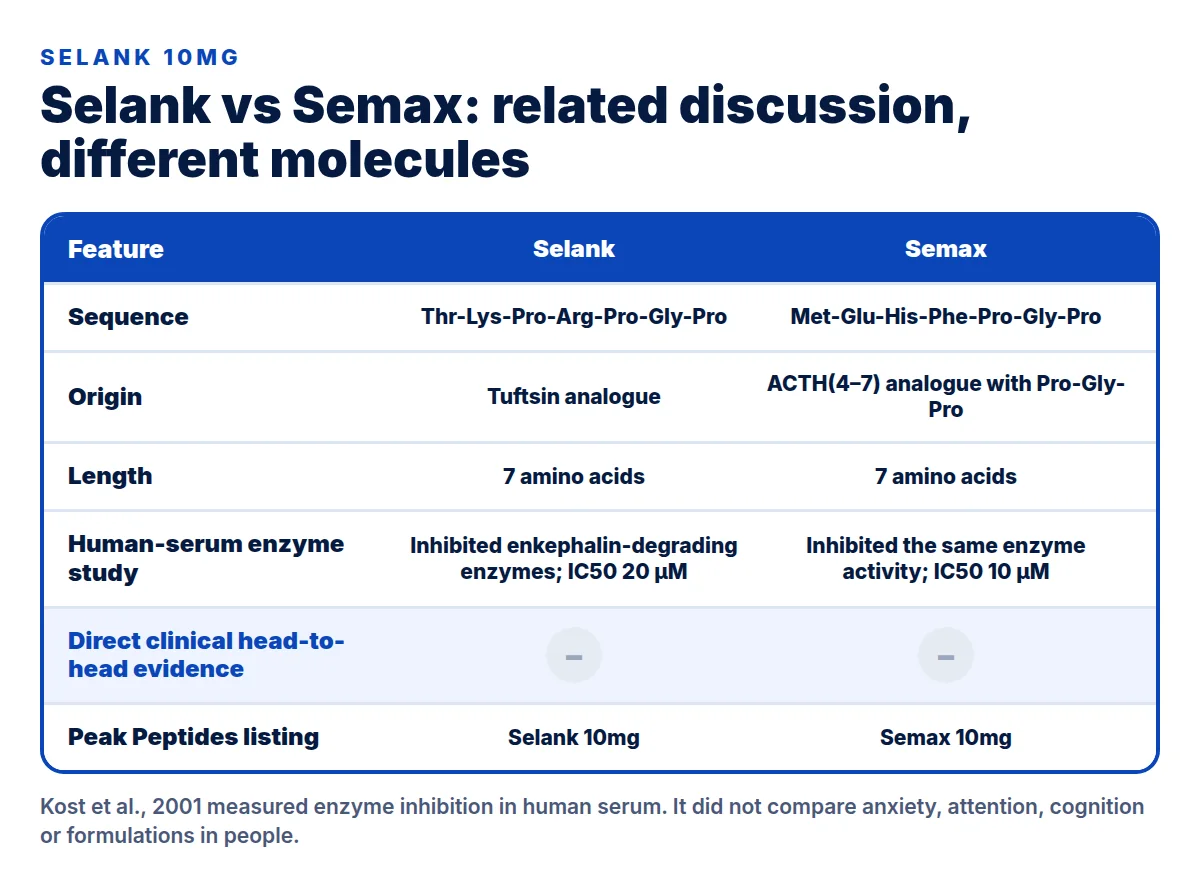
Selank and Semax are both synthetic seven-amino-acid peptides, but their sequences and origins differ. Selank is a tuftsin analogue: TKPRPGP. Semax is an ACTH-derived sequence: MEHFPGP. A 2001 human-serum experiment measured inhibition of enkephalin-degrading enzymes by both compounds. It did not compare their effects on anxiety, attention, cognition or any personal outcome.
What nominal 10mg means
The 10mg label is the manufacturer’s nominal total peptide claim for the freeze-dried vial. Concentration depends on the measured final volume. For example, the chart’s 2mL calculation produces 5mg/mL from the nominal 10mg total, before accounting for a particular sample’s measured content result.
Independent test for this Selank sample
LabDoc report LD-866B records a submitted Selank sample tested on 18 September 2026. It records confirmed identity by LC-MS, 98.27% purity by HPLC and 9.16mg HPLC content against the nominal 10mg claim, equal to 91.6% of the claim. The report lists related impurities at 1.73%, an overall Pass assessment and no stated batch identifier.
What a lab result does and does not answer
LC-MS identity checks that the submitted material matches Selank by mass. HPLC purity measures the share attributed to the main material, while HPLC content measures the amount found in the submitted vial. LD-866B applies to that submitted sample.
Selank is a synthetic seven-amino-acid peptide developed from tuftsin. A peptide is a short chain of amino acids, the same basic building blocks that make proteins. Seven amino acids makes Selank a heptapeptide. Its full sequence is Thr-Lys-Pro-Arg-Pro-Gly-Pro, abbreviated TKPRPGP.
The sequence explains the name tuftsin analogue. Tuftsin is the first four residues, Thr-Lys-Pro-Arg or TKPR. Selank appends Pro-Gly-Pro to the C terminus. This creates a defined manufactured compound with a different seven-residue structure, rather than a natural supplement or a second name for tuftsin.
This listing supplies a nominal 10mg vial of freeze-dried Selank powder for in-vitro research only. It is not a ready-to-use nasal product, a finished formulation or an approved medicine. The nominal amount on a vial is separate from the exact concentration created by a final volume and from the content measured in an independent sample report.
Selank 10mg: a defined tuftsin-analogue heptapeptide with product-specific LabDoc evidence.
How does Selank work in research?
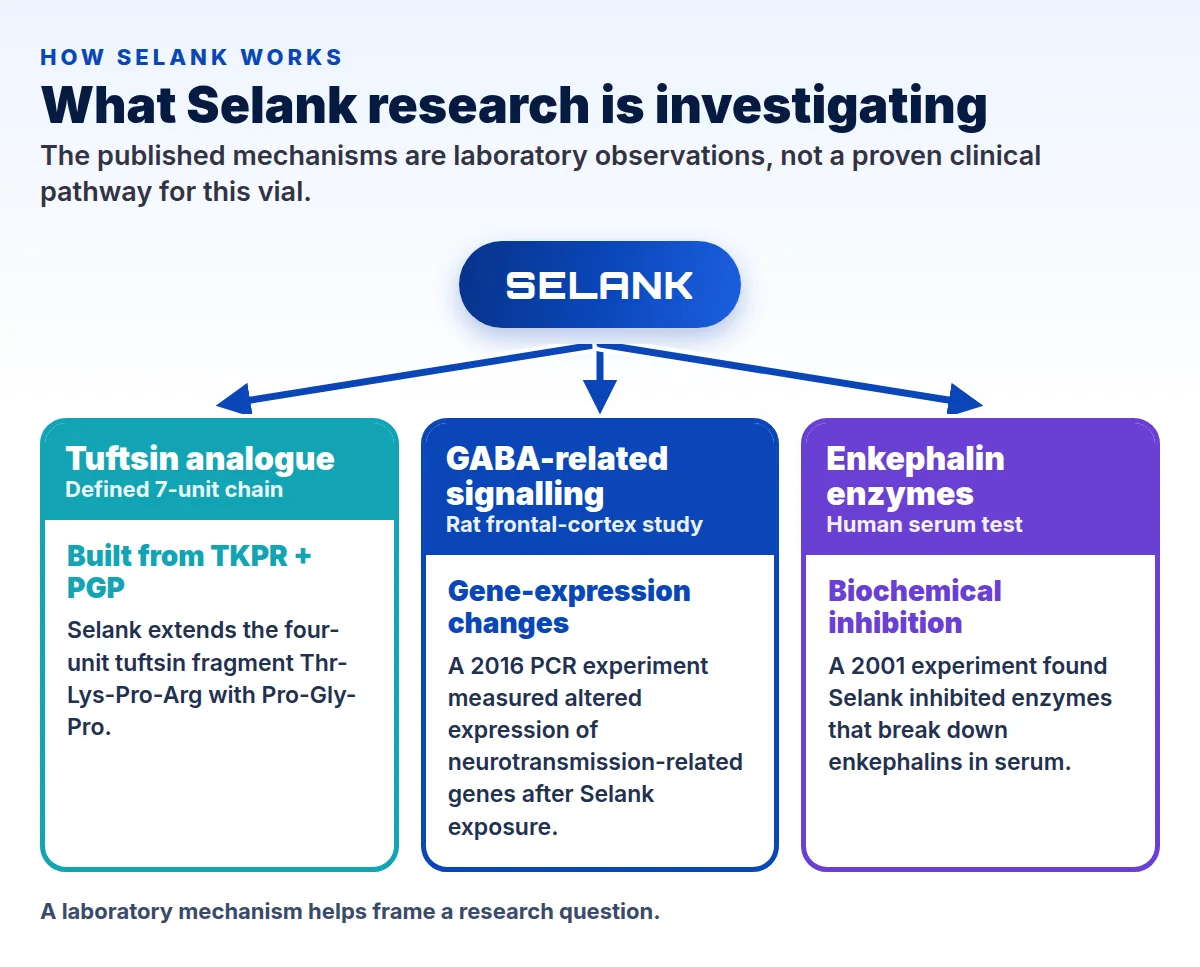
Selank research investigates several molecular questions rather than one settled pathway. The most commonly discussed line is GABA-related signalling. GABA, or gamma-aminobutyric acid, is a neurotransmitter involved in inhibitory signalling in the nervous system. “Allosteric modulation” means changing how a receptor responds through a site other than the main binding site.
In a 2016 study, researchers measured expression of 84 genes involved in neurotransmission in rat frontal cortex one and three hours after exposure to Selank or GABA. The experiment found changes in 45 measured genes at one hour and 22 at three hours. The authors concluded that one possible molecular mechanism involved allosteric modulation of the GABAergic system.
That result needs its full setting. It was a PCR gene-expression experiment in rat tissue, not a human outcome study. A later experiment in human-derived neuroblastoma cells reported no statistically significant change in the genes it measured with Selank alone, while combinations with GABA or olanzapine changed the response. Together, those experiments argue against reducing Selank to a claim that it simply “increases GABA”.
The principal research questions: structure, GABA-related laboratory findings and enzyme work.
What did Selank research find?
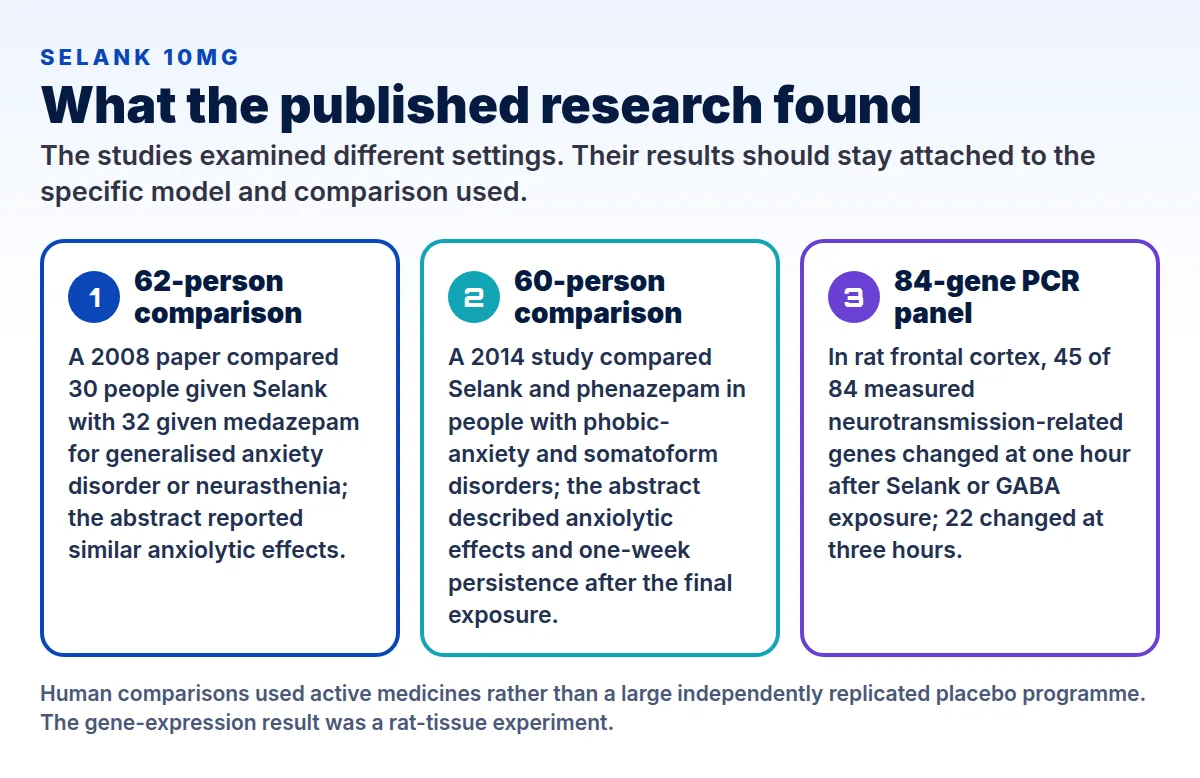
Selank research includes small human comparative studies as well as laboratory experiments. The human papers are useful for describing what was reported in their selected populations, but they are not a large, independently replicated placebo programme. Keeping the study design visible prevents a laboratory finding or active-comparator result from becoming a wider treatment claim.
The 2008 PubMed record describes 62 people with generalised anxiety disorder or neurasthenia. Thirty received Selank and 32 received medazepam; the authors used psychometric scales and reported similar anxiolytic effects in the abstract. The 2014 PubMed record describes a 60-person comparison with phenazepam among people with phobic-anxiety and somatoform disorders. Its abstract described anxiolytic effects and an effect continuing for one week after the final exposure.
The laboratory record is different again. A 2001 study tested synthetic Selank and Semax against enkephalin-degrading enzymes in human serum. It reported dose-dependent inhibition, with Selank’s IC50 at 20 micromolar in that assay. IC50 is the concentration at which a test response reaches half its maximum inhibition. It is a biochemical number, not a clinical comparison or a conversion for this vial.
Three distinct study settings: two small human comparisons and one rat-tissue gene-expression experiment.
Published Selank findings kept in their original research setting
Published Selank findings kept in their original research setting
Source
Model or participants
What was measured
What the report says
Zozulia et al., 2008
62 people; 30 Selank and 32 medazepam
Psychometric scales and serum enkephalin activity
Abstract reported similar anxiolytic effects in the two comparison groups
Medvedev et al., 2014
60 people with phobic-anxiety and somatoform disorders
Comparative clinical study with phenazepam
Abstract described anxiolytic effects and reported persistence for one week after the final exposure
Volkova et al., 2016
Rat frontal cortex
Expression of 84 neurotransmission-related genes by PCR
45 genes changed at one hour; 22 changed at three hours after Selank or GABA exposure
Kost et al., 2001
Human serum
Enkephalin-degrading enzyme activity
Selank inhibited the measured enzyme activity; reported IC50 20 micromolar
These studies differ in molecule preparation, model, comparator and endpoint. None establishes a clinical outcome for this specific laboratory vial.
Selank vs Semax: are they the same?
Selank and Semax are different molecules. Both are synthetic heptapeptides, so each has seven amino acids, but Selank is a tuftsin analogue with the sequence TKPRPGP. Semax is an ACTH-derived peptide with the sequence MEHFPGP. A shared length does not make their structures, mechanisms, formulations or research findings interchangeable.
The two peptides appeared together in a 2001 human-serum study of enkephalin-degrading enzymes. In that particular assay, the paper reported an IC50 of 20 micromolar for Selank and 10 micromolar for Semax. This describes the concentration needed to reach half the measured inhibition in serum. It does not rank the peptides for anxiety, mood, focus, cognition or any other human result.
Semax and Selank have separate research records. A product-specific LabDoc result applies to one vial. Peak Peptides Australia has a separate Semax 10mg page so the two research records can remain distinct.
Similar length, different sequence and origin: Selank and Semax are different compounds.
Selank structure: TKPRPGP
Selank’s structure is the amino-acid sequence Thr-Lys-Pro-Arg-Pro-Gly-Pro. Each one-letter abbreviation gives TKPRPGP. Reading a peptide sequence from left to right is a compact way of identifying its order of amino-acid building blocks. In this case the first four positions match the tuftsin sequence.
The final Pro-Gly-Pro tail is important because it distinguishes Selank from tuftsin. The 2016 Frontiers paper describes Selank as a synthetic analogue elongated at the C terminus with these three natural L-amino acids. The sequence is a chemical identity statement. It is not evidence of an approved indication, purity result, content result or biological effect.
For this product, identity evidence also comes from the independent analytical report. LabDoc LD-866B records LC-MS identity as confirmed for the submitted sample. LC-MS compares mass information; the visible sequence diagram helps explain the name, while the laboratory method is the product-specific analytical check.
Selank is TKPRPGP: the four-residue tuftsin core plus a Pro-Gly-Pro tail.
Independent lab test for this Selank 10mg sample
Selank 10mg is linked to LabDoc report LD-866B. The report records a submitted Selank sample tested on 18 September 2026. It lists identity as confirmed by LC-MS, HPLC purity as 98.27%, HPLC content as 9.16mg against a nominal 10mg claim, 91.6% content claim percentage, 1.73% related impurities and an overall Pass assessment. No batch identifier is stated in the supplied report data.
The three analytical fields answer different questions. LC-MS identity is the mass-based confirmation of the tested molecule. HPLC purity states the measured proportion attributed to the main material in the analytical sample. HPLC content measures the quantity found in the submitted vial. A nominal label amount, a purity percentage and a content result should never be collapsed into one claim.
The report applies to its submitted sample. Open the LabDoc record to verify the report ID, date and analytical results directly.
Report: LabDoc LD-866B; sample tested 18 September 2026.
Identity: confirmed by LC-MS for the submitted Selank sample.
Purity: 98.27% by HPLC; related impurities: 1.73%.
Content: 9.16mg by HPLC, equal to 91.6% of the nominal 10mg claim.
Assessment: Pass; no batch identifier stated in the supplied data.
Selank 10mg research supply in Australia
Selank 10mg is supplied by Peak Peptides Australia for in-vitro research only. In-stock orders receive same-day dispatch from Victoria once payment is confirmed, travel with tracked Australia Post Express, and have a tracking number emailed. This dispatch information explains the fulfilment process and does not change the research-only status of the material.
Selank is not an approved medicine by the TGA or FDA. The TGA explains that peptide products regulated as therapeutic goods need ARTG inclusion before supply as therapeutic goods, and unapproved products have not been assessed by the TGA for quality, safety or effectiveness. The TGA also says a research-use-only statement does not remove therapeutic-goods obligations when a product is otherwise regulated as a therapeutic good.
FDA’s compounding page lists Selank acetate, also called TP-7, among withdrawn nominated bulk substances. FDA identifies potential immunogenicity concerns from aggregation and peptide-related impurities, and says it lacks important safety information for human administration. This page therefore keeps the product description to material identity, research context, analytical documentation and measurement maths.
Step-by-step guide · About 10 minutes
How to reconstitute Selank 10mg (8-step photo guide)
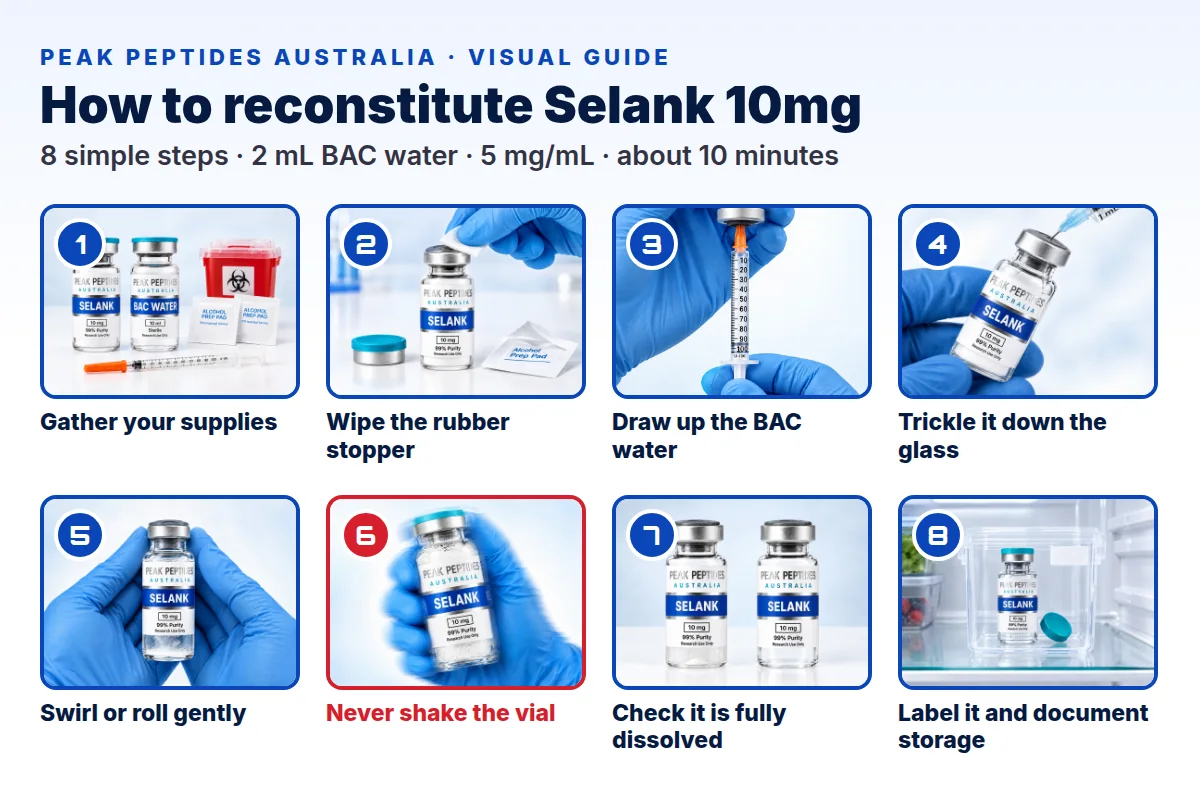
Selank 10mg arrives as dry, freeze-dried powder. Reconstitution means bringing the powder into a measured liquid volume so a concentration can be recorded. The mixing liquid is BAC water or sterile saline. The photographs show the step-by-step sequence using BAC water as the chart’s reference vehicle. The 2mL chart calculation gives a nominal concentration of 5mg/mL and easy U-100 measurement maths. Once mixed, keep it upright in the fridge at 2–8 °C, away from light, use it within about 4 weeks (28 days) and never freeze it. Write the date and strength on the vial.
The general Selank 10mg handling sequence: measure, add slowly, swirl gently, inspect and record.
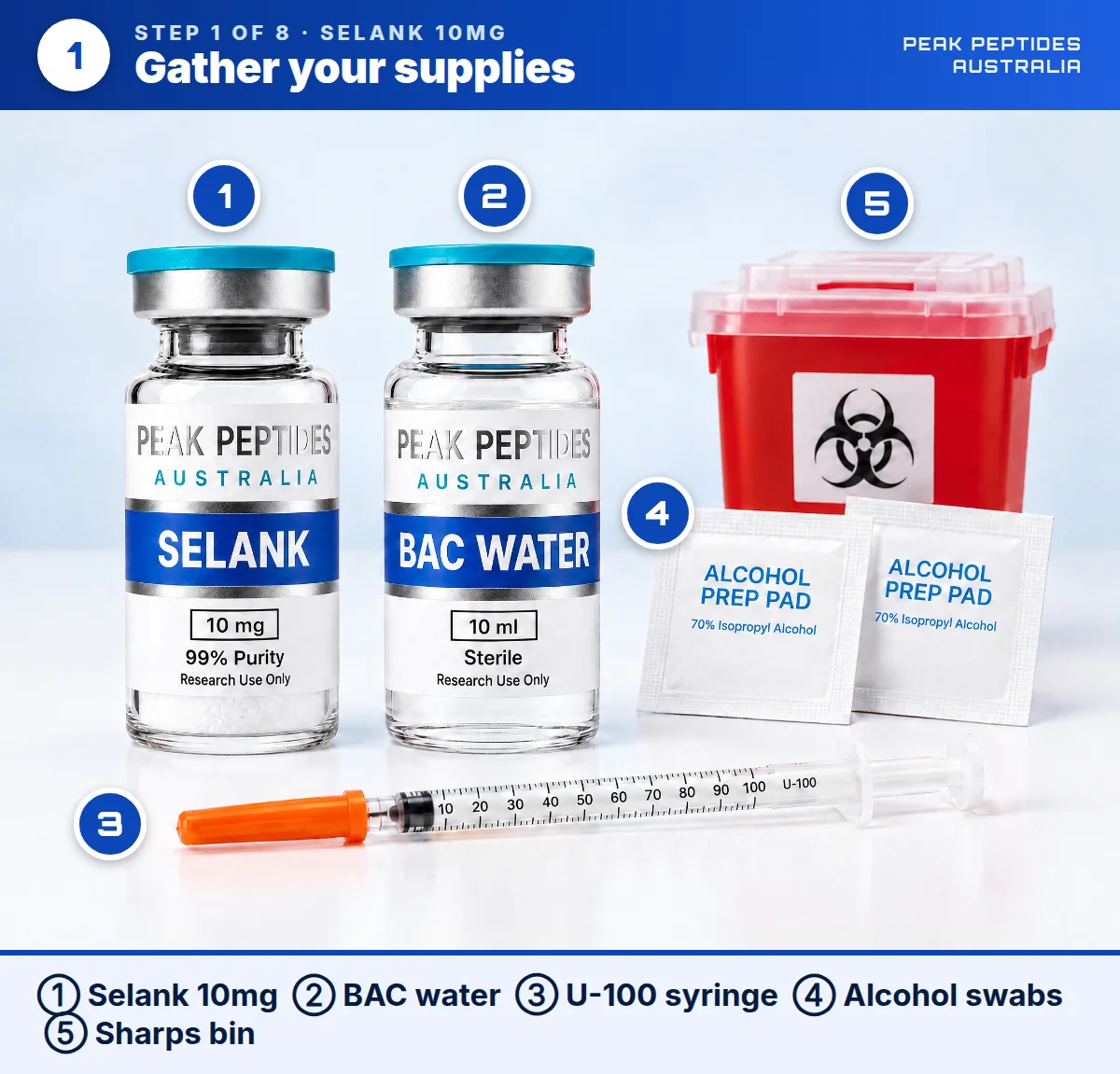
What you need
Selank 10mg vialNominal freeze-dried Selank powder in a sealed glass vial.
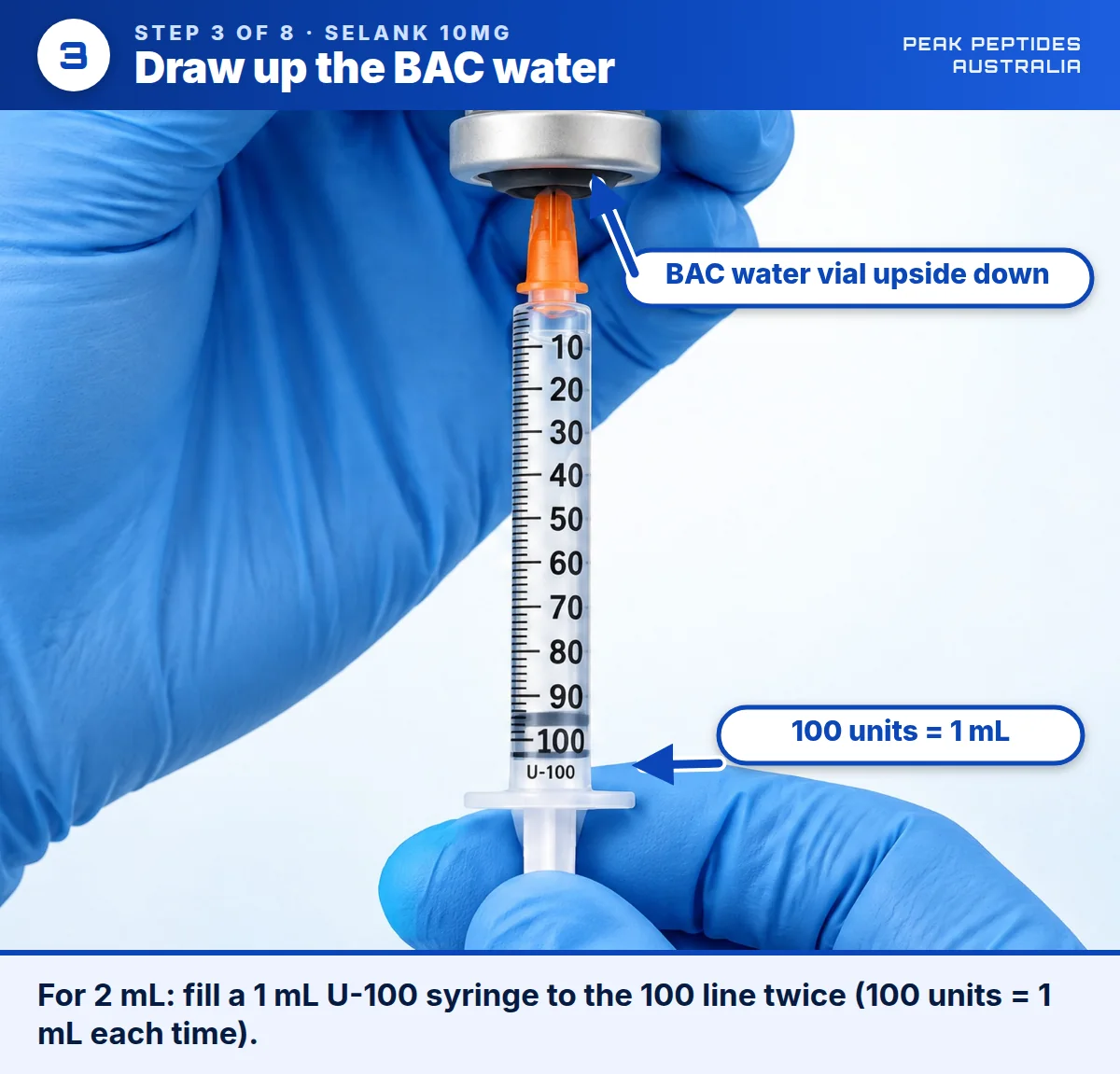
1mL U-100 syringeA U-100 scale has 100 units per 1mL, so each unit is 0.01mL.
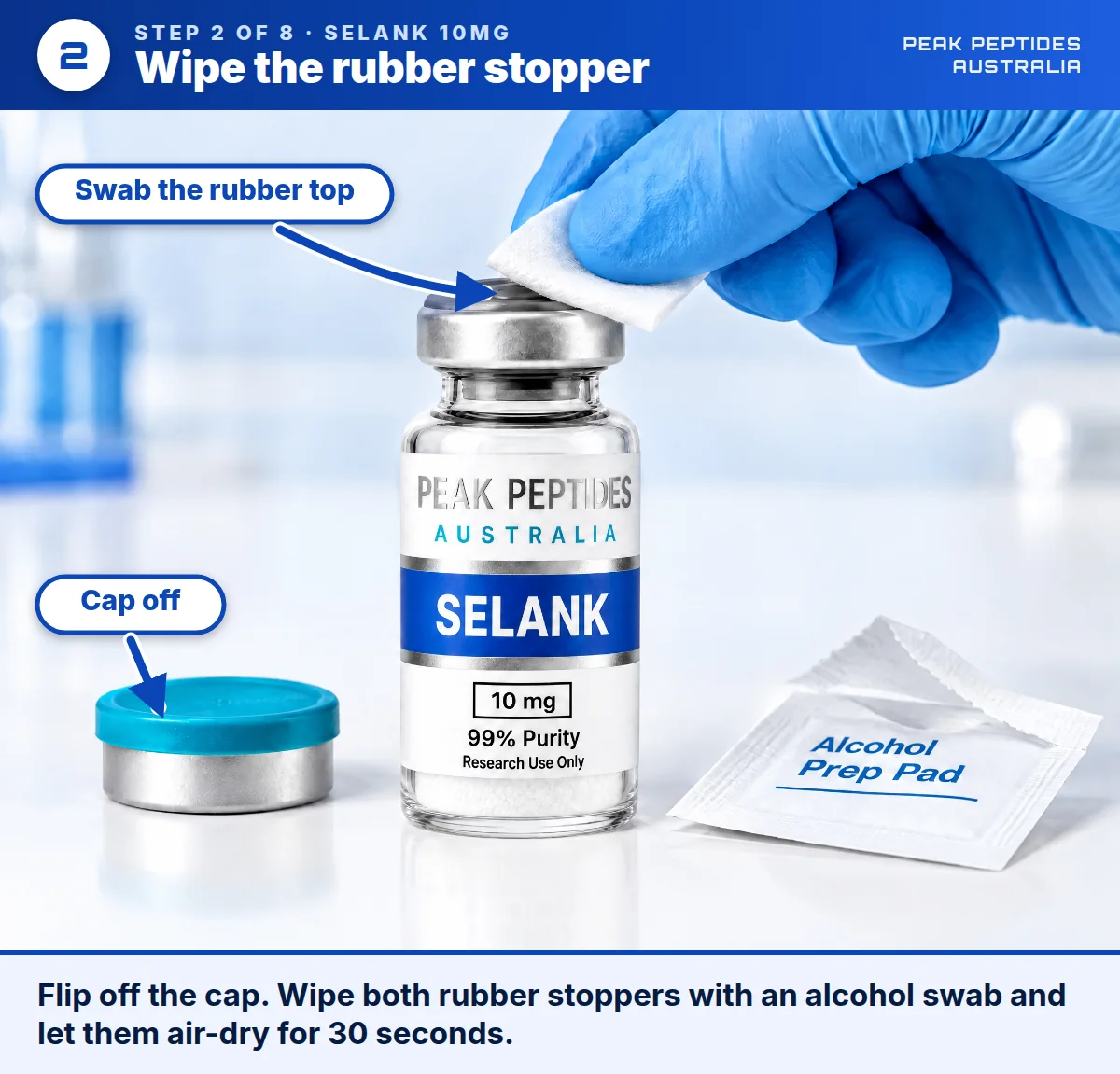
Alcohol swabsFresh swabs for disinfecting the rubber stoppers and allowing them to air-dry.
Clean gloves and work surfaceUse a clean, organised area for documented laboratory handling.
Sharps containerUse for safe disposal of used needles and syringes.
How much BAC water for Selank 10mg?
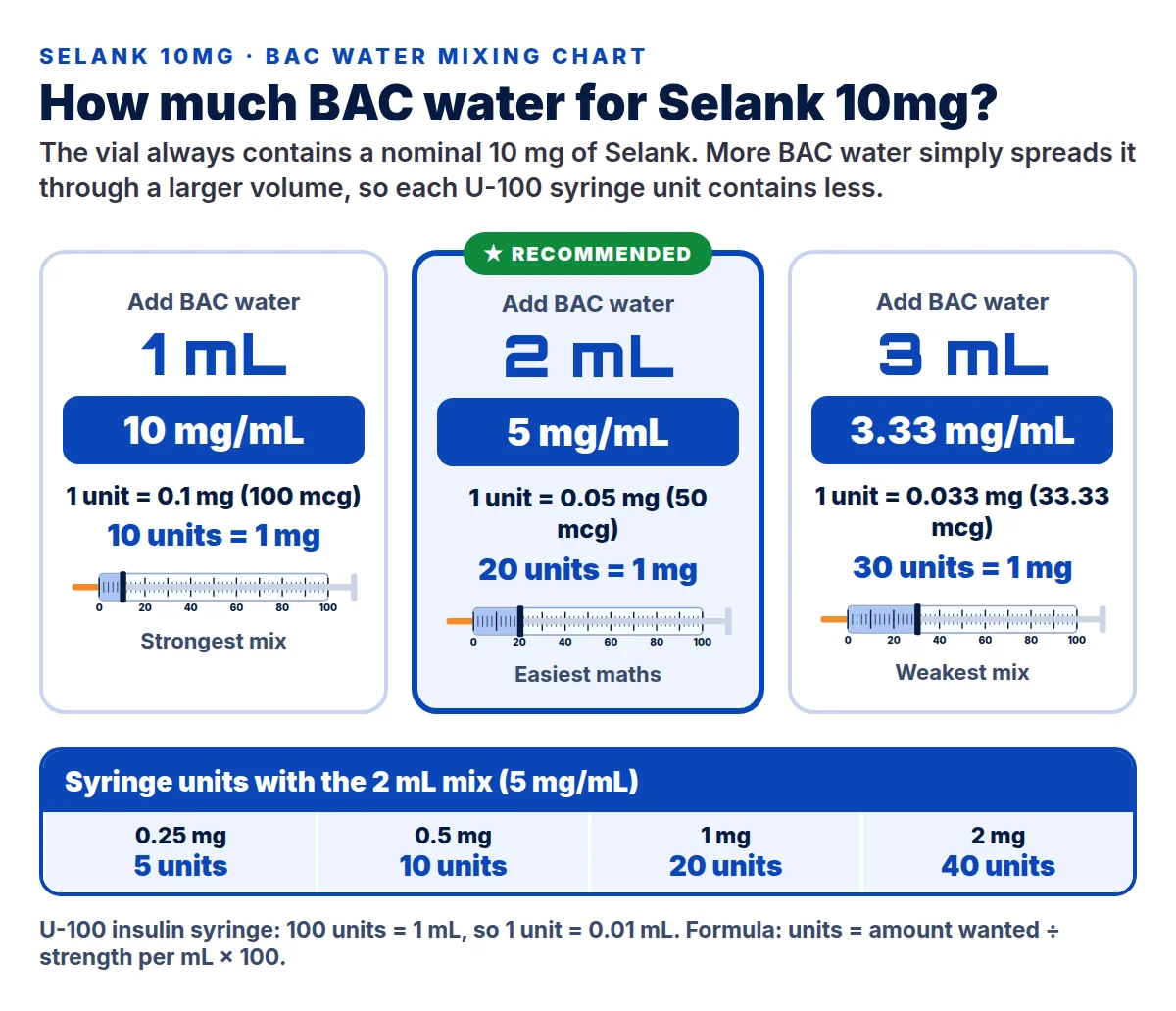
The nominal 10mg total stays the same whichever reference volume is chosen. Adding more BAC water does not increase the peptide total; it spreads the same nominal amount through more liquid. That changes the concentration and the amount represented by each U-100 syringe unit. The chart supplies transparent concentration maths.
The highlighted 2mL calculation is 5mg/mL. On a U-100 syringe, 100 units equals 1mL, so 1 unit equals 0.01mL. At 5mg/mL, 10 units represents 0.5mg and 20 units represents 1mg. The 1mL reference is 10mg/mL, while the 3mL reference is 3.33mg/mL. Select BAC water or sterile saline and the final volume.
Nominal concentration maths for Selank 10mg; the 2mL reference gives 5mg/mL and simple U-100 conversions.
2 mL is highlighted because it gives the simplest numbers.
Syringe units with the 2 mL mix (5 mg/mL)
Syringe units with the 2 mL mix (5 mg/mL)
Amount
Units on a U-100 syringe
Volume
0.25 mg
5 units
0.05 mL
0.5 mg
10 units
0.1 mL
1 mg
20 units
0.2 mL
2 mg
40 units
0.4 mL
The 8 steps
1Step 1: Gather your supplies
Set out the Selank 10mg vial, BAC water or sterile saline, a new 1mL U-100 syringe, alcohol swabs, gloves and a sharps container on a clean surface. Confirm the vial identity, research record and chosen final volume before opening anything. The photos use BAC water as the concentration-chart reference.
2Step 2: Wipe the rubber stopper
Remove the flip-off cap without disturbing the rubber stopper. Wipe the stopper of the Selank vial and the selected vehicle with separate fresh alcohol swabs, then let them air-dry. Do not touch the disinfected stopper or needle shaft after cleaning. A clean-looking stopper is not the same as a disinfected surface.
3Step 3: Draw up the BAC water
For the chart’s 2mL reference, measure 1mL at a time with a U-100 syringe, where the 100-unit line equals 1mL, then repeat for the second measured portion. Keep the selected volume accurate and remove large air bubbles before transfer.
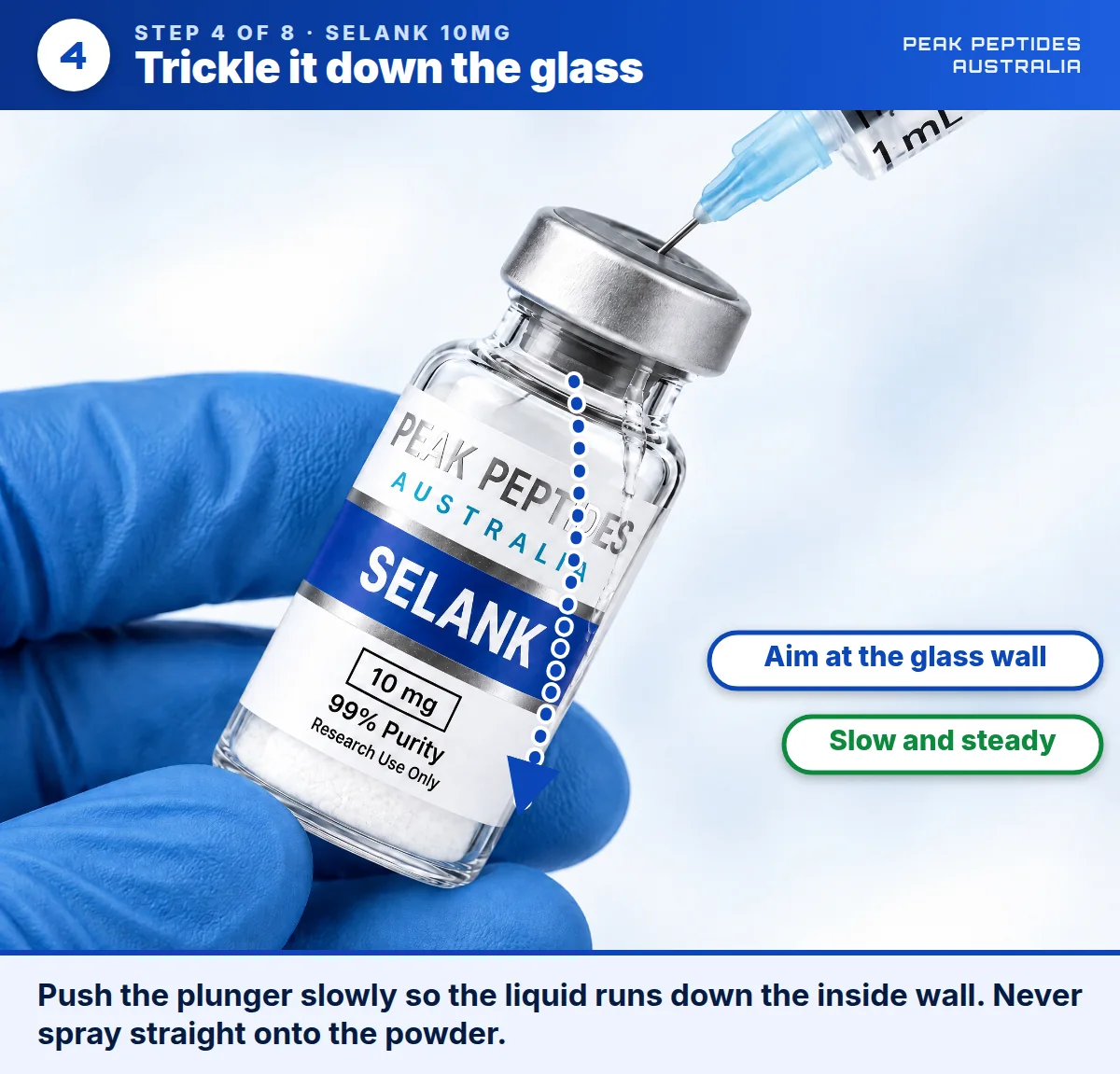
4Step 4: Trickle it down the glass
Insert the needle using clean technique and add the measured liquid slowly down the inside glass wall rather than forcefully onto the dry powder. Slow addition reduces splashing and unnecessary agitation. Keep the vial stable and record the total volume added. Aiming at the wall is a careful general handling approach, not a guarantee of compatibility for every formulation.
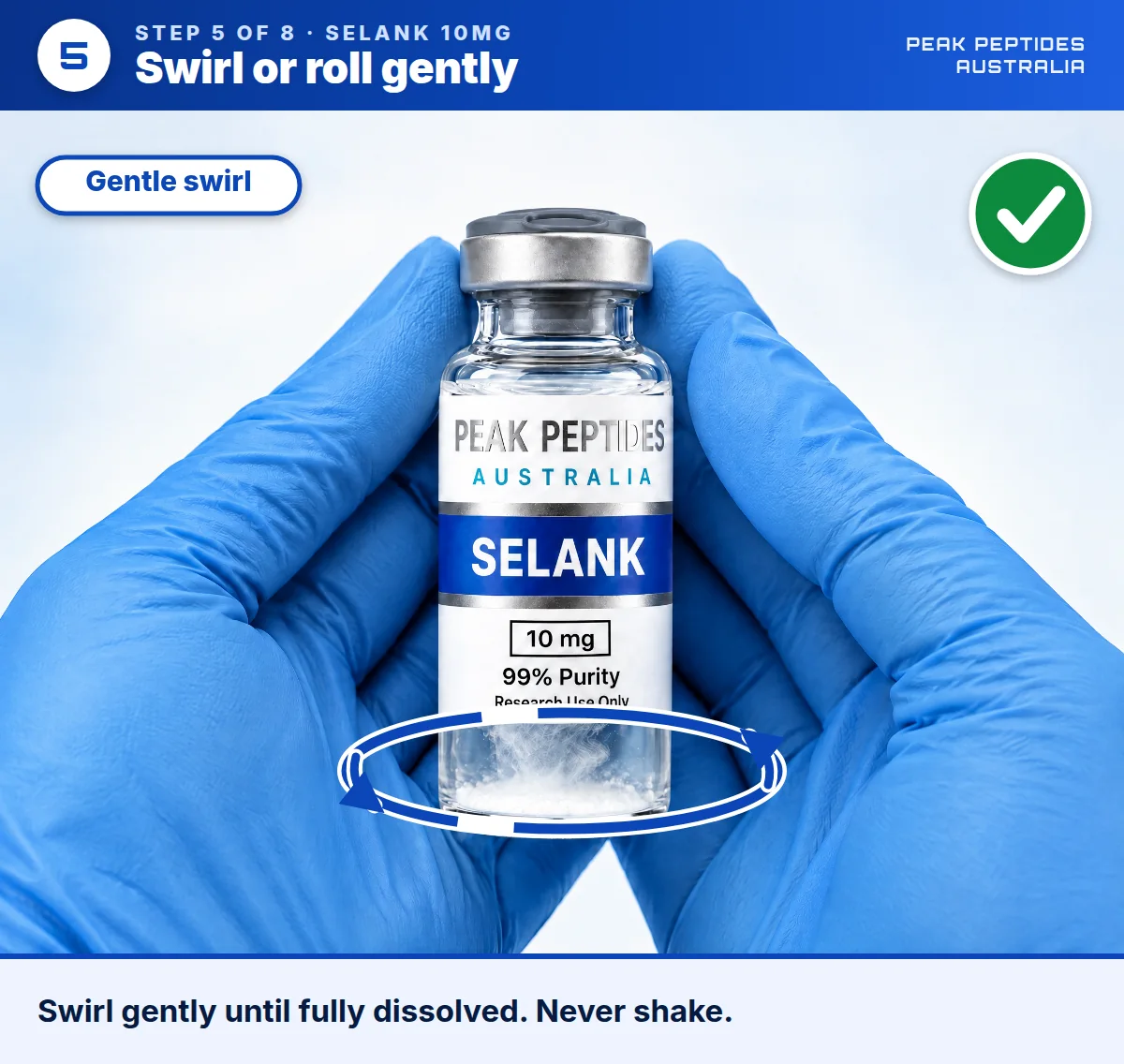
5Step 5: Swirl or roll gently
Use the permitted gentle mixing method, such as slow swirling or rolling, to bring the material into solution. Avoid vigorous agitation. The general reconstitution guidance explains that many freeze-dried peptide preparations are handled with gentle swirling or rolling because mixing stress can contribute to particle formation. Do not impose an unsupported fixed dissolution time on this product.
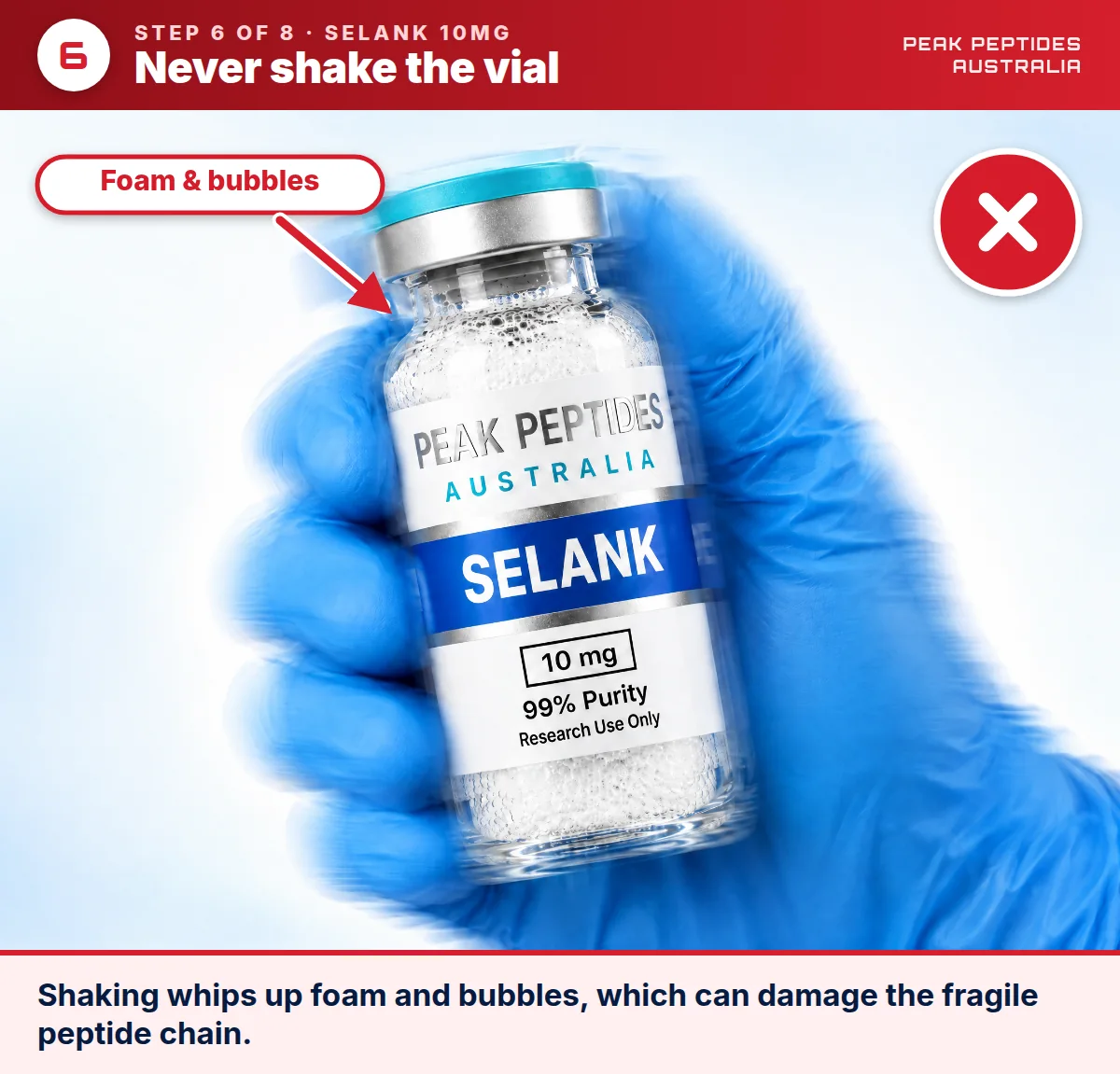
6Step 6: Never shake the vial
Do not shake the vial. Shaking can create foam, bubbles and unnecessary mechanical stress in susceptible peptide preparations. If foam or bubbles appear, stop agitation and document the observation.
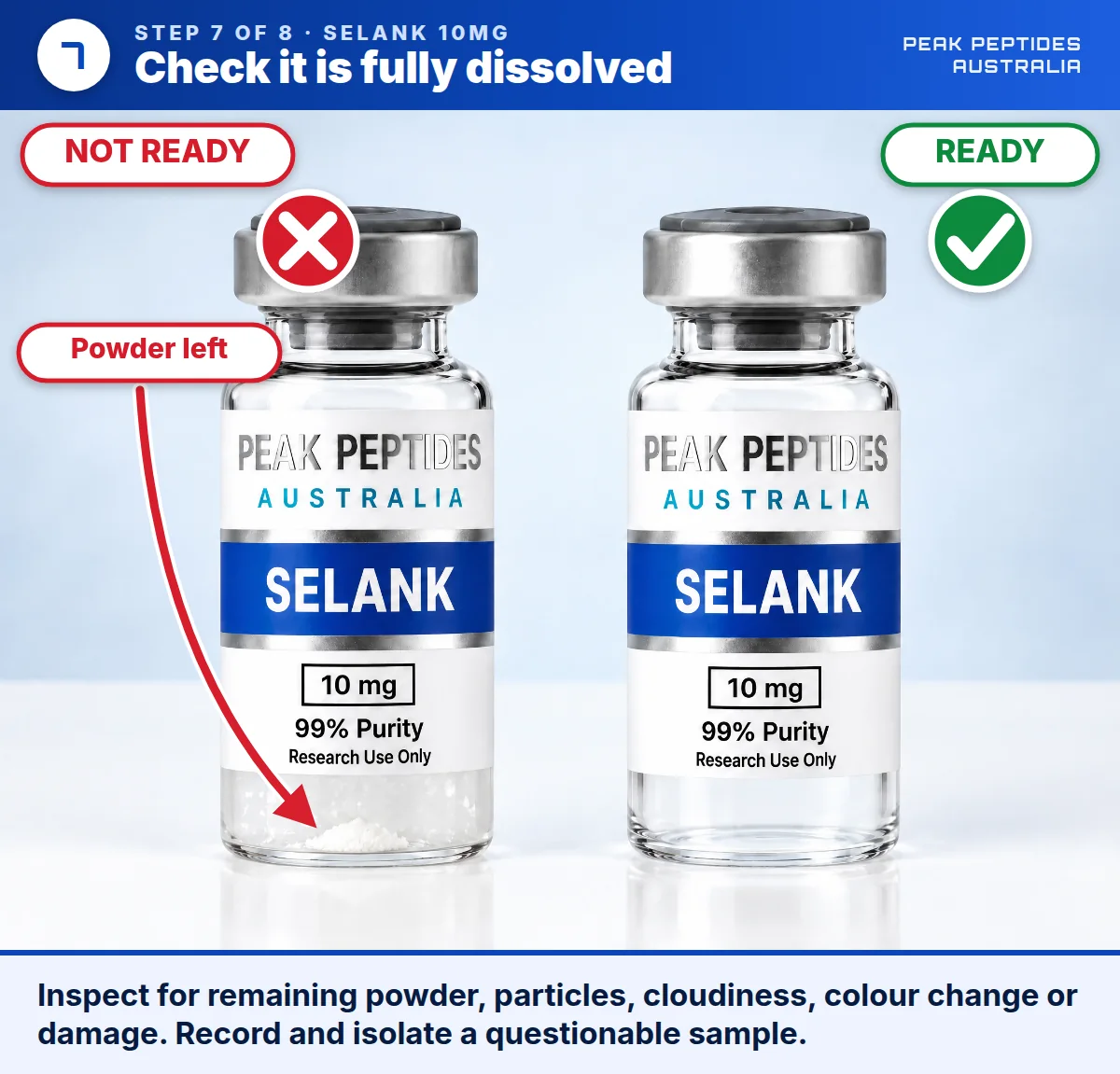
7Step 7: Check it is fully dissolved
Inspect the vial under good light. Look for remaining dry powder, flecks, unexpected cloudiness, colour change, leakage or stopper damage. The reference photograph contrasts a vial with powder left at the bottom and one that looks clear, but visual appearance alone does not verify identity, sterility or suitability. Record and isolate a questionable sample rather than improvising a salvage method.
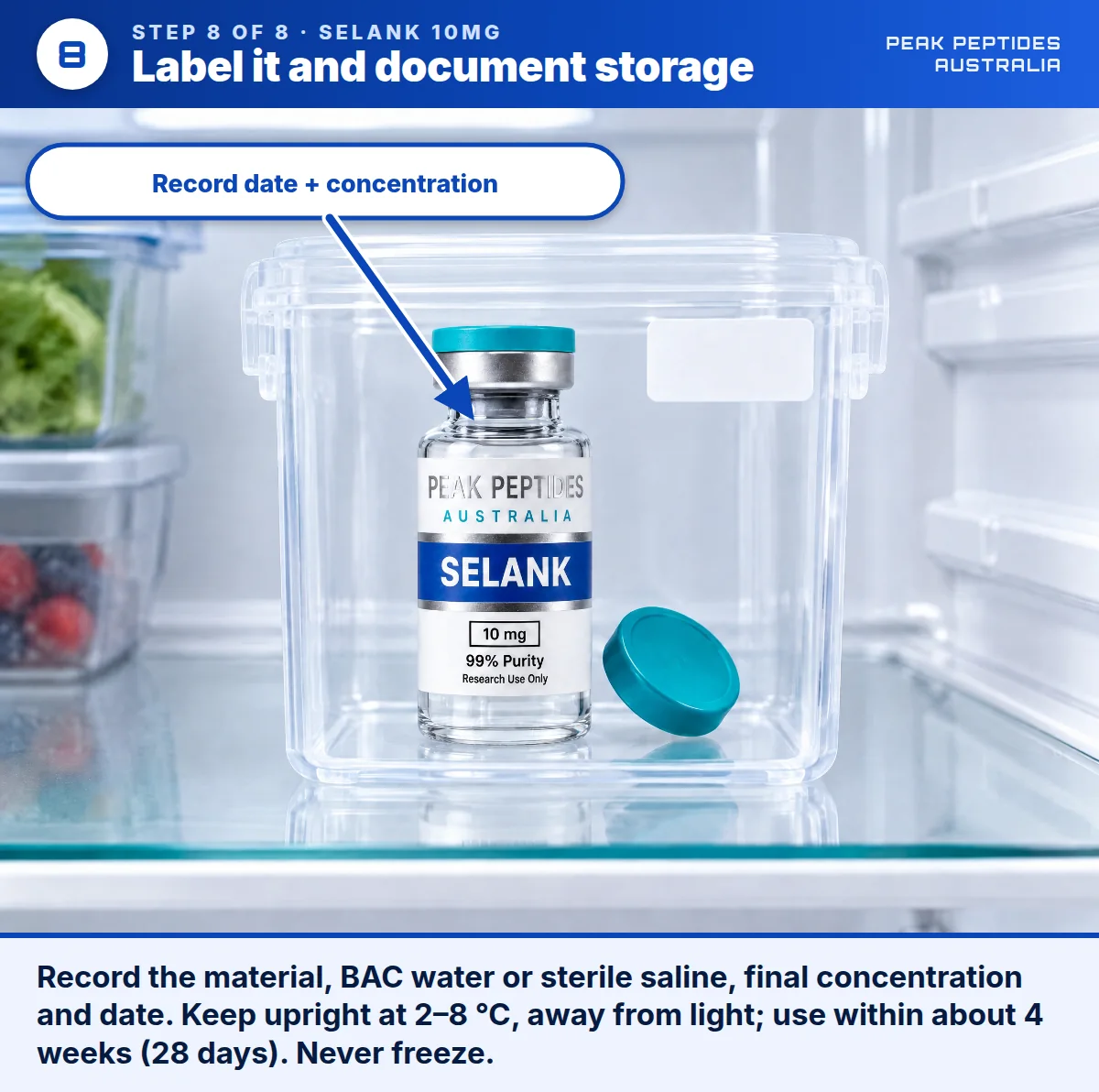
8Step 8: Label it and document storage
Record the material name, BAC water or sterile saline, final volume, calculated concentration, preparation date and storage conditions. Once mixed, keep the vial upright in the fridge at 2–8 °C, away from light, use it within about 4 weeks (28 days) and never freeze it. Write the date and strength on the vial. The storage photograph illustrates a labelled container in a refrigerator.
Selank storage and handling records
Selank 10mg storage information supported by the available documentation
Selank 10mg storage information supported by the available documentation
Material state
What to record or follow
What this page does not assign
Unopened freeze-dried vial
Keep upright in the fridge at 2–8 °C, away from light. Use within about 4 weeks (28 days). Never freeze.
Keep at 2–8 °C; use within about 4 weeks (28 days).
Prepared research solution
Record BAC water or sterile saline, final volume, concentration, preparation date and storage history; keep upright at 2–8 °C, away from light. Never freeze.
Within about 4 weeks (28 days)
Temperature excursion
Record time, temperature and sample details. Keep upright in the fridge at 2–8 °C, away from light.
No assumption that the material remains suitable
Freezing decision
Never freeze it once mixed.
No generic freeze-thaw rule
Mixed: 2–8 °C, upright, dark; use within about 4 weeks (28 days). Never freeze.
Selank is a synthetic heptapeptide, meaning a chain of seven amino acids. Its sequence is Thr-Lys-Pro-Arg-Pro-Gly-Pro, or TKPRPGP. It was designed from tuftsin, an immune-related four-amino-acid fragment, by adding Pro-Gly-Pro. Selank is studied in nervous-system, gene-expression and anxiety-related research. This listing is a nominal 10mg freeze-dried research vial.
What is Selank peptide used for in research?
Selank is studied in anxiety-related research, GABA-related neurotransmission experiments, gene-expression work and enkephalin-metabolism experiments. The research models differ. A rat frontal-cortex experiment measured gene expression, while a human-serum experiment measured enzyme inhibition.
Is Selank a tuftsin analogue?
Yes. Tuftsin is the four-amino-acid sequence Thr-Lys-Pro-Arg, often written TKPR. Selank keeps that core and adds the C-terminal sequence Pro-Gly-Pro, giving Thr-Lys-Pro-Arg-Pro-Gly-Pro. The added three residues make Selank a defined synthetic heptapeptide rather than tuftsin itself. The sequence graphic on this page shows both parts of the chain.
How does Selank work?
Selank research includes possible modulation of GABA-related signalling and inhibition of enzymes that degrade enkephalins. In a 2016 rat frontal-cortex PCR experiment, Selank exposure was followed by changes in expression of neurotransmission-related genes. The authors proposed allosteric modulation of the GABAergic system as one possible mechanism. This laboratory pathway is not a proven clinical mechanism in people.
Does Selank increase GABA?
That is not an accurate shortcut. Selank is investigated in GABA-related signalling research, including gene-expression and radioligand work, but the published work does not show that it simply raises GABA in people. A 2017 human-derived neuroblastoma-cell study found no statistically significant change in its measured genes from Selank alone, while combinations changed the response pattern.
What did Selank studies find?
A 2008 paper studied 62 people with generalised anxiety disorder or neurasthenia, comparing 30 people receiving Selank with 32 receiving medazepam; its abstract reported similar anxiolytic effects. A 2014 comparative study involved 60 people with phobic-anxiety and somatoform disorders. These are small active-medicine comparisons, so they do not supply a broad placebo-based response rate or long-term outcome.
What side effects have been reported in Selank studies?
A complete, product-specific side-effect profile for this vial is not available. FDA’s page on compounded Selank acetate identifies potential immunogenicity concerns related to peptide aggregation and impurities, and says FDA lacks important human safety information. The entry covers compounded drugs and provides no percentage risk for this laboratory product.
What is Selank’s half-life?
No single half-life figure is published for Selank. Half-life depends on the formulation, route and model studied, and Selank research mostly used nasal drops.
Is Selank the same as Semax?
No. Selank is the tuftsin analogue TKPRPGP, while Semax is the ACTH-derived heptapeptide MEHFPGP. Both have seven amino acids and appear in some of the same research conversations, but their sequences, origins and study records are different. Each has its own findings, formulations, measured amounts and product-specific analytical reports.
Selank vs Semax: which is better?
There is no direct clinical head-to-head result on this page that establishes one as better. The 2001 serum study measured a biochemical endpoint: enkephalin-degrading enzyme inhibition. It found Selank and Semax active at different reported IC50 values, but it did not test anxiety, focus, cognition or any clinical result. Compare the exact sequence and research endpoint instead of treating them as substitutes.
Is Selank approved by the TGA or FDA?
No. Selank is not an approved medicine by the TGA or FDA. The TGA explains that therapeutic peptide products must be included in the ARTG before supply as therapeutic goods, and that unapproved peptide products have not been assessed for quality, safety or effectiveness. FDA lists Selank acetate among withdrawn nominated bulk substances and identifies unresolved safety information for human administration.
Can I buy Selank 10mg online in Australia?
Selank 10mg can be ordered online from Peak Peptides Australia when it is available as research material. In-stock orders receive same-day dispatch from Victoria once payment is confirmed, sent via tracked Australia Post Express, with the tracking number emailed. It is supplied for in-vitro research only. The product is not presented as an approved therapeutic medicine.
How fast is Selank shipping in Australia?
For in-stock orders, Peak Peptides Australia uses same-day dispatch from Victoria once payment is confirmed. Orders travel with tracked Australia Post Express, and the tracking number is emailed. Dispatch timing describes the handover process; delivery timing after that depends on the Australia Post network and the destination.
How do I know Selank is real?
Look for a sample-specific independent report that links a named material to an identity method, purity method and content result. Selank 10mg has LabDoc report LD-866B. It records identity confirmed by LC-MS, 98.27% purity by HPLC and 9.16mg HPLC content for the submitted sample tested on 18 September 2026. Check the report at labdoc.org.
How is this Selank 10mg sample verified?
LabDoc report LD-866B records a Selank submitted sample tested on 18 September 2026. The report lists confirmed LC-MS identity, 98.27% HPLC purity, 9.16mg HPLC content against the nominal 10mg claim, 91.6% of label claim and 1.73% related impurities. It records an overall Pass assessment and no stated batch identifier.
Why does the LabDoc result show 9.16mg rather than 10mg?
The label’s 10mg is the manufacturer’s nominal claim. LabDoc LD-866B reports 9.16mg of HPLC content for the submitted sample, expressed as 91.6% of that claim. Content is different from purity: the report’s 98.27% HPLC purity describes the measured share attributed to the main material. LC-MS identity is a third, separate result.
How much BAC water for Selank 10mg?
The page chart shows concentration maths for 1mL, 2mL and 3mL of BAC water. With the nominal 10mg total, 1mL calculates to 10mg/mL, 2mL to 5mg/mL and 3mL to 3.33mg/mL. The chart highlights 2mL because it produces easy unit conversions. The mixing liquid is BAC water or sterile saline; record the final volume.
How many units is 1mg of Selank?
It depends on the final volume. In the page’s 2mL calculation, the concentration is 5mg/mL, so 1mg equals 20 units on a U-100 syringe and 0.2mL. In the 1mL calculation, 1mg equals 10 units. In the 3mL calculation, 1mg equals 30 units.
How many mg are in 10 units of Selank?
With the 2mL chart calculation, 10 U-100 units equals 0.1mL and holds 0.5mg of nominal Selank. With the 1mL calculation, 10 units holds 1mg. With the 3mL calculation, 10 units holds about 0.33mg. The amount in each unit changes only because the same nominal 10mg total is distributed through different volumes.
How do I reconstitute Selank 10mg?
The photo guide shows the general handling sequence: prepare a clean work area, disinfect the stoppers, measure the selected volume, add BAC water or sterile saline slowly, use gentle swirling instead of shaking, inspect for particles or cloudiness, then record the material, liquid, final concentration and date. Once mixed, keep the vial upright in the fridge at 2–8 °C, away from light, use it within about 4 weeks (28 days) and never freeze it.
Can I use sterile water or tap water instead of BAC water?
Do not use tap water. It is not a sterile laboratory diluent. Plain sterile water, BAC water, saline and a specialised vehicle are different formulations. Use BAC water or sterile saline for mixing. The concentration chart uses BAC water to show arithmetic.
What if Selank powder will not dissolve?
Check the BAC water or sterile saline, measured volume and temperature. Mix gently; do not add extra liquid to force dissolution because that changes the concentration. Record persistent undissolved material, particles or unexpected cloudiness as a quality issue.
Should reconstituted Selank be cloudy?
Unexpected cloudiness, visible particles, colour change, leakage or stopper damage should be treated as an inspection issue. The general reconstitution guidance says to inspect the solution in good light against the product description and not to assume a solution is acceptable solely because it is clear. A clear appearance also does not identify the substance or establish sterility.
How long does mixed Selank last?
Once mixed with BAC water or sterile saline, keep it upright in the fridge at 2–8 °C, away from light. Use it within about 4 weeks (28 days) and never freeze it. Write the date and strength on the vial. Record the mixing liquid, final volume, concentration, date and storage history.
How should Selank powder be stored before mixing?
Store unopened powder in the fridge at 2–8 °C in the dark, or in the freezer at −20 °C for long-term storage. Protect it from heat and moisture.
Can mixed Selank be frozen?
Once mixed with BAC water or sterile saline, keep Selank upright in the fridge at 2–8 °C, away from light, and use it within about 4 weeks (28 days). Never freeze it: freeze-thaw stress can destabilise peptide formulations. Write the date and strength on the vial.
What does a Selank COA show?
A certificate of analysis records what a laboratory measured for a submitted sample. LabDoc LD-866B records LC-MS identity confirmed, 98.27% HPLC purity and 9.16mg HPLC content for its Selank sample. Those results do not themselves establish sterility, endotoxin status, stability, safety, legal status or the characteristics of every current or future vial.