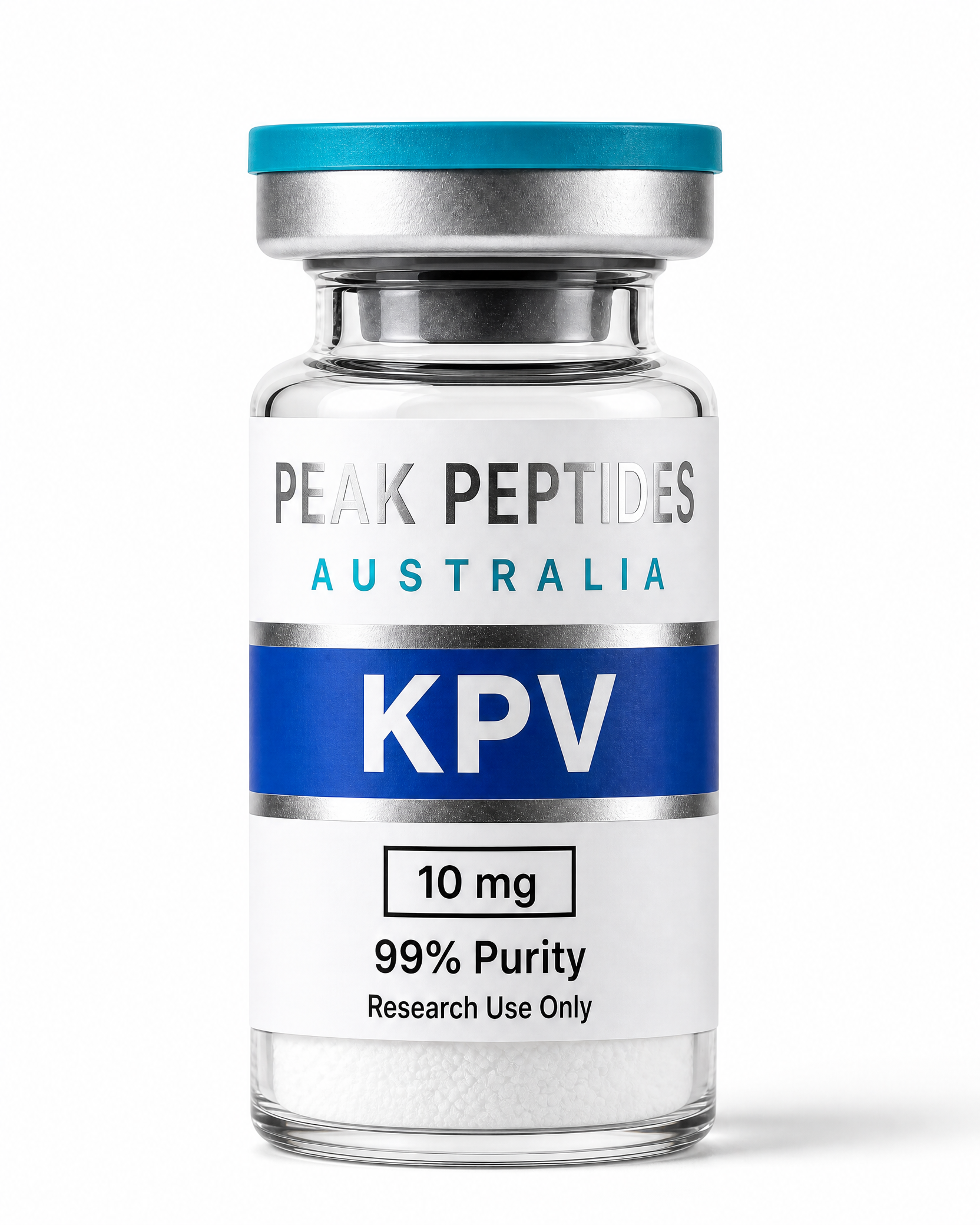
KPV 10mg is a freeze-dried Lys–Pro–Val tripeptide: the three-amino-acid C-terminal sequence of alpha-MSH. The supplied nominal 10 mg vial is independently documented by LabDoc for identity, purity and content. In-stock orders receive same-day dispatch from Victoria after payment confirmation, with tracked Australia Post Express shipping Australia-wide.
Product Specifications
Full NameKPV (Alpha-MSH C-Terminal Tripeptide)
Vial Size10mg
Purity99.24% HPLC (LD-B98X, 9.04mg sample)
Legal Disclaimer
This product is sold strictly for in-vitro laboratory research purposes only. It is not intended for human or animal consumption, injection, or any diagnostic or therapeutic use.
α-MSH C-terminal tripeptide · PepT1 and inflammatory-signalling research
KPV 10mg — What It Is, Research Findings & How to Reconstitute It
KPV is the short name for Lys–Pro–Val, a three-amino-acid tripeptide found at the C-terminal end of alpha-melanocyte-stimulating hormone (α-MSH). It is also called α-MSH(11–13) or MSH 11–13. Published research has examined how KPV enters selected intestinal and immune-cell models through the PepT1 peptide transporter, and how it affected inflammatory signalling under defined laboratory conditions. Each KPV 10mg vial contains freeze-dried powder with a nominal 10 mg label claim and is documented by LabDoc report LD-B98X. This guide explains the molecule, the experiments, how KPV differs from BPC-157 and the KLOW blend, the tested-sample report, and concentration maths for preparing a laboratory solution. Peak Peptides Australia supplies KPV for in-vitro research only, not for personal, diagnostic or therapeutic use.
Also referred to in research or catalogue references as KPV, KPV peptide, KPV 10mg, KPV 10 mg, Lys-Pro-Val, Lys Pro Val, L-lysyl-L-prolyl-L-valine, α-MSH(11–13), alpha-MSH(11-13), MSH 11–13, MSH 11-13, H-Lys-Pro-Val-OH, CAS 67727-97-3.
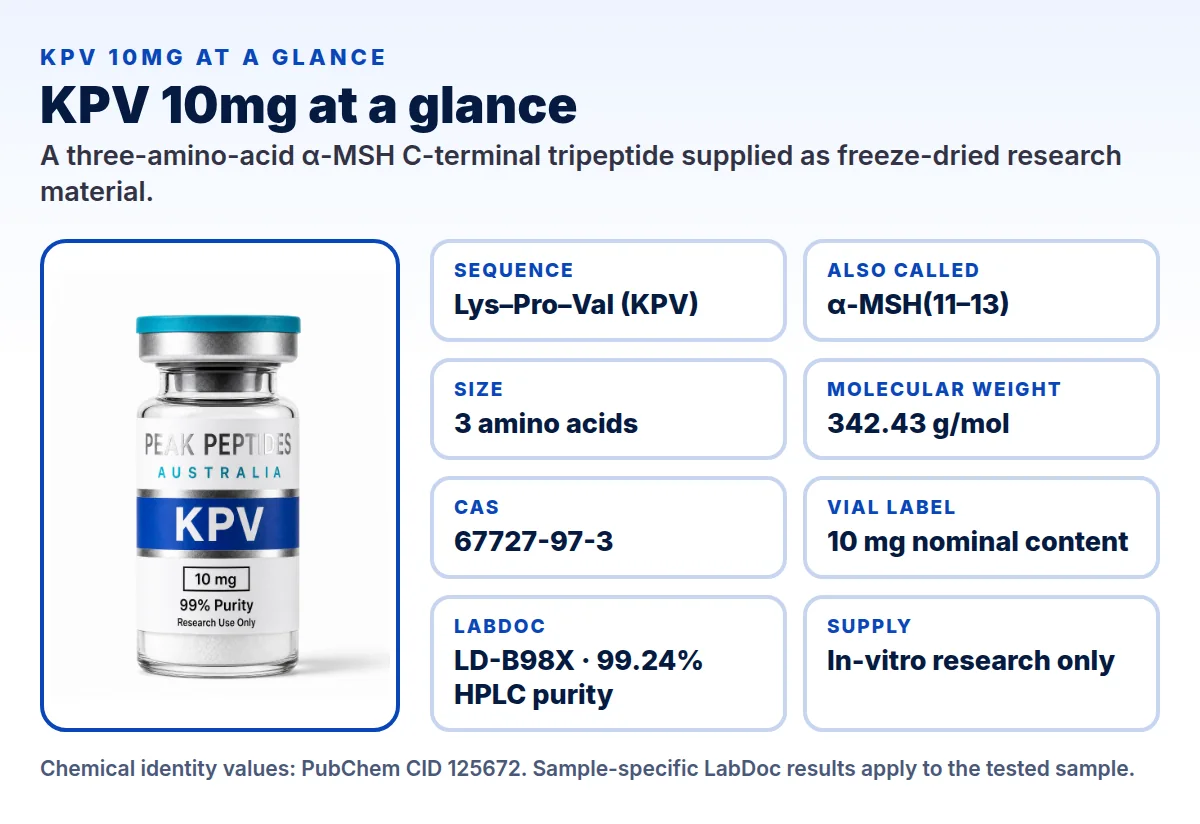
KPV 10mg at a glance
Name
KPV — Lys–Pro–Val
Also called
α-MSH(11–13), MSH 11–13, H-Lys-Pro-Val-OH
What it is
A three-amino-acid tripeptide from the C-terminal end of α-MSH
Sequence
K–P–V: lysine, proline, valine
Formula
C16H30N4O4
Molecular weight
342.43 g/mol
CAS number
67727-97-3
Research focus
PepT1 transport and inflammatory-signalling models
Refrigerate at 2–8 °C, protect from light and avoid freeze–thaw cycles
Dispatch
Same-day from Victoria for in-stock orders after payment confirmation, tracked Australia Post Express
KPV means Lys–Pro–Val
KPV is one tripeptide: lysine, proline and valine joined in that order. It is not three separate amino-acid supplements. PubChem records the sequence as KPV, formula C16H30N4O4, molecular weight 342.43 g/mol and CAS number 67727-97-3. The aliases α-MSH(11–13) and MSH 11–13 describe its position at the end of the longer α-MSH peptide.
PepT1 was the transport finding
A 2008 Gastroenterology study examined KPV in cultured intestinal epithelial lines and a T-cell line. The researchers reported PepT1-mediated uptake of KPV in those systems. PepT1 is a transporter that moves small dipeptides and tripeptides into cells.
NF-κB and MAPK were laboratory readouts
In the same 2008 experiments, nanomolar KPV was associated with lower activation of NF-κB and MAP kinase pathways and lower secretion of pro-inflammatory cytokines after experimental stimulation. NF-κB and MAPK are signalling systems cells use to respond to stress and inflammatory cues. These are laboratory measurements, not a diagnosis, medicine claim or proven patient outcome.
Delivery system changes the experiment
A 2017 KPV study used hyaluronic-acid-functionalised nanoparticles embedded in a chitosan/alginate hydrogel for targeted gut-delivery experiments. A separate 2017 prepared-human-skin experiment compared passive movement with microneedles and iontophoresis. The carrier, barrier and delivery method were part of each study, so those findings cannot be assigned to an ordinary KPV solution.
KPV is not confirmed to copy every α-MSH action
KPV comes from α-MSH, but it is only the final three residues. In a 2003 model study, researchers concluded KPV was unlikely to act through melanocortin receptors in that setting and observed a pattern distinct from core melanocortin peptides. This page therefore describes KPV’s sequence relationship and the experiments that were actually done, rather than claiming a confirmed receptor profile.
What the 10 mg label means
10 mg is the nominal total quantity named on this lyophilised research vial. A laboratory concentration depends on both the material quantity and the final measured liquid volume. With the 3 mL BAC-water reference mix shown below, the arithmetic concentration is 3.33 mg/mL.
Independent KPV sample documentation
LabDoc report LD-B98X records the tested KPV sample as identity Confirmed by LC-MS, 99.24% purity by HPLC and 9.04 mg content against the 10 mg claim, equal to 90.4% of that claim. The report date is 22 September 2026. Identity, purity and content are separate results; the report does not provide a sterility, stability or clinical-safety result.
Australian supply and dispatch
KPV 10mg is supplied for in-vitro research only. In-stock orders receive same-day dispatch from Victoria once payment is confirmed, sent with tracked Australia Post Express, and the tracking number is emailed. The vial label and LabDoc report should be considered together: the label identifies the supplied material, while LD-B98X documents one tested sample rather than every later vial.
KPV is a tripeptide, meaning it is a chain of three amino acids. Its sequence is lysine–proline–valine, usually written Lys–Pro–Val or K–P–V. PubChem identifies this same molecule as Msh (11–13), with molecular formula C16H30N4O4, molecular weight 342.43 g/mol and CAS number 67727-97-3.
The name α-MSH(11–13) explains where KPV sits in a longer natural peptide: it is the final three residues of alpha-melanocyte-stimulating hormone, or α-MSH. KPV and full-length α-MSH are different peptides.
This product is a nominal 10 mg vial of freeze-dried KPV powder. The number on the label states a supplied quantity, not a concentration or a statement about biological activity. A useful laboratory concentration only exists after a final volume has been measured and recorded. Peak Peptides Australia supplies this material for in-vitro research only.
KPV is the three-residue Lys–Pro–Val sequence at the C-terminal end of α-MSH.
How did KPV work in research models?
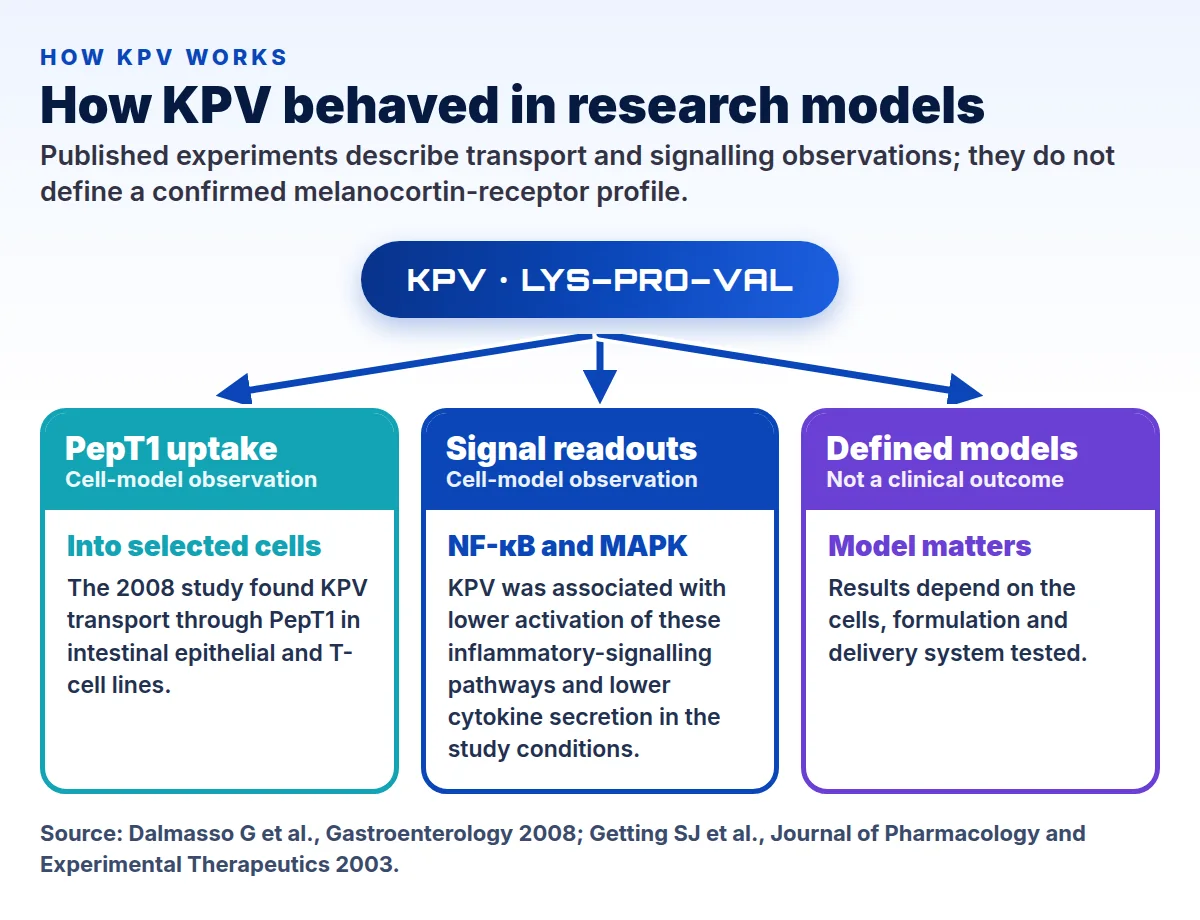
KPV was studied as a small peptide that certain cells can transport. In the 2008 Gastroenterology paper, the researchers worked with cultured human intestinal epithelial cells and a T-cell line. They found that KPV entered those systems through PepT1, a transporter for dipeptides and tripeptides. PepT1 is the important transport observation, not a blanket claim about every tissue or formulation.
The same paper measured NF-κB and MAP kinase signalling after experimental inflammatory stimulation. NF-κB and MAPK are cell-signalling systems that control many response genes. Under the study conditions, KPV was associated with lower activity in both pathways and lower secretion of several pro-inflammatory cytokines. These were laboratory readouts from defined cells and conditions.
KPV’s α-MSH origin does not settle its receptor pathway. A 2003 comparison study of α-MSH-related peptides found KPV behaved differently from core melanocortin peptides and was unlikely to act through melanocortin receptors in that experiment. The direct wording here matters: the published evidence supports a transport and signalling research story, not a confirmed universal receptor label.
The KPV research mechanism shown here is model-specific: PepT1 uptake and signalling readouts in selected cell systems.
What did published KPV research find?
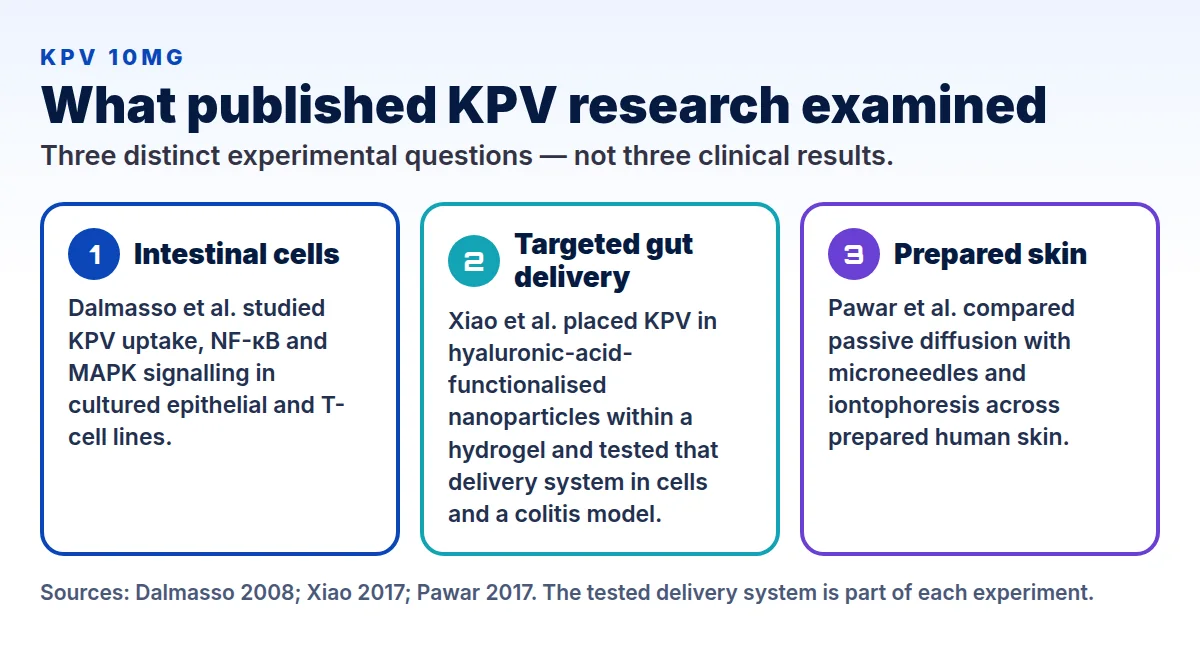
The most cited KPV work is Dalmasso and colleagues’ 2008 study. It tested KPV in cultured intestinal epithelial and immune-cell models, then in two chemically induced colitis models. The authors reported PepT1-mediated uptake, lower NF-κB and MAP kinase activation, and lower pro-inflammatory cytokine secretion under their experimental conditions. The preclinical arm reported lower disease measures in the models used.
A later 2017 Molecular Therapy paper tested a different question: how to deliver KPV to particular gut tissues and cells. KPV was loaded into hyaluronic-acid-functionalised polymeric nanoparticles and placed in a chitosan/alginate hydrogel. The authors reported delivery and inflammation-related measurements in cells and a chemically induced colitis model. The engineered nanoparticles and hydrogel are inseparable from that result.
A separate 2017 Journal of Pharmaceutical Sciences paper tested transport across prepared human skin. Passive diffusion of KPV was below the paper’s detection limit. Microneedles, iontophoresis and their combination increased transport under the stated experimental parameters. This was a skin-barrier and delivery experiment, not a patient treatment study. The table below keeps the research questions separate rather than turning different models into one claim.
KPV research has examined distinct questions in cells, specialised delivery systems and prepared skin — the model and carrier matter.
Published KPV research examples and what each experiment actually tested
Published KPV research examples and what each experiment actually tested
Source
Research setup
Reported observation
Limits
Dalmasso et al., 2008
Cultured intestinal epithelial and T-cell lines; chemically induced colitis models
PepT1 uptake; lower NF-κB/MAPK activation and cytokine secretion under study conditions
A clinical benefit or a result from a different KPV formulation
Xiao et al., 2017
KPV in hyaluronic-acid-functionalised nanoparticles inside hydrogel; cells and a colitis model
Targeted-delivery and inflammation-related measures for the engineered system
That ordinary KPV without the carrier behaves the same way
Pawar et al., 2017
Prepared human skin with passive diffusion, microneedles and iontophoresis
Passive movement below detection; enhanced transport with delivery technologies
A KPV topical treatment outcome in people
The studies answer different questions and use different models, formulations, carriers and endpoints.
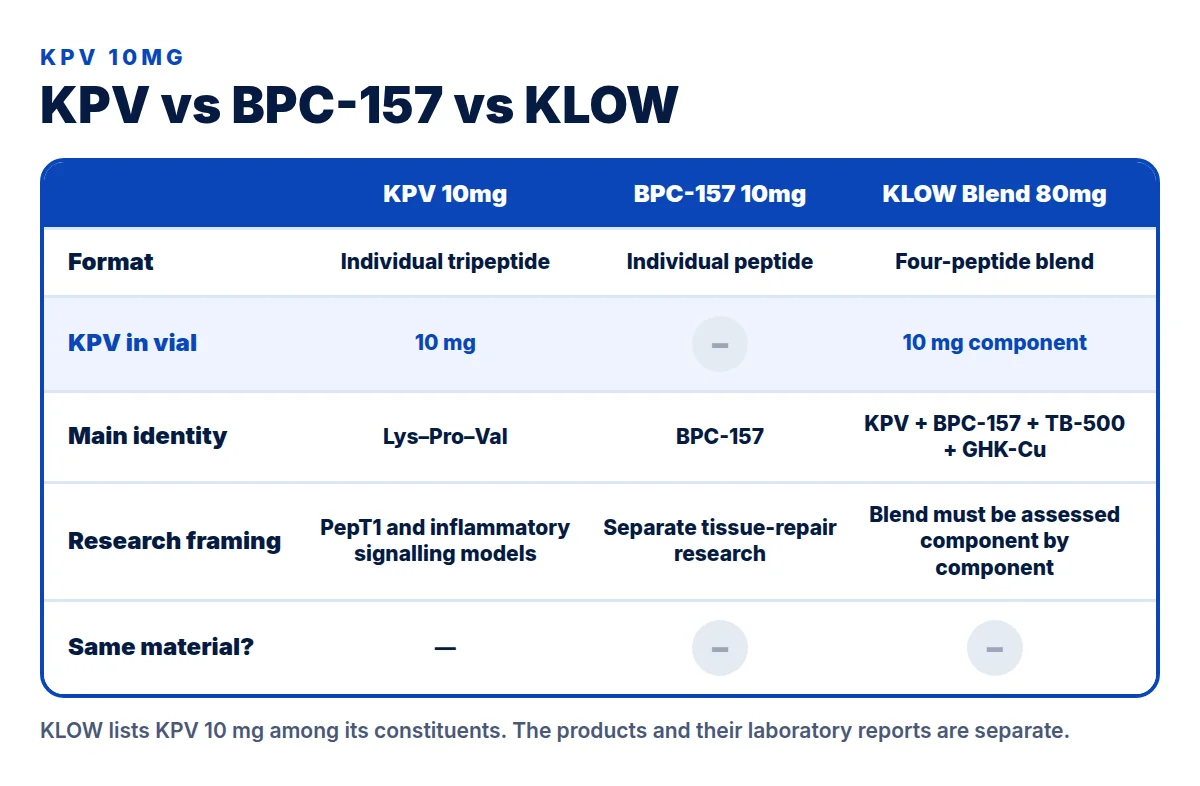
KPV vs BPC-157 vs KLOW
KPV, BPC-157 and KLOW are often grouped in online searches, but they are different products. KPV is a single three-amino-acid tripeptide with the sequence Lys–Pro–Val. BPC-157 is a separately listed individual 15-amino-acid peptide with a different name, sequence, evidence base and LabDoc record.
KLOW is different again: it is a fixed-ratio blend rather than one molecule. The supplied KLOW facts list 50 mg GHK-Cu, 10 mg BPC-157, 10 mg TB-500 and 10 mg KPV. KPV is therefore one stated component of KLOW, while this listing is an individual KPV 10 mg vial. A change to a blend amount changes every listed component at once; it does not isolate KPV.
The practical comparison is format and traceability. Individual KPV research focuses on the KPV molecule and the particular models above. KLOW has its own blend-level label and LabDoc report, while BPC-157 has its own sample report. Comparing products is useful for identification; it is not evidence of shared effects, compatibility or a combined research result.
KPV is an individual tripeptide. BPC-157 is a different individual peptide, while KLOW is a fixed four-component blend.
KPV compared with BPC-157 and KLOW by identity and product format
KPV compared with BPC-157 and KLOW by identity and product format
KPV 10mg
BPC-157 10mg
KLOW Blend 80mg
Product format
Individual tripeptide
Individual peptide
Fixed four-peptide blend
KPV present
10 mg nominal vial
No
10 mg nominal component
Named identity
Lys–Pro–Val
BPC-157
GHK-Cu + BPC-157 + TB-500 + KPV
Analytical record
LabDoc LD-B98X
Separate LabDoc LD-VN45
Separate blend LabDoc LD-E6HW
Interchangeable?
No
No
No
The entries identify supplied products. They do not make a combined-use, compatibility or therapeutic claim.
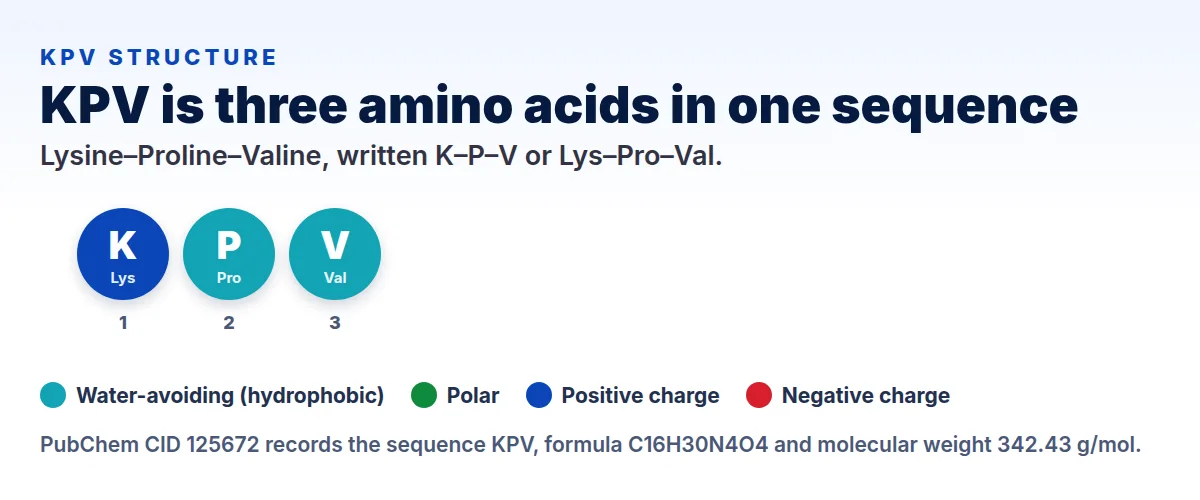
KPV structure: three amino acids, one tripeptide
KPV is unusually short for a research peptide: it contains only lysine (K), proline (P) and valine (V). Reading a sequence from left to right gives the order of amino-acid residues joined by peptide bonds. In this case, KPV and Lys–Pro–Val are two ways of writing the same three-residue sequence.
PubChem lists KPV as H-Lys-Pro-Val-OH and identifies its all-L form as L-lysyl-L-prolyl-L-valine. It records the molecular formula C16H30N4O4 and molecular weight 342.43 g/mol. Formula, molecular weight and CAS number are chemical identity values; they do not confirm the identity or quantity of a particular commercial vial by themselves.
For this vial, the separate analytical evidence is LabDoc LD-B98X. The report’s LC-MS result is the product-specific identity measurement, while HPLC reports purity and the content result records the quantity measured in the submitted sample.
KPV is the three-amino-acid sequence Lys–Pro–Val, also written K–P–V.
Independent lab test for this KPV 10mg vial
KPV 10mg is backed by LabDoc report LD-B98X. The submitted sample was recorded as KPV lyophilised powder in a vial and tested on 22 September 2026. The report records identity as Confirmed by LC-MS, 99.24% purity by HPLC, related impurities of 0.76%, 9.04 mg content against the nominal 10 mg claim, and an overall Pass assessment.
Each result answers a different question. LC-MS identity compares the measured mass signal with the expected molecular identity. HPLC purity reports the proportion assigned to the main tested material in the analytical run. Content reports the quantity measured against the label claim. A strong purity result is not a substitute for content, and a content result is not a sterility or stability test.
The scope is equally important. LD-B98X covers the tested sample, not every vial in a future shipment. The supplied record says the batch was not stated. It is therefore accurate to quote the report’s tested-sample findings exactly, then avoid applying them automatically to untested material. Open the public LabDoc record to verify its report ID and details.
Identity: Confirmed by LC-MS for the submitted KPV sample.
Purity: 99.24% by HPLC; related impurities recorded as 0.76%.
Content: 9.04 mg against a nominal 10 mg claim, reported as 90.4% of claim.
Date tested: 22 September 2026.
Scope: tested sample only; batch not stated.
Not reported: sterility, stability or clinical safety.
KPV in Australia: research material, not an approved medicine
KPV is not described on this page as a TGA-approved medicine. The TGA states that unapproved peptide products that are not included on the Australian Register of Therapeutic Goods have not been evaluated by the regulator for safety, quality or effectiveness. That is why product identity, research evidence and approved-medicine status must stay separate.
The FDA has also reviewed KPV free base and KPV acetate in the context of a bulk-drug-substance assessment. Its 2026 staff document says neither is a component of an FDA-approved drug. It further says FDA did not identify clinical studies, human pharmacokinetic or pharmacodynamic studies, or human safety and exposure data for either form. That is a direct regulatory and evidence-status statement, not a claim about KPV’s activity in laboratory models.
Peak Peptides Australia supplies KPV 10mg for in-vitro research only. For in-stock orders, dispatch is the same day from Victoria once payment is confirmed, by tracked Australia Post Express, with a tracking number emailed. This dispatch information describes fulfilment only; it does not change the research-use boundary or approval status.
Step-by-step guide · About 10 minutes
How to reconstitute KPV 10mg (step-by-step with photos)
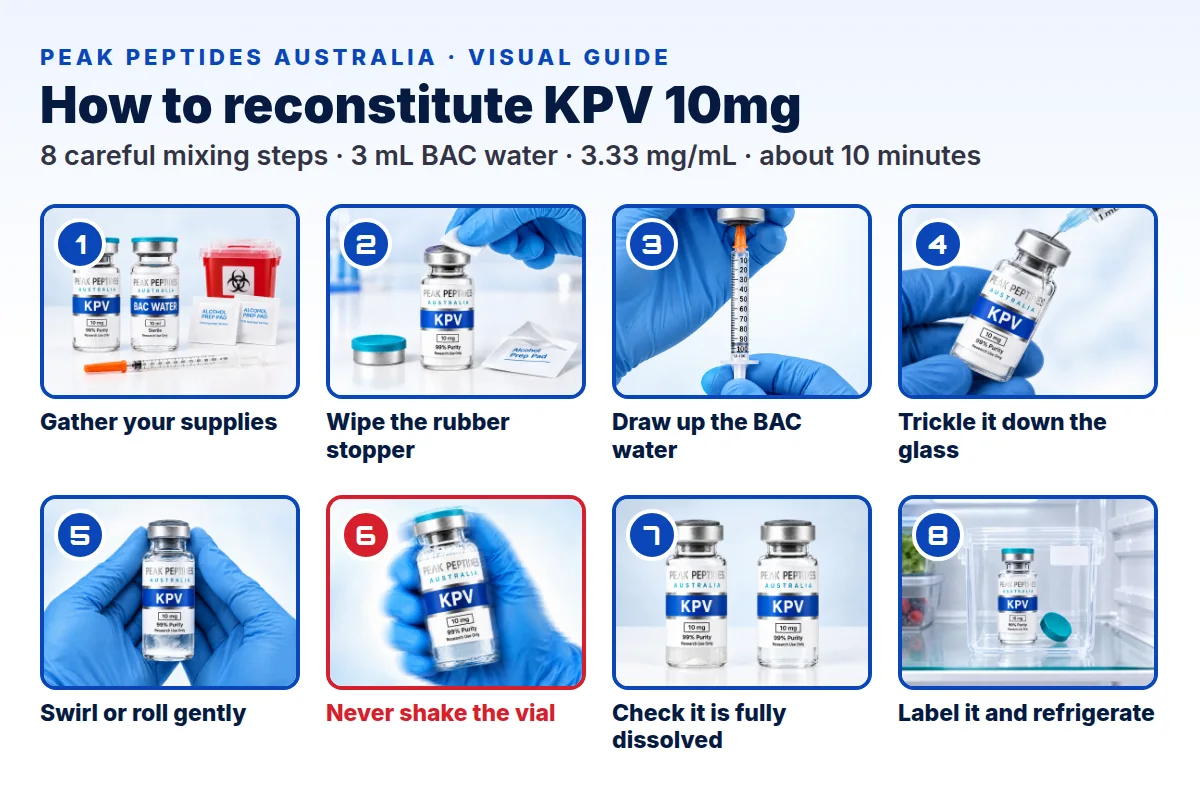
KPV 10mg arrives as freeze-dried powder. Reconstitution means adding a measured liquid so the powder forms a clear laboratory solution with a known concentration. PeptideDosages uses 3 mL bacteriostatic (BAC) water as its KPV 10 mg reference mix; the resulting arithmetic concentration is 3.33 mg/mL, so 30 U-100 syringe units correspond to 1 mg. The eight visual cards show a careful preparation workflow.
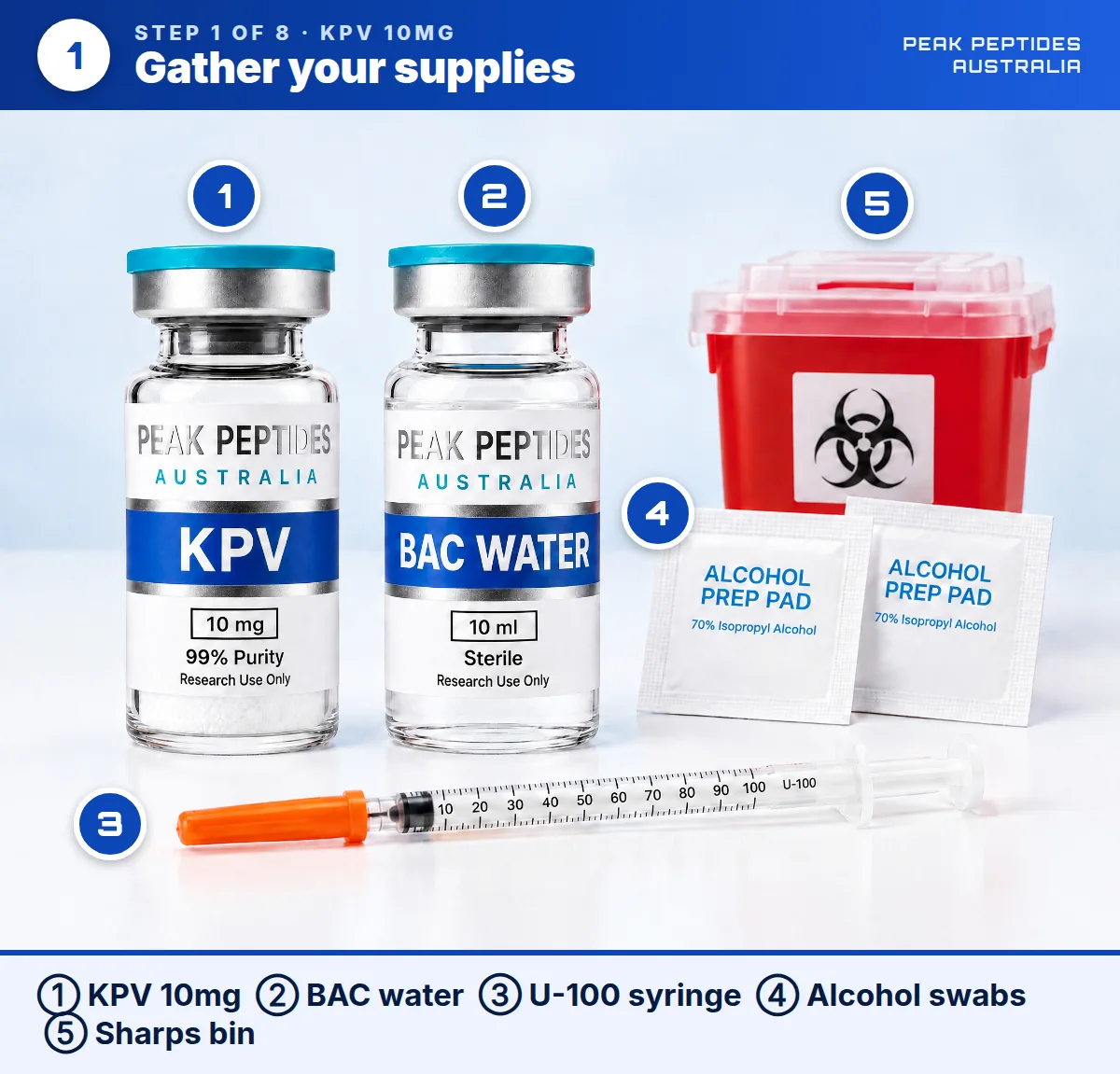
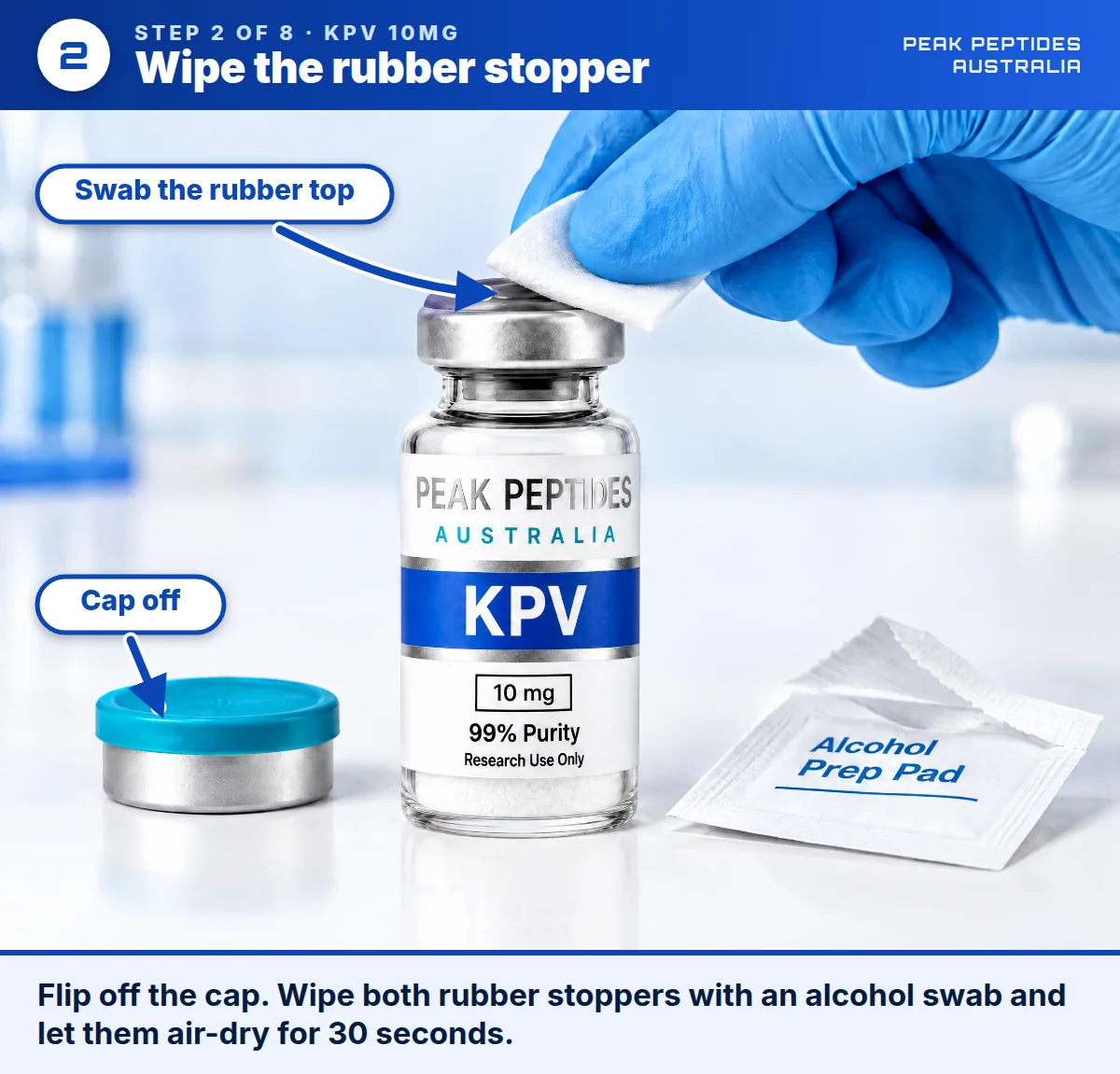
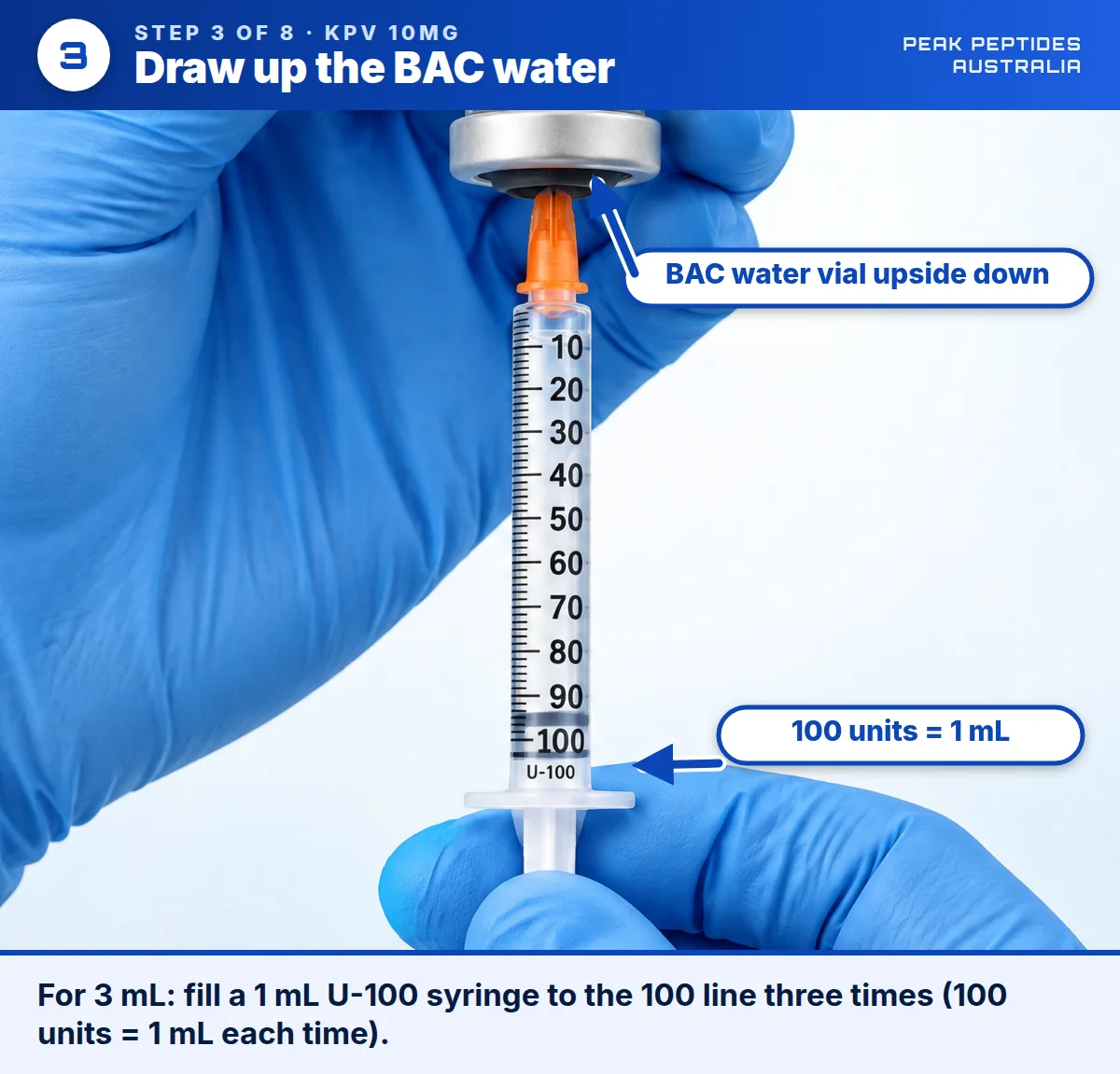
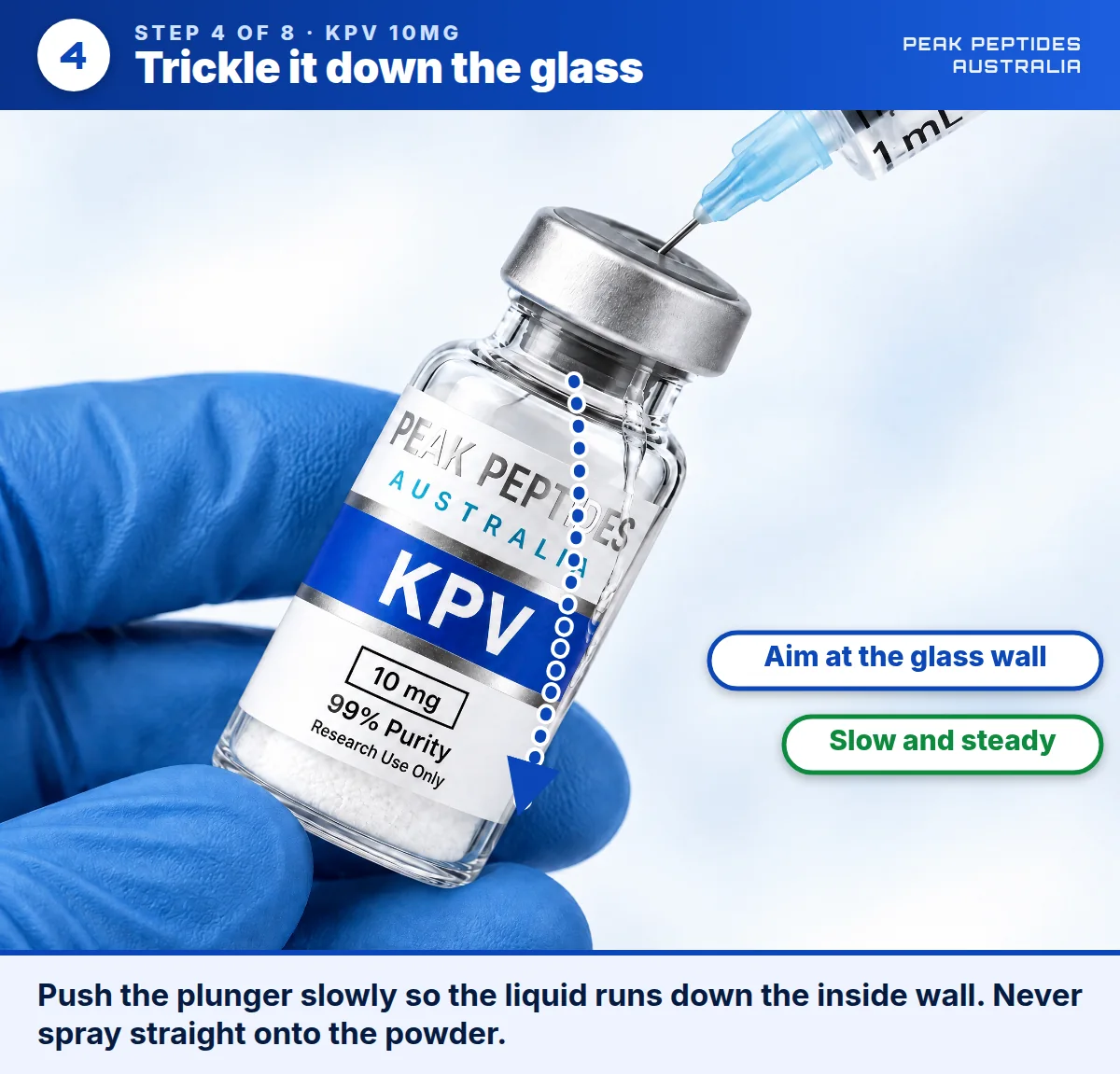
KPV 10mg preparation in eight visual steps: clean technique, gentle mixing and a clear-solution check.
What you need
KPV 10mg vialNominal 10 mg freeze-dried KPV powder in a sealed glass vial.
Bacteriostatic waterThe solvent used in the PeptideDosages KPV 10 mg reference mix.
1 mL U-100 syringeA measurement tool where 100 units equals 1 mL; use a new sterile syringe for each preparation.
Alcohol swabsFor cleaning each vial stopper before access.
Sharps containerFor disposal of used needles and syringes.
How much BAC water to add to KPV 10mg
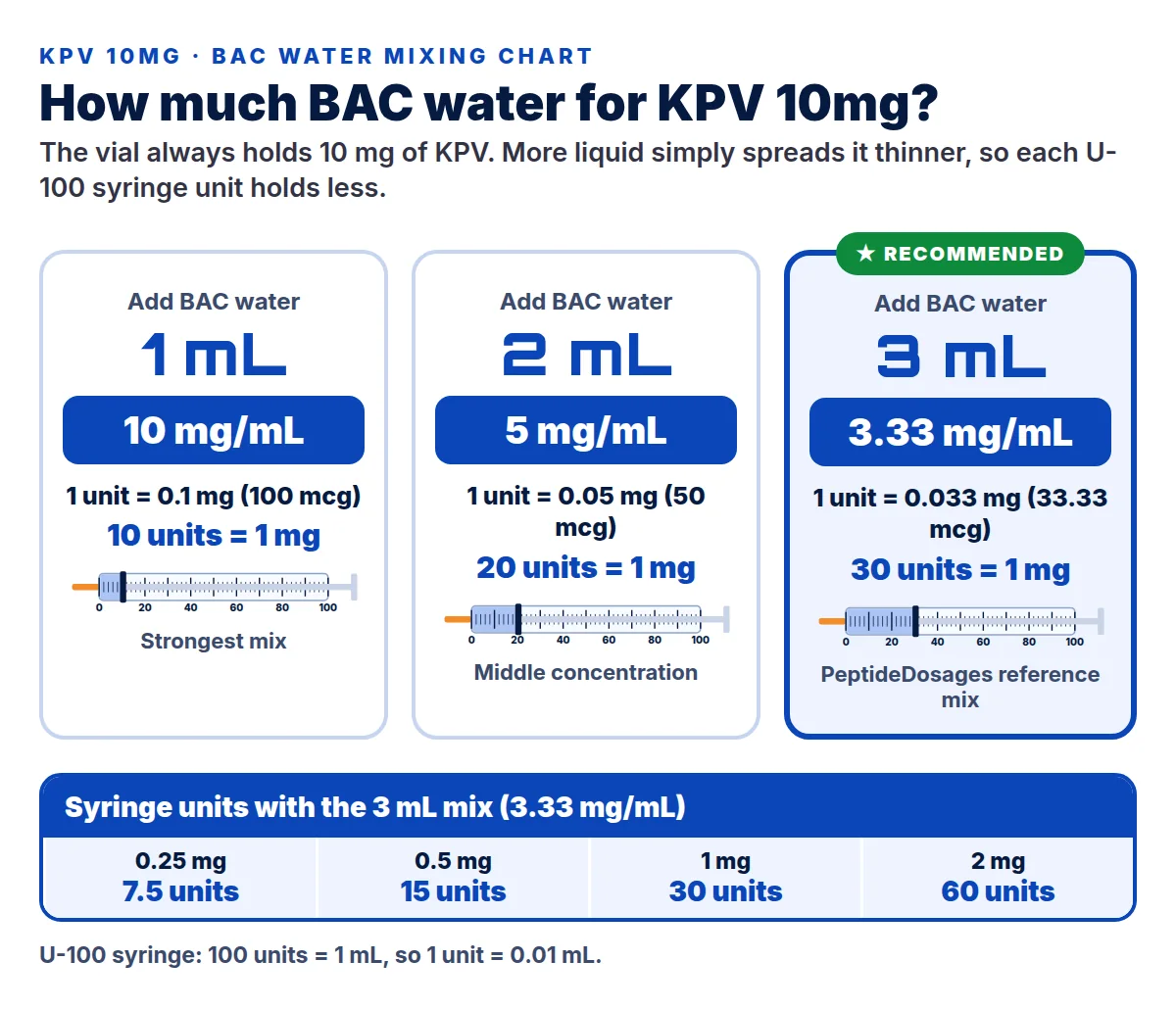
A nominal 10 mg KPV vial contains the same labelled quantity whether the final volume is 1 mL, 2 mL or 3 mL. The water changes concentration only. The chart shows 10 mg/mL at 1 mL, 5 mg/mL at 2 mL and 3.33 mg/mL at 3 mL. PeptideDosages presents 3 mL as its reference mix for KPV 10 mg.
With the 3 mL reference mix, each U-100 syringe unit equals 0.01 mL and holds about 0.033 mg, or 33 mcg. That makes 0.25 mg equal to 7.5 units, 0.5 mg equal to 15 units, 1 mg equal to 30 units and 2 mg equal to 60 units. This is preparation arithmetic for measuring a laboratory solution.
KPV 10mg concentration chart: PeptideDosages’ 3 mL reference mix gives 3.33 mg/mL and 30 units per 1 mg.
3 mL is highlighted because it gives the simplest numbers.
Syringe units with the 3 mL mix (3.33 mg/mL)
Syringe units with the 3 mL mix (3.33 mg/mL)
Amount
Units on a U-100 syringe
Volume
0.25 mg
7.5 units
0.075 mL
0.5 mg
15 units
0.15 mL
1 mg
30 units
0.3 mL
2 mg
60 units
0.6 mL
The 8 steps
1Step 1: Gather your supplies
Set out the KPV 10mg vial, bacteriostatic water, a new 1 mL U-100 syringe, alcohol swabs and a sharps container on a clean laboratory surface. Check the vial label and record the intended final volume before starting. For the reference mix, the final volume is 3 mL, so the 1 mL syringe will be filled three times.
2Step 2: Wipe the rubber stopper
Remove the flip-off caps from the KPV and BAC-water vials. Wipe each rubber stopper with a fresh alcohol swab and allow it to air-dry. Once cleaned, avoid touching either stopper. This keeps the preparation workflow orderly and reduces the chance that material is transferred from hands, caps or the work surface to the access point.
3Step 3: Draw up the BAC water
For the 3 mL reference mix, draw 1 mL of BAC water to the 100-unit mark on a U-100 syringe. A U-100 syringe holds 100 units per mL. Repeat this measured draw three times in total, keeping track of each transfer so that the recorded final volume is 3 mL. Remove obvious air bubbles before each transfer.
4Step 4: Trickle it down the glass
Place the needle through the KPV stopper at an angle so the liquid can run gently down the inside wall of the vial. Transfer the BAC water slowly rather than directing a hard stream onto the freeze-dried powder. Repeat the measured transfer until the intended 3 mL final volume has been added, recording the volume as part of the laboratory preparation notes.
5Step 5: Swirl or roll gently
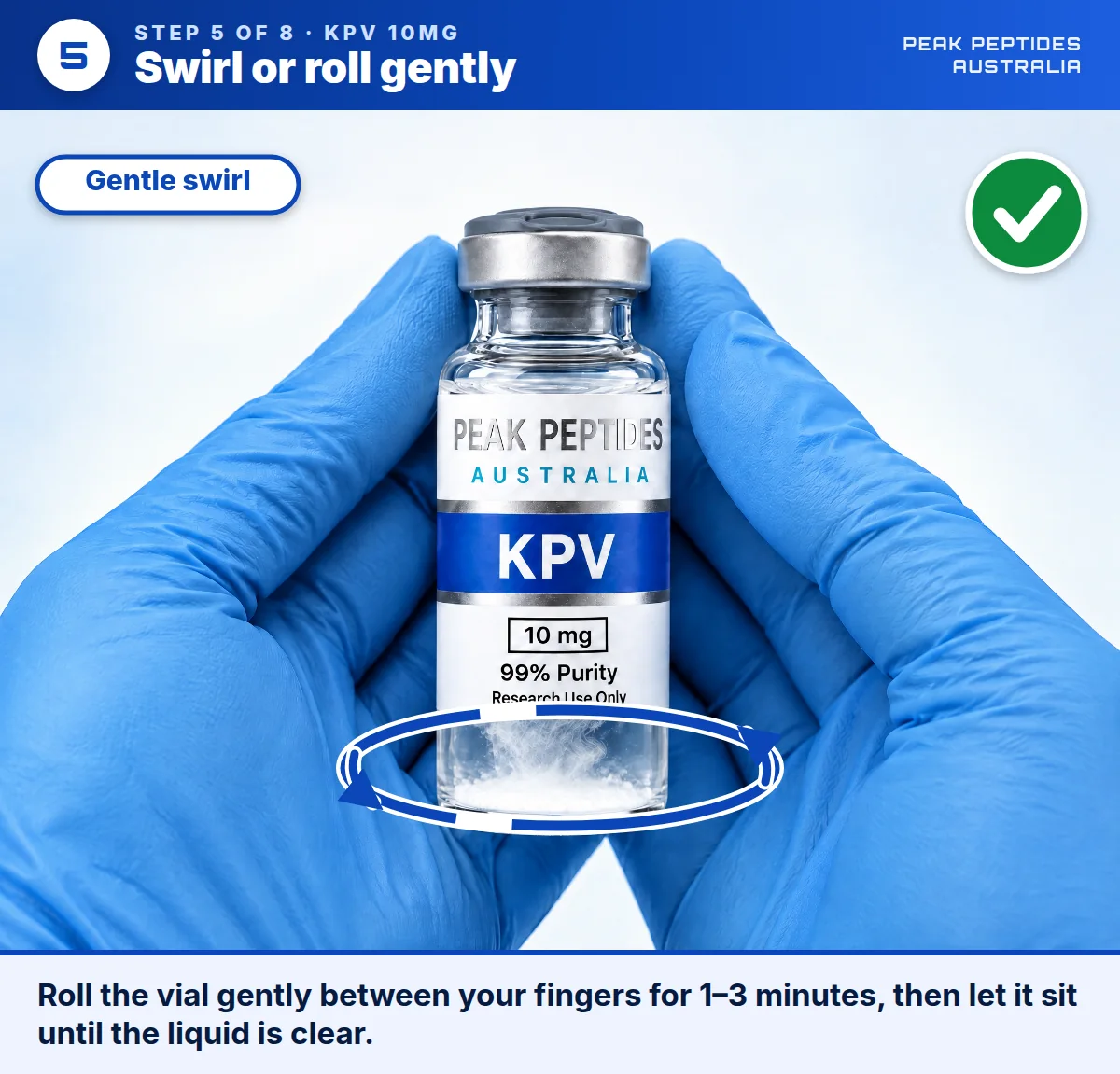
Gently roll the KPV vial between your fingers or swirl it in slow circles. The aim is to let the water contact and dissolve the powder without whipping the solution into bubbles. A little white material may remain at first. Give it time to dissolve, then use another gentle swirl rather than applying forceful agitation.
6Step 6: Never shake the vial
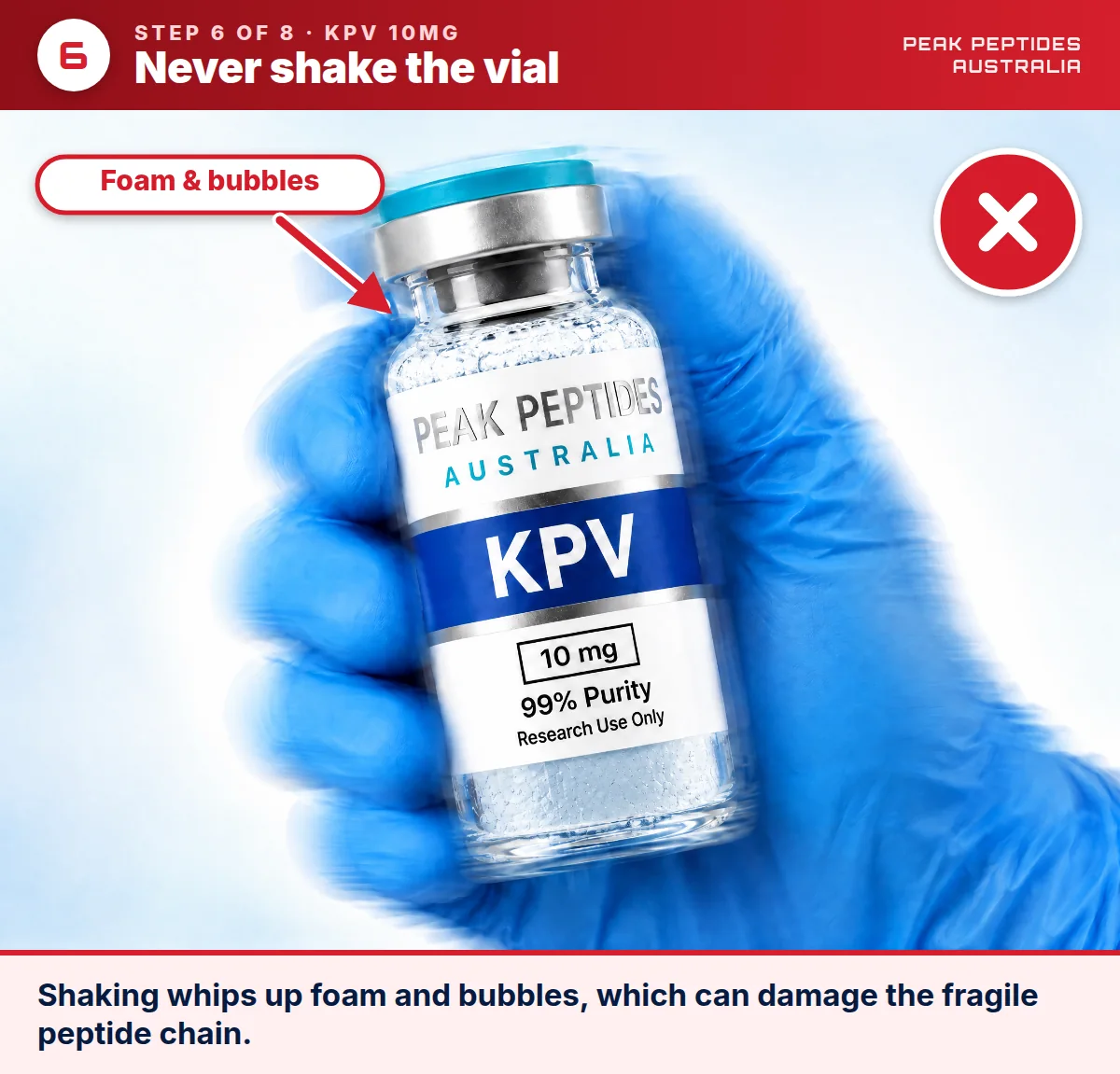
Do not shake the KPV vial. Shaking creates foam and bubbles that make a clarity check harder and can stress a peptide solution. If bubbles appear, put the vial upright and allow the liquid to settle. Gentle swirling is the controlled mixing action shown in this guide; vigorous shaking is not an alternative mixing method.
7Step 7: Check it is fully dissolved
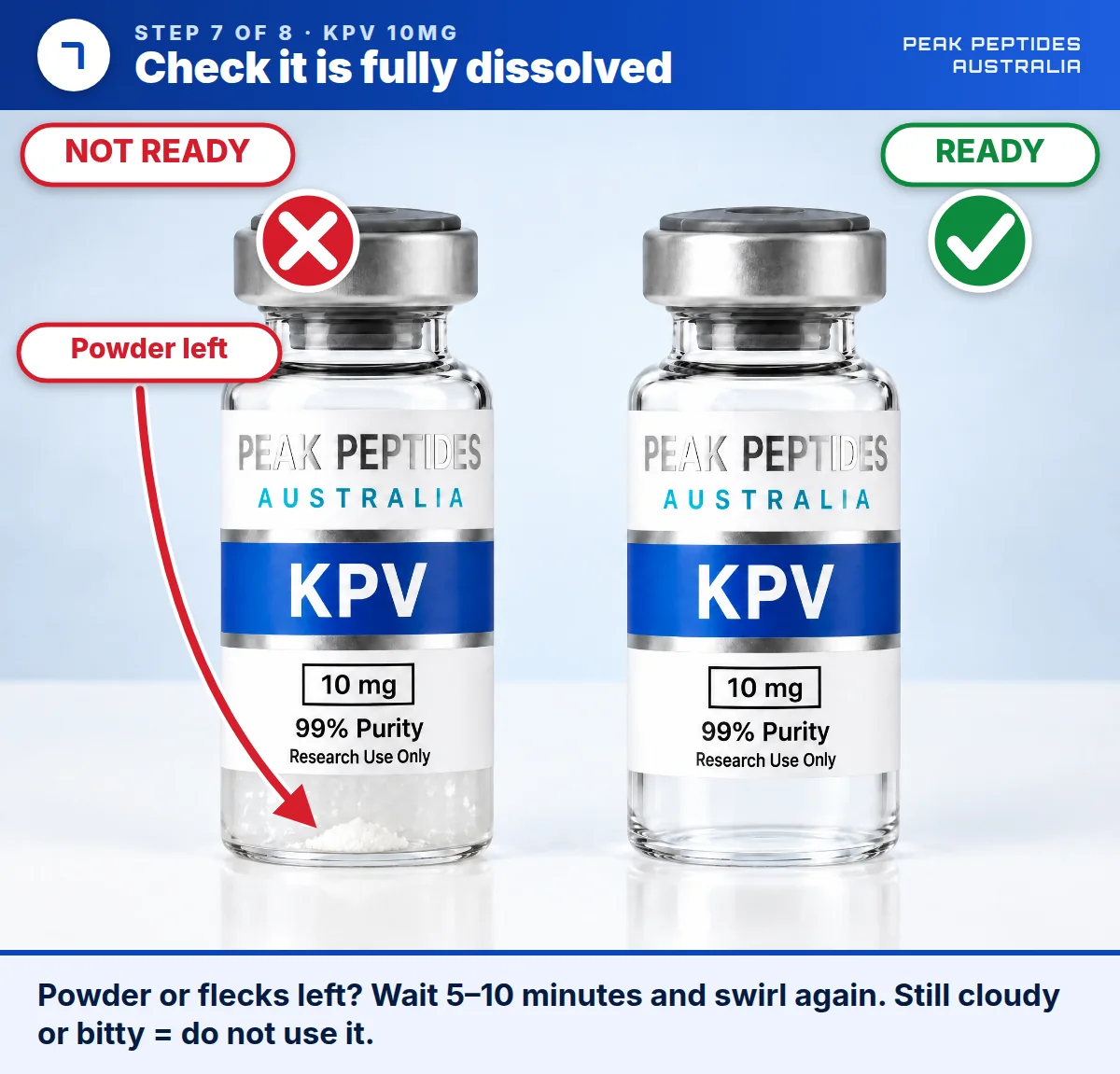
Hold the KPV vial against a well-lit background and inspect it before calling the preparation complete. A fully dissolved solution should be clear and free of visible powder, flecks or cloudiness. If residue remains, let the vial stand for several minutes and swirl gently again. If cloudiness or particles persist, do not classify the solution as fully dissolved.
8Step 8: Label it and refrigerate
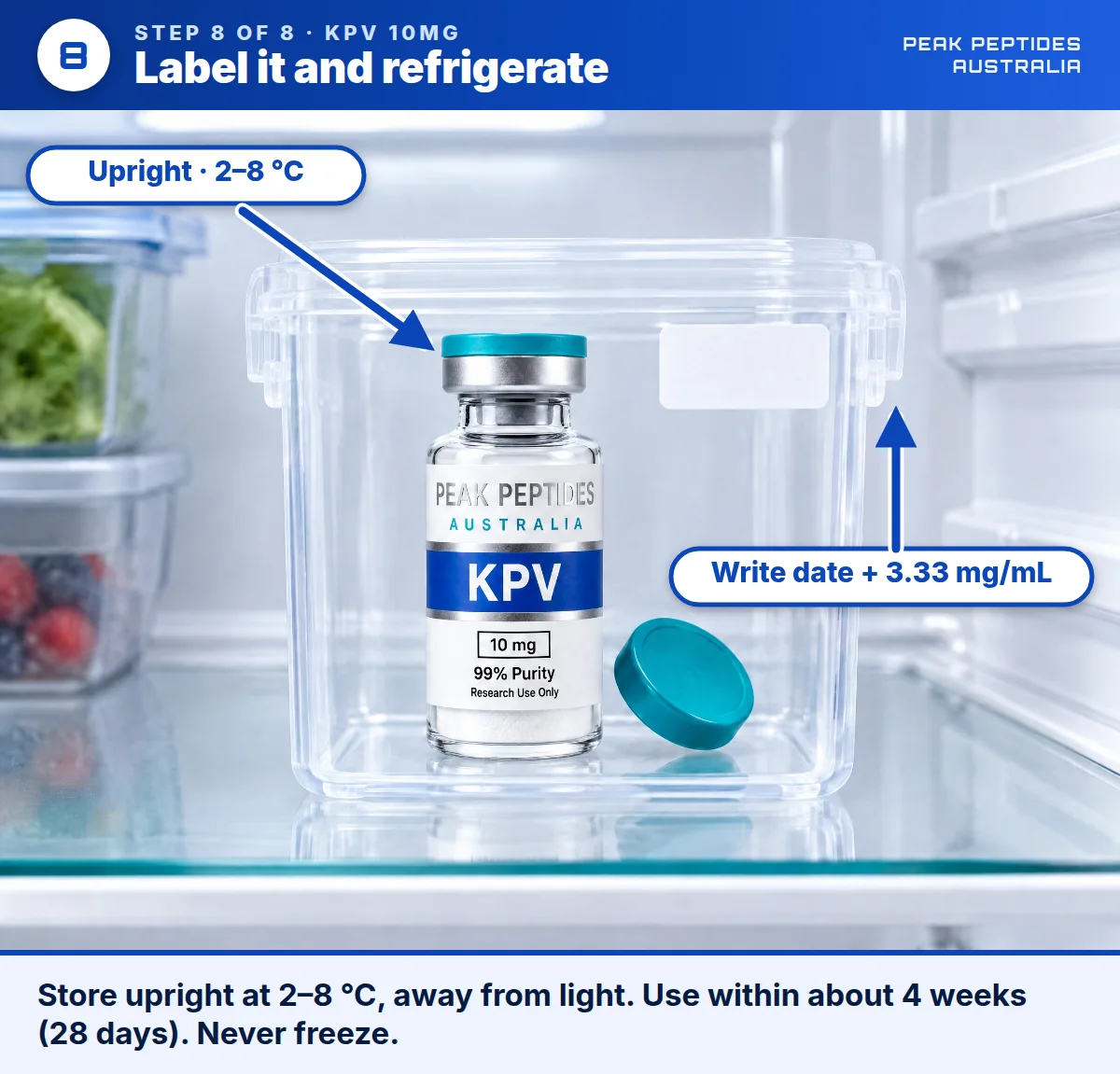
Label the prepared KPV vial with the preparation date, final volume and calculated concentration. For the 3 mL reference mix, write 3.33 mg/mL. Store it upright in the fridge at 2–8 °C, away from light, use it within about 4 weeks (28 days) and never freeze it.
How to store KPV
KPV handling and storage guide
KPV handling and storage guide
Material state
Storage condition
Key handling point
Unopened freeze-dried KPV
Dry and dark; PeptideDosages lists −20 °C or below
Keep sealed and protect from moisture and light.
Prepared KPV reference solution
Refrigerator at 2–8 °C, protected from light
Record the final volume and calculated concentration on the vial.
Prepared KPV reference solution
Freezer
Avoid freezing and freeze–thaw cycles after preparation.
Any prepared vial
Use-by period
Within about 4 weeks (28 days).
Cloudy or particulate solution
Do not classify as fully dissolved
Reinspect after standing and gentle swirling; document a persistent failed clarity check.
Keep storage claims tied to the material state. Chemical identity, lab purity and measured content do not supply a stability study for a prepared KPV solution.
KPV is a tripeptide with the sequence lysine–proline–valine. It is the three-residue C-terminal sequence of alpha-melanocyte-stimulating hormone, so it is also called α-MSH(11–13) or MSH 11–13. Published work has examined KPV transport and inflammatory-signalling readouts in defined laboratory models.
What does KPV stand for?
KPV stands for Lys–Pro–Val: lysine, proline and valine linked in that exact order. It identifies one tripeptide molecule, not a mixture of three separate amino acids. PubChem lists it as Msh (11–13), with the sequence KPV and molecular weight 342.43 g/mol.
Is KPV the same as alpha-MSH?
No. KPV is the C-terminal three-amino-acid part of the longer alpha-MSH peptide. KPV and full-length alpha-MSH have different properties. A 2003 model study found KPV behaved differently from core melanocortin peptides and was unlikely to act through melanocortin receptors in that setting.
What is KPV studied for in research?
KPV is studied for peptide transport and inflammatory-signalling questions. The key 2008 paper examined uptake through PepT1 in cultured intestinal epithelial and T-cell lines, plus NF-κB, MAPK and cytokine readouts after experimental stimulation. Other studies examined specialised gut nanoparticles or transport across prepared human skin.
How does KPV work in laboratory models?
In the 2008 cell experiments, KPV was transported through PepT1, a dipeptide and tripeptide transporter, in selected intestinal and immune-cell lines. Under those study conditions it was associated with lower NF-κB and MAP kinase activation and lower pro-inflammatory cytokine secretion. These are model-specific findings, not a confirmed human mechanism.
What did the 2008 KPV study find?
Dalmasso and colleagues found PepT1-mediated KPV uptake in their intestinal epithelial and T-cell systems. They reported lower NF-κB and MAP kinase signalling and lower pro-inflammatory cytokine secretion at nanomolar KPV concentrations. The paper also used two chemically induced colitis models, which are preclinical models rather than patient studies.
What did KPV nanoparticle research find?
A 2017 Molecular Therapy paper put KPV into hyaluronic-acid-functionalised nanoparticles inside a chitosan/alginate hydrogel. It reported targeted delivery observations in cells and a chemically induced colitis model. The nanoparticles and hydrogel were part of the tested intervention, so the result does not describe an ordinary KPV vial without that delivery system.
What did KPV skin-transport research find?
A 2017 prepared-human-skin experiment found passive KPV permeation below the study’s detection limit. Microneedles and iontophoresis were then tested as delivery technologies and increased transport in that laboratory setup. This measured movement across prepared skin; it did not test a KPV cream in patients or report a clinical skin result.
Are there human KPV clinical trials?
The FDA staff review opened for KPV free base and KPV acetate did not identify clinical studies or human exposure data for either form by any route. It also found no human pharmacokinetic or pharmacodynamic studies. The research described on this page is cell, tissue, nanoparticle or preclinical-model work, not a clinical trial.
What side effects of KPV were reported in studies?
Reliable human side-effect rates are not available from the sources reviewed for this page. The FDA staff document did not identify clinical safety studies or human exposure data for KPV free base or acetate. Cell and preclinical findings cannot supply a dependable side-effect percentage for people.
What is the half-life of KPV?
The primary sources opened for this page supplied no reliable pharmacokinetic half-life for KPV in people. Half-life values relate to the specific peptide, formulation, route or laboratory model studied.
Is KPV the same as BPC-157?
No. KPV is the Lys–Pro–Val tripeptide, while BPC-157 is a separately listed 15-amino-acid peptide. Their names, sequences, research literature and sample documentation are different. KPV research commonly focuses on PepT1 transport and inflammatory-signalling models; BPC-157 is discussed separately in gastrointestinal and connective-tissue research contexts.
What is KPV vs BPC-157?
KPV vs BPC-157 compares two different individual research peptides, not two strengths of one molecule. KPV contains three amino acids and is also called α-MSH(11–13). BPC-157 is a 15-amino-acid peptide. Neither product’s evidence, identity report or nominal label amount should be transferred to the other.
What is KLOW and does it contain KPV?
KLOW is a separate 80 mg fixed-ratio research blend. Its supplied product facts list 50 mg GHK-Cu, 10 mg BPC-157, 10 mg TB-500 and 10 mg KPV. KLOW is not the same as individual KPV 10mg because changing a blend quantity changes every listed component together.
Is KPV approved by the TGA or FDA?
No. FDA’s 2026 staff briefing says KPV free base and KPV acetate are not components of FDA-approved drugs. In Australia, KPV is not presented here as a TGA-approved medicine. The TGA states that unapproved peptide products not included on the ARTG have not been evaluated for safety, quality or effectiveness.
Can I buy KPV 10mg online in Australia?
KPV 10mg can be ordered online from Peak Peptides Australia for legitimate in-vitro research. In-stock orders receive same-day dispatch from Victoria once payment is confirmed, travel by tracked Australia Post Express, and have a tracking number emailed. The material is supplied for research purposes only, not as a medicine.
How fast is KPV shipping in Australia?
For in-stock orders, KPV 10mg receives same-day dispatch from Victoria once payment is confirmed. It is sent by tracked Australia Post Express and the tracking number is emailed. Actual delivery timing depends on the Australia Post network and destination, while the same-day statement refers to dispatch rather than delivery.
How do I know this KPV sample is documented?
Check the public LabDoc record LD-B98X. It identifies the submitted sample as KPV and records LC-MS identity as Confirmed, HPLC purity of 99.24%, 9.04 mg content against the 10 mg claim, and a Pass assessment. The report applies to the tested sample and its batch field is not stated.
What does the KPV LabDoc report LD-B98X show?
LabDoc report LD-B98X lists the sample as KPV lyophilised powder in a vial, tested on 22 September 2026. It reports identity Confirmed by LC-MS, 99.24% purity by HPLC, related impurities of 0.76%, and 9.04 mg content against the 10 mg claim, or 90.4% of claim.
Does LabDoc purity prove sterility or stability?
No. LD-B98X measures identity, purity and content for the tested sample. Sterility and shelf life are separate tests.
How much BAC water for KPV 10mg?
PeptideDosages uses 3 mL BAC water as its reference mix for a 10 mg KPV vial. That gives 3.33 mg/mL. The chart also shows the arithmetic for 1 mL, 2 mL and 3 mL: 10 mg/mL, 5 mg/mL and 3.33 mg/mL respectively. More liquid changes concentration, not the nominal 10 mg total.
How many units is 1 mg of KPV with 3 mL BAC water?
With a 10 mg KPV vial mixed to 3 mL, the concentration is 3.33 mg/mL. On a U-100 syringe, 1 mg corresponds to 30 units, or 0.30 mL. This is concentration arithmetic for laboratory measurement.
How many units is 0.5 mg of KPV with 3 mL BAC water?
With the 3 mL mix, 0.5 mg corresponds to 15 units on a U-100 syringe, equal to 0.15 mL. The calculation uses 3.33 mg/mL and 100 units per mL. The same vial would give different unit values if a different final liquid volume were used.
How many mg are in 10 units of KPV with 3 mL BAC water?
With 3 mL BAC water in a nominal 10 mg KPV vial, 10 units equals 0.10 mL and holds about 0.33 mg. At 2 mL, 10 units would hold 0.5 mg; at 1 mL, 10 units would hold 1 mg. The chart shows why final volume must be written down.
How do I reconstitute KPV 10mg?
For a laboratory preparation, clean the vial stoppers, draw BAC water, and add it slowly down the inside glass wall rather than directly onto the powder. Swirl gently until the solution is clear; do not shake. The eight visual steps on this page show the workflow and the 3 mL reference mix.
Can sterile water or tap water replace BAC water for KPV?
Tap water is not suitable for sterile laboratory preparation. The chart and photo guide use bacteriostatic water because PeptideDosages presents it as the solvent for its KPV 10 mg reference mix. Plain sterile water is a different preparation choice and does not carry the same preservative context, so it should not be substituted into a storage convention.
What if KPV powder does not dissolve?
Let the vial stand for several minutes, then swirl or roll it gently again. Do not shake it, because shaking produces foam and can stress the peptide solution. The finished liquid should be clear and free of visible powder, flecks or cloudiness. A cloudy or particulate result should be documented as a failed preparation rather than treated as fully dissolved.
Should reconstituted KPV be cloudy?
No. The visual preparation guide treats a clear, colourless solution with no visible powder or flecks as the fully dissolved endpoint. If visible powder remains, allow it to stand and swirl gently again. If cloudiness or particles persist, do not call it fully dissolved or use it as though it meets the expected visual check.
How should KPV powder be stored before mixing?
PeptideDosages states that lyophilised KPV should be kept dry and dark, with freezing at −20 °C or below for storage. Keep the vial sealed and protect it from moisture and light. Handling requirements depend on the peptide’s formulation and packaging.
Can reconstituted KPV be frozen?
The KPV reference guide says to refrigerate the reconstituted material at 2–8 °C, protect it from light and avoid freeze–thaw cycles. After mixing with BAC water, keep it upright in the fridge at 2–8 °C, away from light, use it within about 4 weeks (28 days) and never freeze it.
What does a KPV COA or LabDoc report show?
A good analytical report separates identity, purity and content. For KPV LD-B98X, LC-MS identity was Confirmed, HPLC purity was 99.24%, and measured content was 9.04 mg against the nominal 10 mg claim. It documents the tested sample only and does not answer unrelated questions such as sterility, stability or clinical effect.