PE-22-28 10mg is a spadin-derived synthetic heptapeptide studied in laboratory TREK-1 potassium-channel experiments. LabDoc report LD-UVDL records LC-MS-confirmed identity, 99.68% HPLC purity and 9.2mg measured content. In-stock orders receive same-day dispatch from Victoria after payment confirmation, with tracked Australia Post Express shipping Australia-wide.
Product Specifications
Full NamePE-22-28 (Spadin-Derived Synthetic Heptapeptide)
Vial Size10mg
Purity99.68% HPLC (LD-UVDL, 9.20mg sample)
Legal Disclaimer
This product is sold strictly for in-vitro laboratory research purposes only. It is not a therapeutic good, is not approved by the TGA, and is not intended for human or animal consumption, injection, or any diagnostic or therapeutic use.
Spadin-derived heptapeptide · TREK-1 channel research
PE-22-28 10mg — What It Is, TREK-1 Research & Reconstitution
PE-22-28 is a synthetic seven-amino-acid peptide studied as a blocker of the TREK-1 potassium channel. It is a shorter fragment developed from spadin research. PE-22-28, spadin, Semax and Selank are different compounds. In the key 2017 paper, patch-clamp experiments in cells expressing human TREK-1 reported an IC50 of 0.12 nM. The same paper also reported mouse behavioural, neurogenesis and mouse-neuron results. This vial is labelled PE-22-28 10mg and 99% purity. LabDoc report LD-UVDL tested this listing’s sample: identity confirmed by LC-MS, 99.68% HPLC purity and 9.2mg measured content, an overall Pass. This page explains the molecule, the exact research findings, how it differs from Semax and Selank, and clear measurement maths for the labelled quantity. Peak Peptides Australia supplies this material for in-vitro research only, not for human use.
Also referred to in research or catalogue references as PE-22-28, PE 22-28, PE22-28, PE 22 28, PE22 28, PE-22-28 peptide, PE 22-28 peptide, spadin-derived heptapeptide, GVSWGLR.
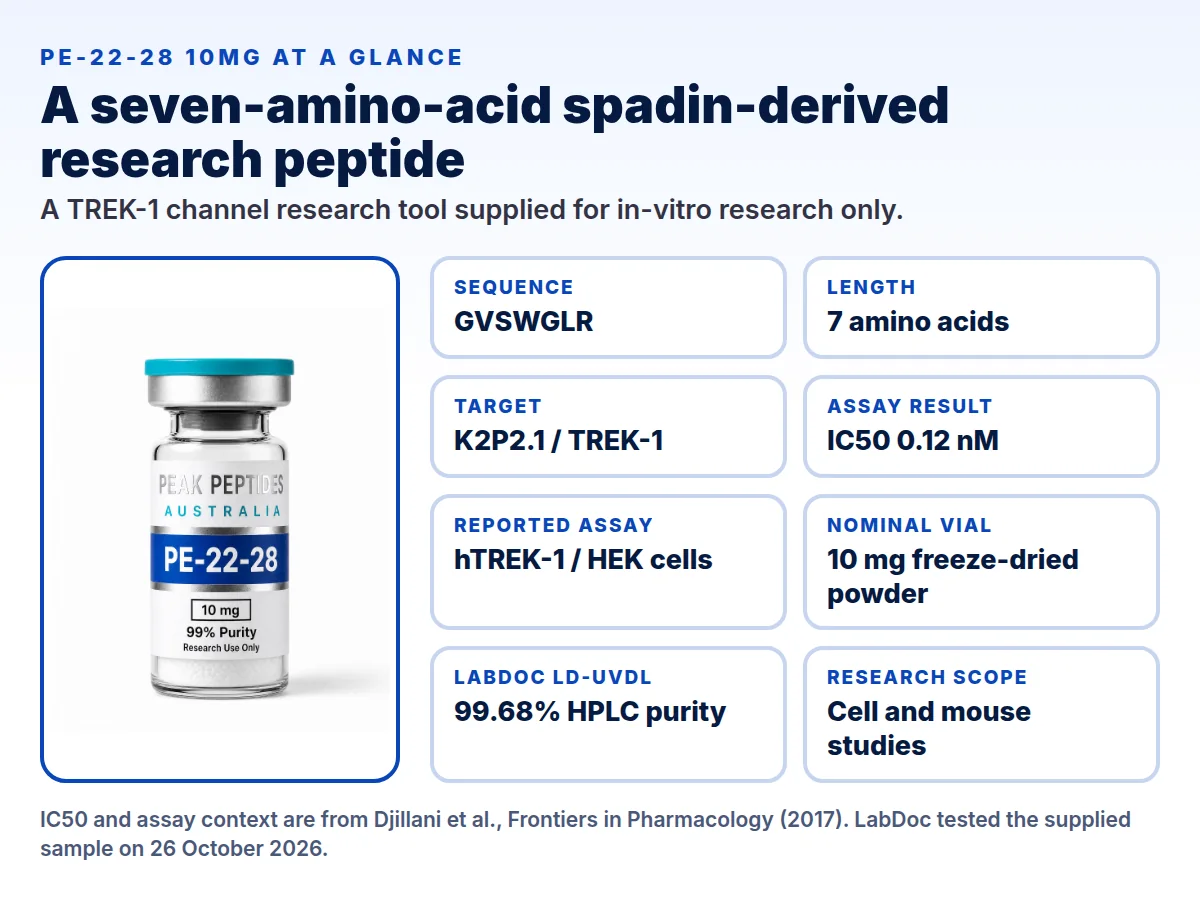
PE-22-28 10mg at a glance
Name
PE-22-28
Also written
PE 22-28, PE22-28 and PE 22 28
What it is
A synthetic, spadin-derived seven-amino-acid peptide
Sequence
GVSWGLR — Gly-Val-Ser-Trp-Gly-Leu-Arg
Research target
TREK-1 / K2P2.1 two-pore potassium channel
Direct assay result
IC50 0.12 nM in hTREK-1/HEK patch-clamp experiments
Same-day from Victoria for in-stock orders after payment confirmation, tracked Australia Post Express
A seven-amino-acid spadin fragment
PE-22-28 is the heptapeptide GVSWGLR: Gly-Val-Ser-Trp-Gly-Leu-Arg. Researchers designed it from shorter pieces of spadin, a longer peptide derived from sortilin. PE-22-28 is therefore related to spadin but is a separate molecule with its own sequence and experiments.
Direct TREK-1 result: 0.12 nM in a cell assay
In the 2017 primary study, patch-clamp experiments in HEK cells expressing human TREK-1 reported a 0.12 nM IC50 for PE-22-28. IC50 is the concentration that produced half of the measured inhibitory effect in that assay. It is a target-engagement result, not a human concentration or therapeutic outcome.
TREK-1 is a potassium channel
TREK-1, also called K2P2.1 and encoded by KCNK2, is a two-pore-domain potassium channel. Ion channels control the movement of charged particles across cell membranes, which changes electrical signalling. The PE-22-28 study examined channel current directly with electrophysiology.
What the preclinical paper actually measured
The 2017 paper combined human-TREK-1/HEK cell recordings with mouse behavioural tests, BrdU-positive-cell counts in mouse hippocampi and PSD-95 measurements in mouse cortical neurons. The authors reported changes in each of those systems. Those endpoints do not demonstrate a dependable mood, memory or concentration effect in people.
PE-22-28 is not spadin, Semax or Selank
Spadin is the longer parent peptide. Semax is an ACTH(4–10) analogue with the sequence MEHFPGP. Selank is the heptapeptide TKPRPGP. All three comparison peptides are distinct molecules with different research lineages, sequences and published mechanism work. Their milligram figures refer to different compounds.
What the nominal 10mg label means
10mg is the nominal total quantity stated on this research vial. If 2 mL of diluent is used for laboratory measurement, the nominal concentration is 5 mg/mL and 20 units on a U-100 syringe represents 1 mg of the nominal label amount.
LabDoc report LD-UVDL for this sample
LabDoc report LD-UVDL received the sample on 26 October 2026 and tested it the same day. It records confirmed identity by LC-MS, 99.68% HPLC purity, 9.2mg HPLC content or 92% of the 10mg label claim, and an overall Pass.
Australian supply for laboratory research
For in-stock orders, Peak Peptides Australia dispatches the same day from Victoria once payment is confirmed, using tracked Australia Post Express. A tracking number is emailed. PE-22-28 is supplied for in-vitro research only and is not an approved therapeutic good.
PE-22-28 is a lab-made heptapeptide, meaning it is a chain of seven amino acids. Its sequence is Gly-Val-Ser-Trp-Gly-Leu-Arg, usually written GVSWGLR. The name refers to a shorter piece investigated during research on spadin, the longer sortilin-derived peptide. It does not identify a dose, a duration or a therapeutic category.
The direct research interest is TREK-1, also called K2P2.1. TREK-1 is a two-pore potassium channel: a membrane protein that carries potassium ions and influences a cell's electrical behaviour. That makes PE-22-28 an ion-channel research peptide, rather than a GLP-1 product or a blend of other neuropeptides.
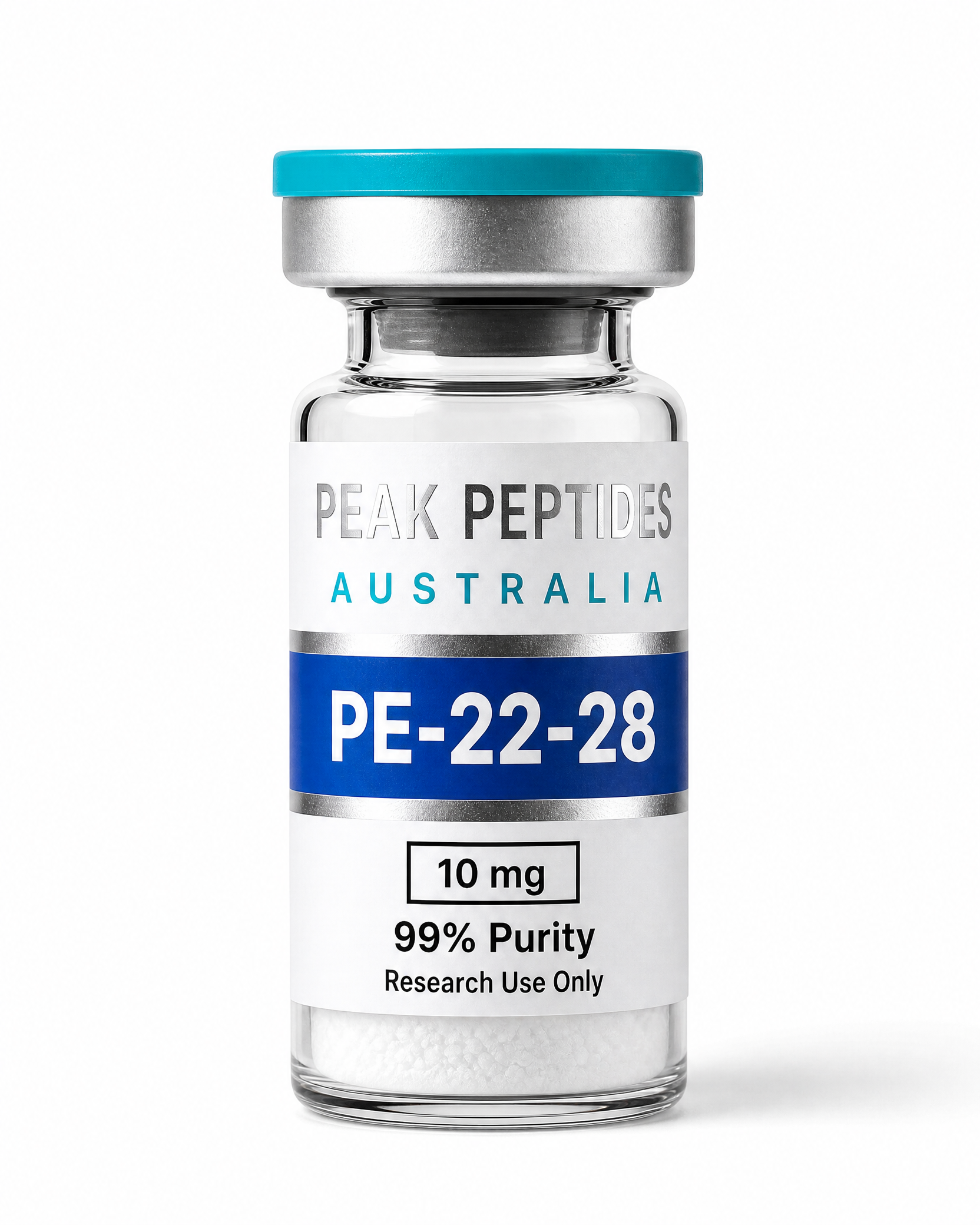
The 10mg vial is a nominal-quantity research listing. The supplied product data describes it as at least 99% by HPLC and the physical vial label reads 99% Purity. LabDoc report LD-UVDL measured 99.68% HPLC purity and 9.2mg content for the tested sample. PE-22-28 is supplied for in-vitro research only.
PE-22-28 is a seven-amino-acid, spadin-derived research peptide studied at the TREK-1 channel.
How does PE-22-28 work in the reported assay?
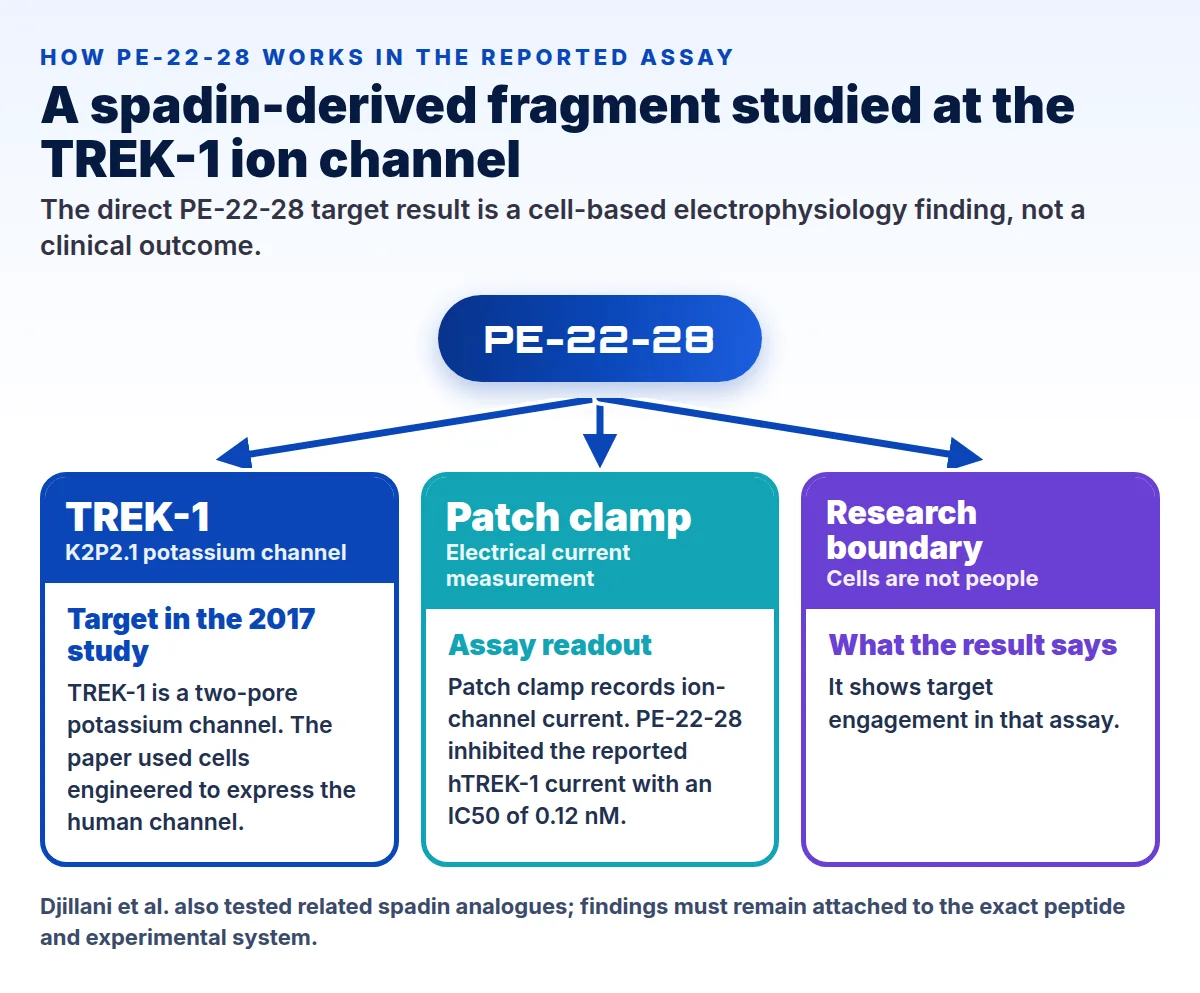
PE-22-28 works as a TREK-1 inhibitor in the key reported cell assay. The researchers used HEK cells engineered to express human TREK-1, then used patch clamp to record current through the channel. Patch clamp is a method that holds a cell's electrical voltage steady while measuring movement of charged ions across its membrane.
In that system, the paper reported that PE-22-28 inhibited TREK-1 with an IC50 of 0.12 nM. IC50 is a laboratory comparison point: it says how much compound was needed for half of the measured effect under that assay's conditions. It does not convert into a human concentration, route, schedule or clinical outcome.
The paper also compared PE-22-28 with spadin and tested several altered PE-22-28 analogues. Some terminal changes retained activity and others did not. That is why findings should stay attached to the exact sequence and experiment. Calling every spadin-related peptide identical would lose an important part of the research result.
The direct PE-22-28 mechanism result is inhibition of TREK-1 current in a defined cell-based electrophysiology assay.
What did PE-22-28 research find?
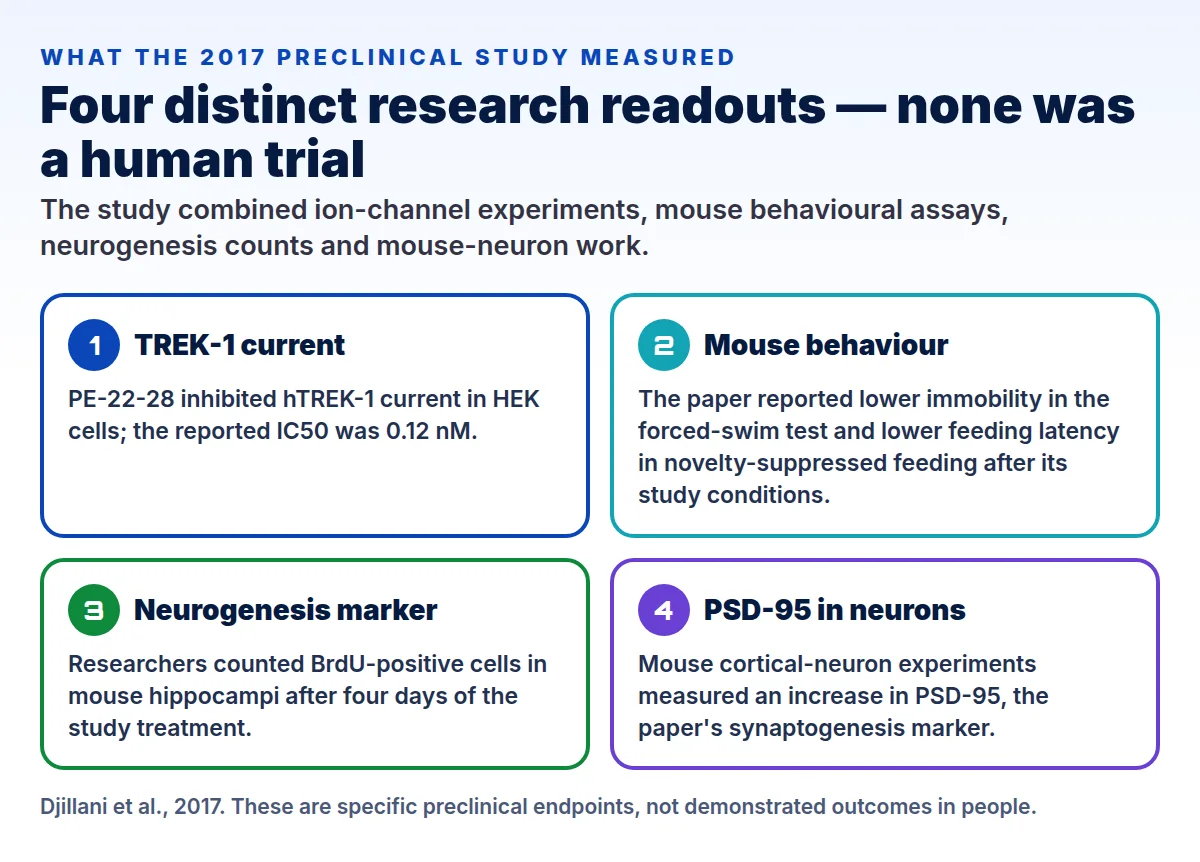
The main PE-22-28 paper was published in Frontiers in Pharmacology in 2017. It contains four types of result: channel-current recordings, mouse behavioural assays, hippocampal cell-count measurements and mouse cortical-neuron experiments. Looking at those separately is the clearest way to understand what the study did and did not show.
For the direct target result, the authors reported an IC50 of 0.12 nM for PE-22-28 in hTREK-1/HEK cells. The paper also measured selectivity against other potassium channels in its cell experiments. A commercial supplier's study summary describes no effect at 100 nM against TREK-2, TRAAK, TRESK and TASK-1 in its human-channel HEK experiments; that is useful assay context, not a claim of universal selectivity in every biological system.
In the mouse part of the primary paper, PE-22-28 and related analogues were tested in forced-swim, novelty-suppressed-feeding and learned-helplessness paradigms. The authors reported reduced immobility, reduced latency to food and altered escape-related results under their study conditions. These are preclinical behavioural endpoints.
The same paper counted BrdU-positive cells in mouse hippocampi after four days of the experimental treatment and used PSD-95 level in mouse cortical neurons as a synaptogenesis marker. The paper reported increased measures in those systems. BrdU is a marker researchers use to label dividing cells; PSD-95 is a protein concentrated at postsynaptic sites. Neither measurement is a direct test of human cognition, mood or recovery.
The 2017 paper reports four kinds of preclinical measurement, each with its own experimental meaning.
What the direct PE-22-28 study measured
What the direct PE-22-28 study measured
Research system
What was measured
Reported finding
Scope
hTREK-1/HEK cells
TREK-1 current by patch clamp
IC50 0.12 nM
A human therapeutic concentration
Mouse forced-swim and feeding tests
Immobility and feeding latency
Changes under the study conditions
A clinical depression outcome
Mouse hippocampi
BrdU-positive cells
Increased neurogenesis measure
A human cognitive result
Mouse cortical neurons
PSD-95 expression
Increased synaptogenesis marker
A dependable effect in people
Source: Djillani et al., 2017. The table keeps each result matched to the system that generated it.
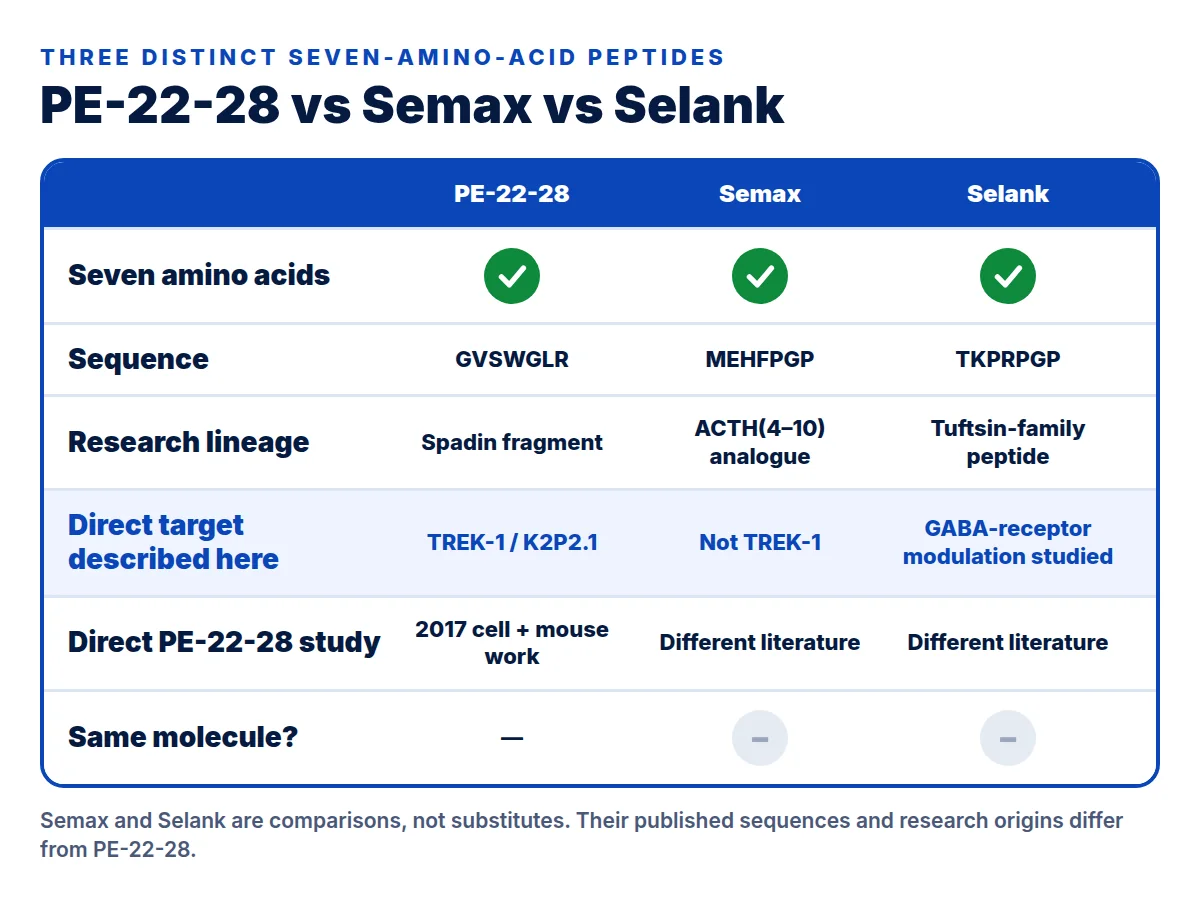
PE-22-28 vs Semax vs Selank
PE-22-28, Semax and Selank are each seven amino acids long. That shared length can make them look similar in a catalogue, but their sequences and research histories are different. PE-22-28 is GVSWGLR, derived from shortened-spadin research. Semax is MEHFPGP, built from the ACTH(4–7) region with a Pro-Gly-Pro tail. Selank is TKPRPGP, a tuftsin-family peptide.
The core direct PE-22-28 experiment concerns TREK-1 current. Published Semax work describes an ACTH-derived peptide and diverse cell, molecular and physiological research questions. A Selank review describes GABA-receptor allosteric-modulation experiments.
These products are different compounds, with quantities specific to each one. A research question should begin with the exact peptide sequence, the intended assay, an appropriate control and a method that matches the literature being examined.
All three are heptapeptides, but PE-22-28, Semax and Selank are different molecules with different research questions.
PE-22-28 compared with Semax and Selank
PE-22-28 compared with Semax and Selank
PE-22-28
Semax
Selank
Sequence
GVSWGLR
MEHFPGP
TKPRPGP
Research lineage
Spadin fragment
ACTH(4–10) analogue
Tuftsin-family peptide
Direct mechanism described here
TREK-1 current inhibition
Different literature
GABA-receptor modulation studied
Same molecule?
—
No
No
Peak Peptides listing
PE-22-28 10mg
Semax 10mg
Selank 10mg
Comparison is about identity and research lineage, not a recommendation to combine or exchange peptides.
PE-22-28 sequence and structure
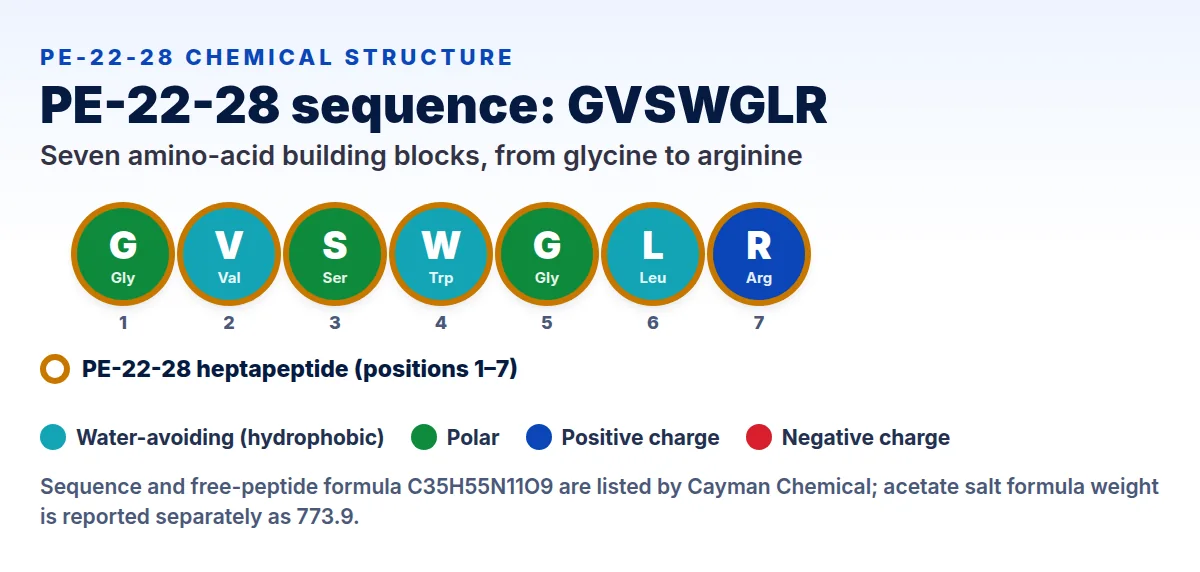
PE-22-28 is compact: only seven building blocks long. Read from left to right, its sequence is Gly-Val-Ser-Trp-Gly-Leu-Arg. The full sequence matters. Peptide activity can change when a residue is replaced or when an end of the chain is altered, and the 2017 paper specifically found that terminal modifications of PE-22-28 analogues could retain or abolish channel activity.
A supplier reference lists the peptide formula as C35H55N11O9 and a 773.9 formula weight for its PE 22-28 acetate product. Product forms can include counterions such as acetate, so reference formulas and formula weights should be matched to the exact salt form and analytical method. The Peak Peptides vial is a separate supplied material, not that supplier's product.
Short names can obscure these details. The term spadin-derived tells you where the research sequence came from; it does not make PE-22-28 chemically identical to spadin. The sequence graphic below makes the seven-residue identity visible at a glance.
PE-22-28 is the seven-residue sequence GVSWGLR.
LabDoc test for this PE-22-28 10mg sample
This listing is backed by LabDoc report LD-UVDL. LabDoc received the PE-22-28 sample on 26 October 2026 and tested it the same day. It records identity confirmed by LC-MS, 99.68% purity by HPLC and 9.2mg measured content by HPLC against the 10mg label claim, which is 92% of that claim. The overall assessment is Pass.
Quality documentation serves different jobs. Identity testing checks that the material matches the claimed molecule. LC-MS is commonly used because a peptide has a characteristic mass. HPLC purity testing estimates the proportion of the main chromatographic peak. Content testing measures how much material is present. A report can be useful only when it identifies the tested batch and its method.
The signed LD-UVDL report, its PDF and a direct link to LabDoc’s own record are on the Quality page. The batch field reads “Not stated”, so the report describes the tested sample. A report issued for another peptide, another strength or another batch does not verify this sample, which matters for a short peptide whose sequence and salt form must match the analytical method.
Vial label: PE-22-28, 10 mg, 99% Purity, Research Use Only.
LabDoc report: LD-UVDL, sample received and tested 26 October 2026.
Results: identity confirmed by LC-MS, 99.68% HPLC purity, 9.2mg HPLC content (92% of claim), overall Pass.
Where to view it: the LabDoc section of the Peak Peptides Australia Quality page.
Buying PE-22-28 10mg in Australia
PE-22-28 10mg can be ordered online from Peak Peptides Australia when it is in stock. In-stock orders receive same-day dispatch from Victoria once payment is confirmed, sent by tracked Australia Post Express. A tracking number is emailed after dispatch.
The listing is for in-vitro laboratory research only. It is not a TGA-approved therapeutic good and it is not an FDA-approved medicine. The Australian Register of Therapeutic Goods is the official searchable register for therapeutic goods supplied in Australia; an exact-name search did not show an approved PE-22-28 medicine.
For a method that needs a nominal concentration calculation, add bacteriostatic water and use the reconstitution calculator. The chart below gives the volume maths for the nominal 10mg label.
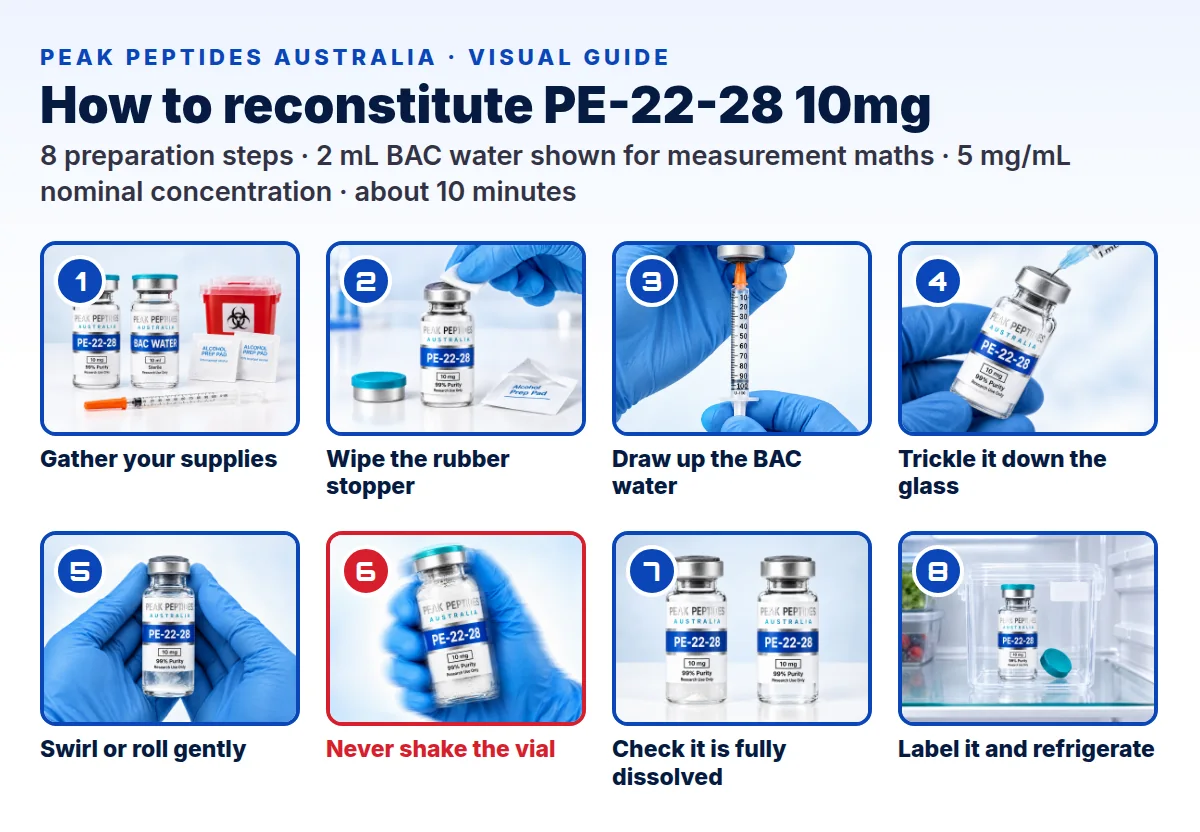
Step-by-step guide · About 10 minutes
How to reconstitute PE-22-28 10mg (8 photo steps)
PE-22-28 10mg is supplied as freeze-dried powder. Reconstitution means adding a selected diluent to make a measurable liquid for laboratory work. The eight photo steps below use BAC water and show a nominal 2 mL example because it creates simple 5 mg/mL maths from the label quantity. Once mixed, keep it upright in the fridge at 2–8 °C, away from light, and use it within about 4 weeks (28 days). Never freeze it. Write the date and strength on the vial.
A visual overview of the PE-22-28 10mg preparation sequence.
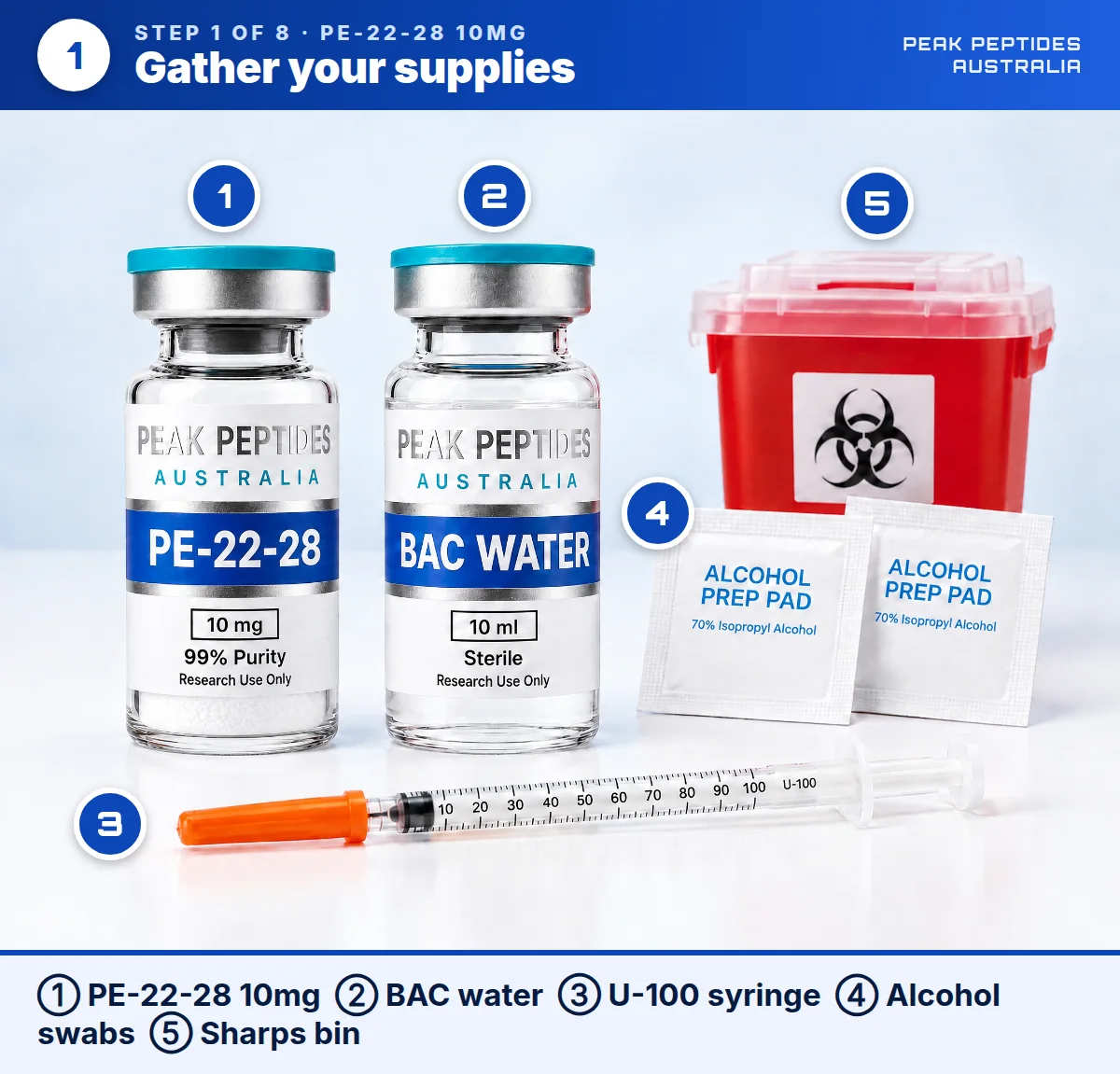
What you need
PE-22-28 10mg vialLabelled freeze-dried research material in a sealed glass vial.
1 mL U-100 syringeIts scale is 100 units per mL, so each unit is 0.01 mL.
Alcohol swabsFor disinfecting each rubber stopper before entry.
Sharps containerFor immediate disposal of used needles and syringes.
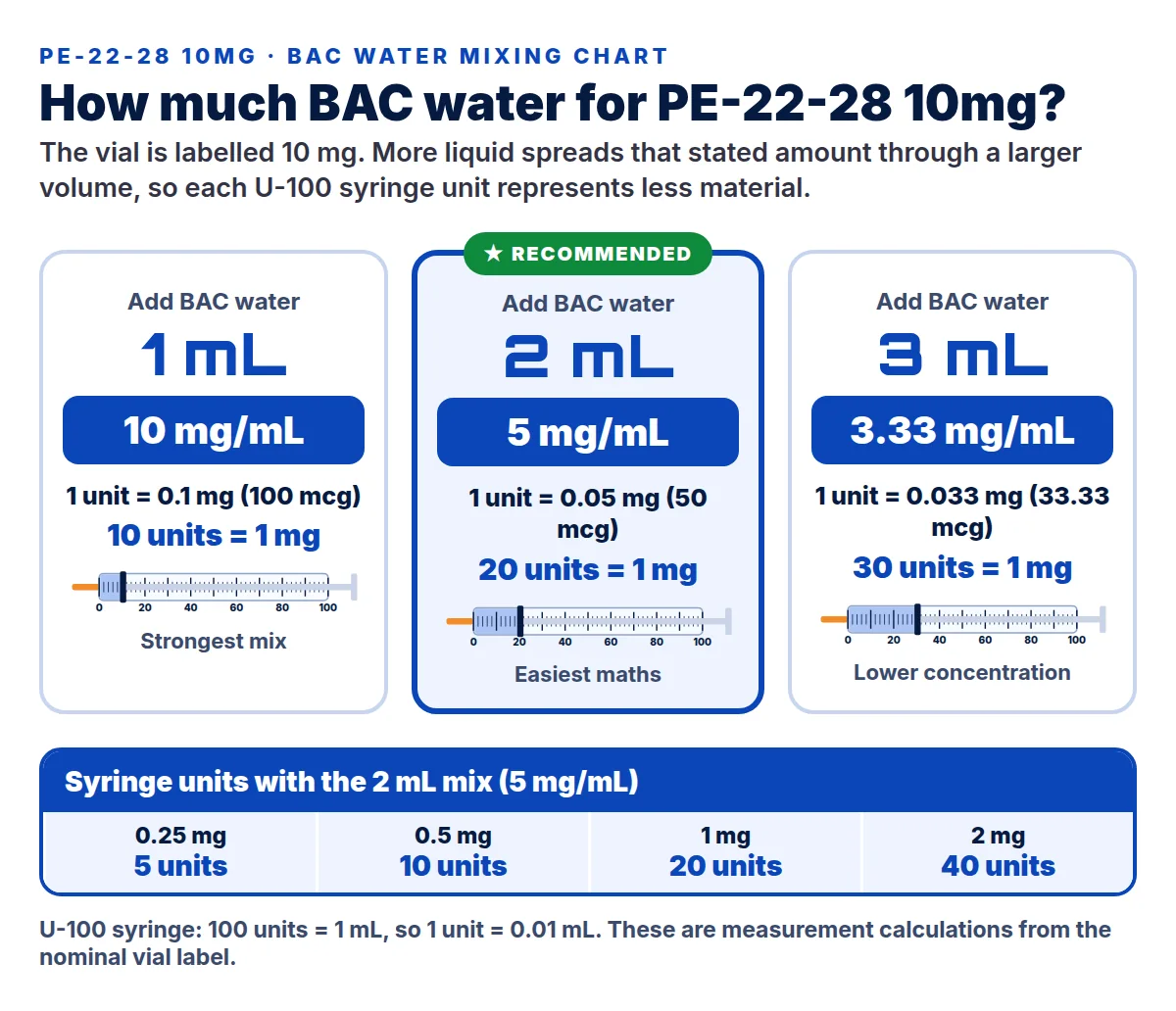
How much BAC water for PE-22-28 10mg?
The nominal 10mg quantity on the vial stays the same whichever volume is selected. More BAC water spreads that nominal quantity through more liquid, reducing the amount represented by each syringe unit. The table and chart use the standard U-100 scale: 100 units equals 1 mL.
For the highlighted 2 mL example, the nominal concentration is 5 mg/mL. Each U-100 unit represents 0.05 mg (50 mcg), 10 units represents 0.5 mg and 20 units represents 1 mg. A 1 mL example is 10 mg/mL, where 10 units represents 1 mg; a 3 mL example is 3.33 mg/mL, where 30 units represents 1 mg.
These are arithmetic conversions from the vial's nominal 10mg label. The formula is: units = amount wanted divided by concentration in mg/mL, then multiplied by 100.
Nominal mixing maths for a PE-22-28 10mg label; 2 mL yields 5 mg/mL.
2 mL is highlighted because it gives the simplest numbers.
Syringe units with the 2 mL mix (5 mg/mL)
Syringe units with the 2 mL mix (5 mg/mL)
Amount
Units on a U-100 syringe
Volume
0.25 mg
5 units
0.05 mL
0.5 mg
10 units
0.1 mL
1 mg
20 units
0.2 mL
2 mg
40 units
0.4 mL
The 8 steps
1Step 1: Gather your supplies
Set out the labelled PE-22-28 10mg vial, the selected diluent, a new 1 mL U-100 syringe, alcohol swabs and a sharps container on a clean work surface. Inspect the vial before starting. The cap, crimp and stopper should be intact, and dry powder should not show moisture or unexpected discolouration.
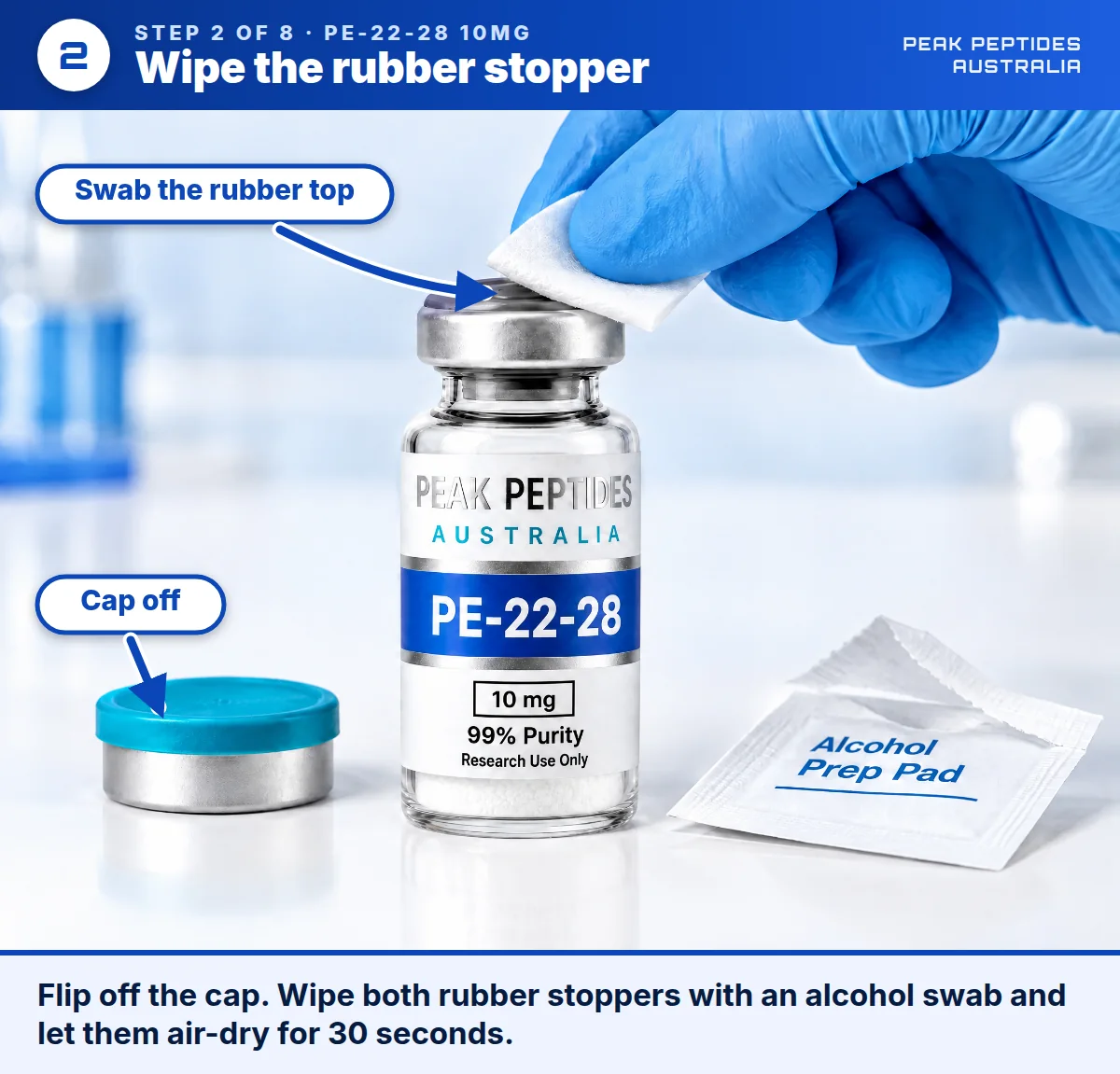
2Step 2: Wipe the rubber stopper
Remove the flip-off caps without disturbing the rubber stoppers. Use a fresh alcohol swab on the stopper of the PE-22-28 vial and the selected diluent vial. Allow both surfaces to air-dry rather than touching them again. Disinfecting the stopper before each entry helps keep the preparation process controlled.
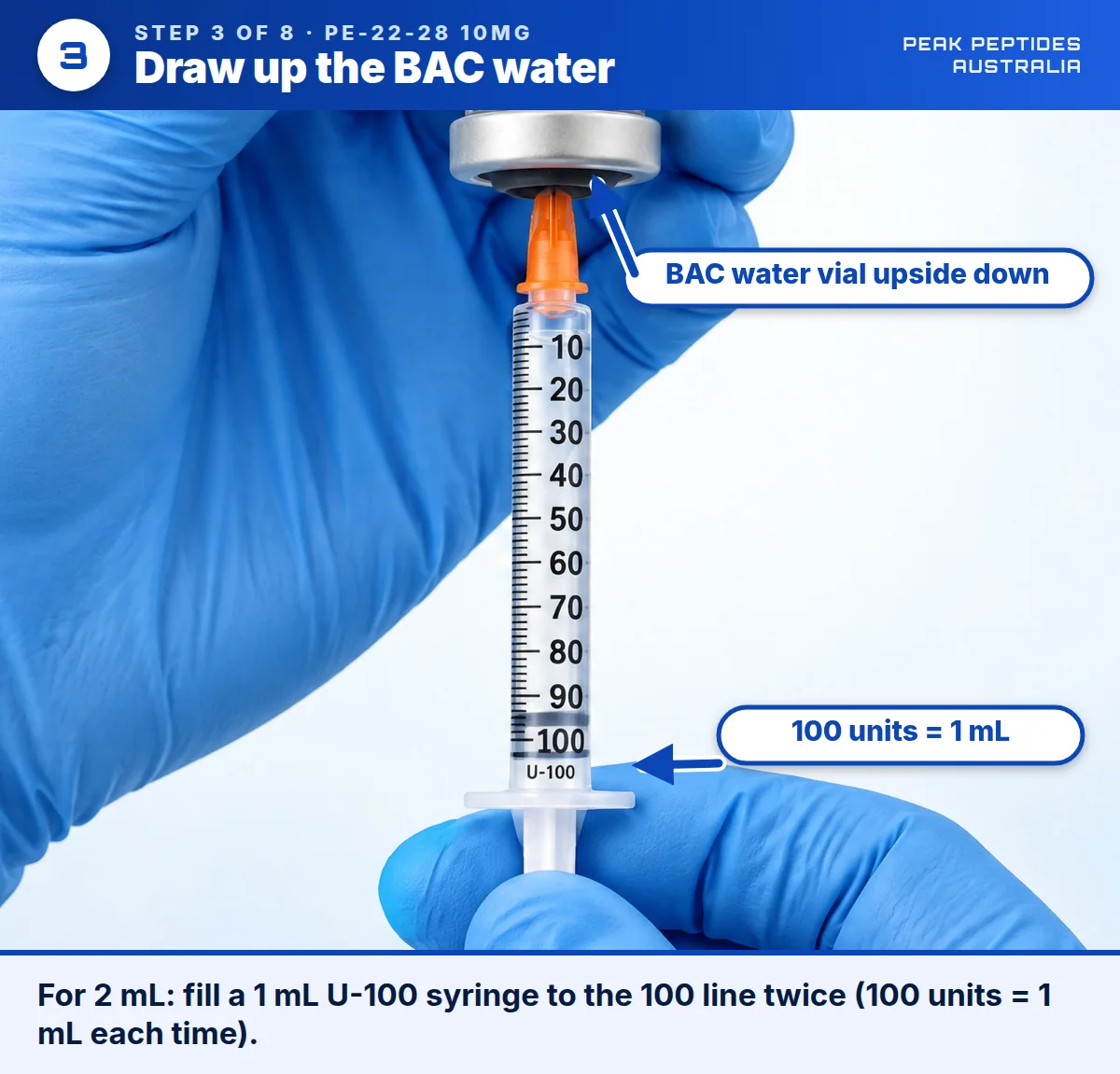
3Step 3: Draw up the BAC water
Measure the selected BAC water volume with a new U-100 syringe. A 1 mL syringe holds 100 units, so the highlighted 2 mL example requires two measured 1 mL transfers. Keep the selected volume consistent with the concentration calculation, and recheck the liquid level at eye height before transfer.
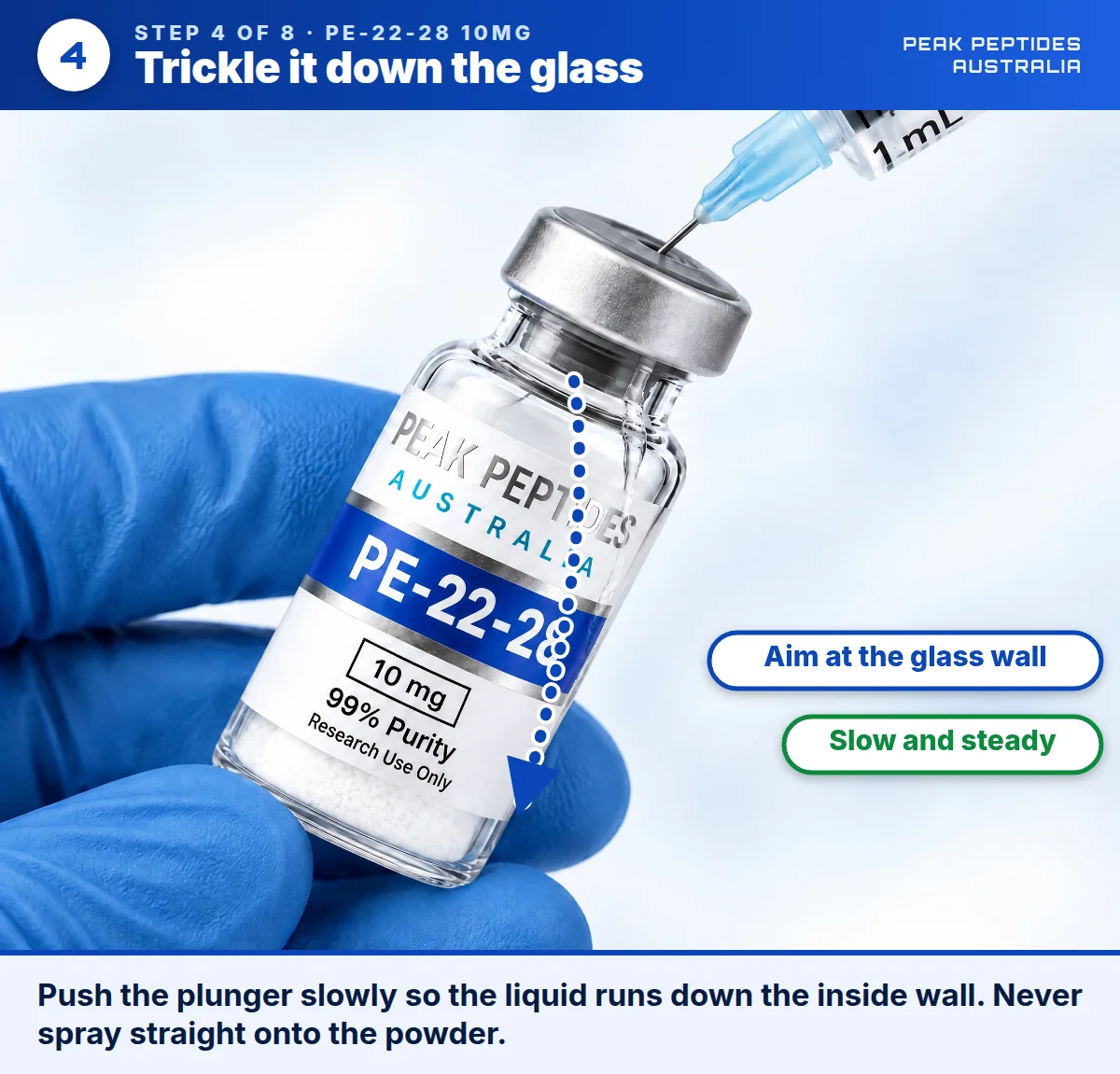
4Step 4: Trickle it down the glass
Place the needle through the PE-22-28 stopper and add the liquid slowly against the inside wall of the glass. A gentle transfer reduces splashing and unnecessary agitation. Do not force a rapid stream directly onto the powder. If using the highlighted 2 mL volume, repeat the measured transfer until the full 2 mL has been added.
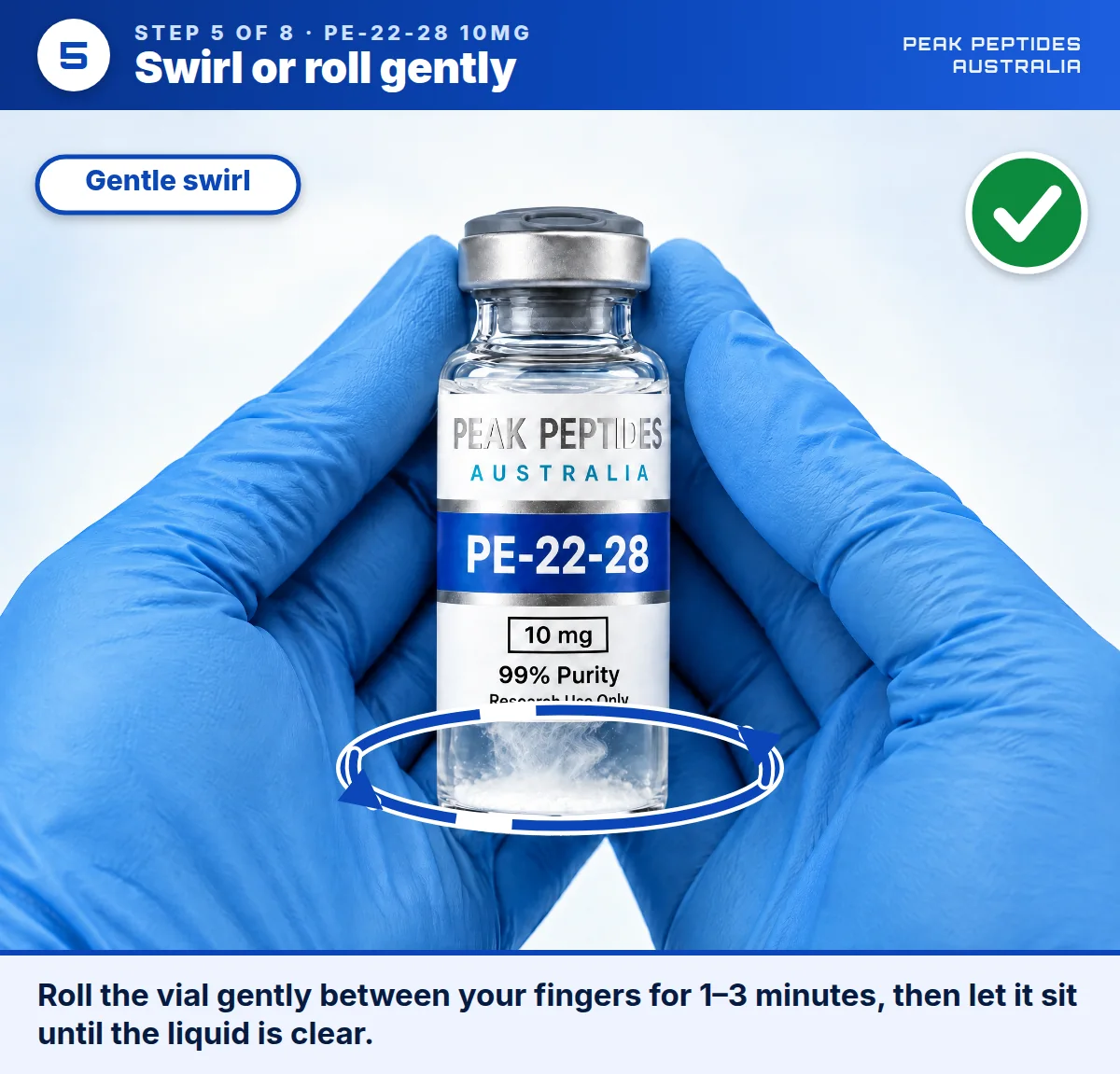
5Step 5: Swirl or roll gently
Gently roll the PE-22-28 vial between the fingers or move it in slow circles. Gentle swirling brings the liquid into contact with the freeze-dried material without vigorous mechanical stress. Let the vial stand as needed to dissolve the material.
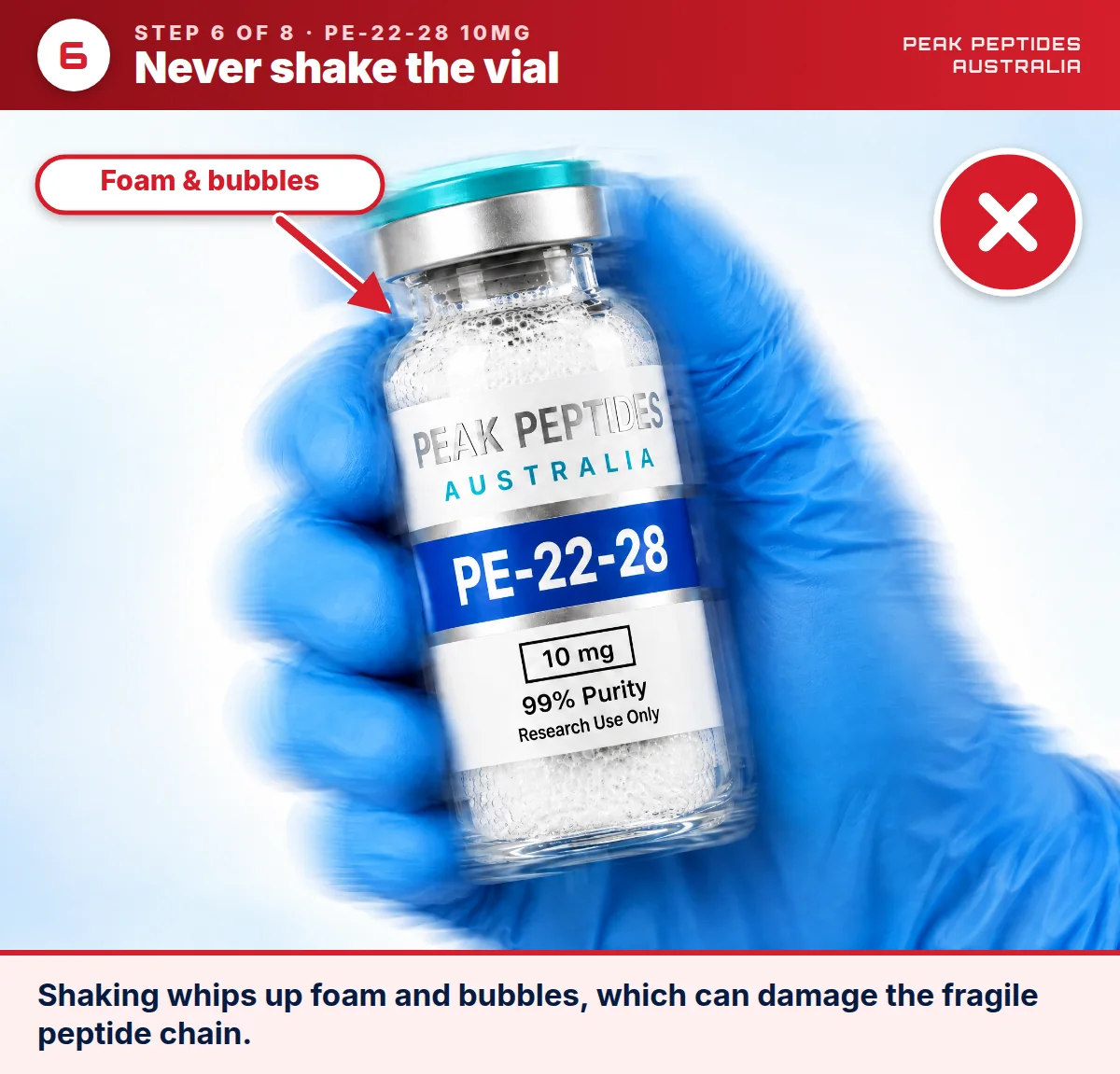
6Step 6: Never shake the vial
Do not shake the vial. Vigorous shaking can create foam, bubbles and particle formation in susceptible peptide preparations. If bubbles appear after accidental agitation, stop the movement and let the vial stand.
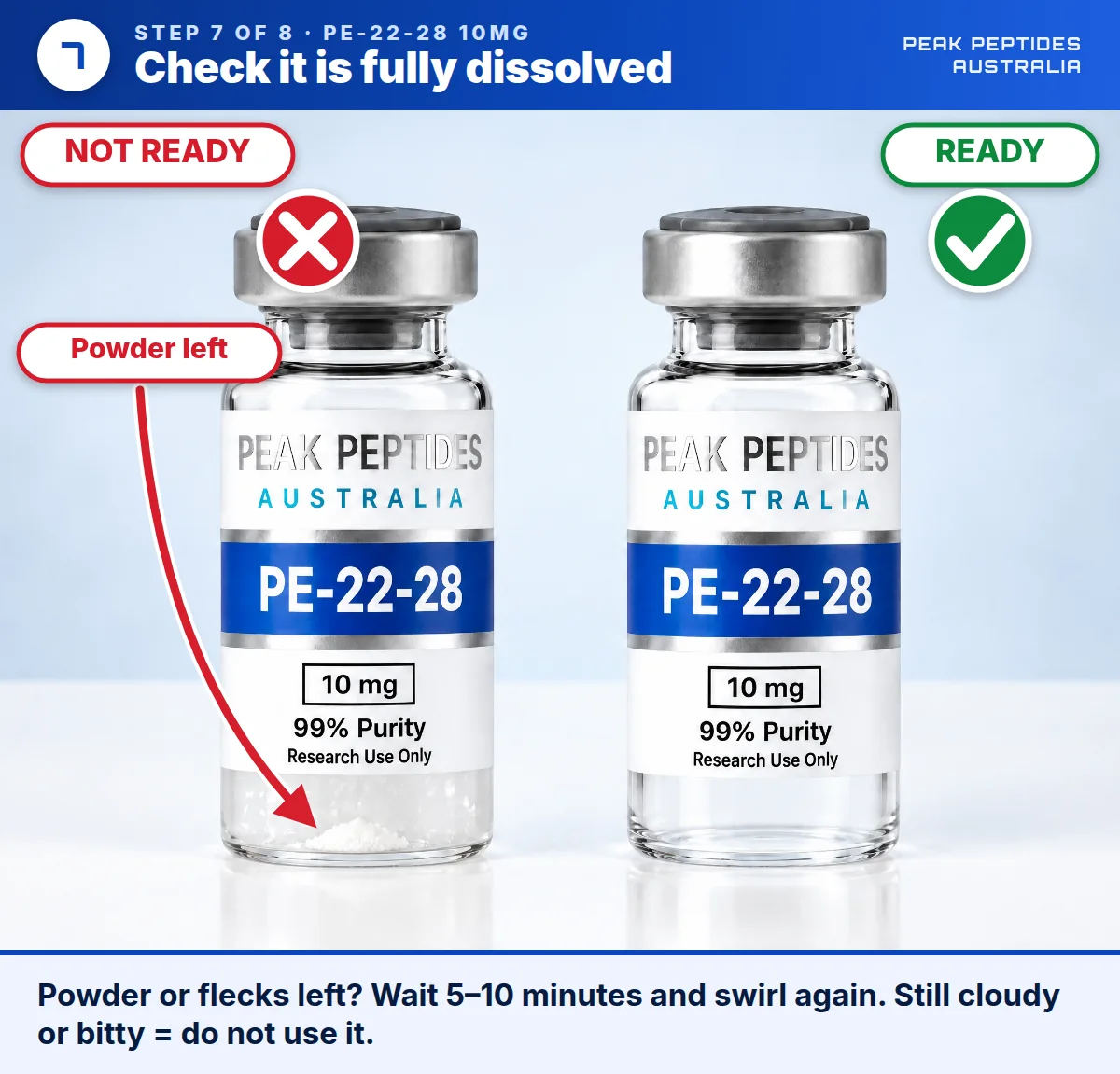
7Step 7: Check it is fully dissolved
Inspect the vial under good light. The prepared liquid should not have persistent powder, flecks, unexpected cloudiness or colour change. If material remains, use only the permitted gentle mixing approach and allow standing time rather than adding unplanned extra liquid. Set aside a visibly questionable sample instead of assuming it is suitable.
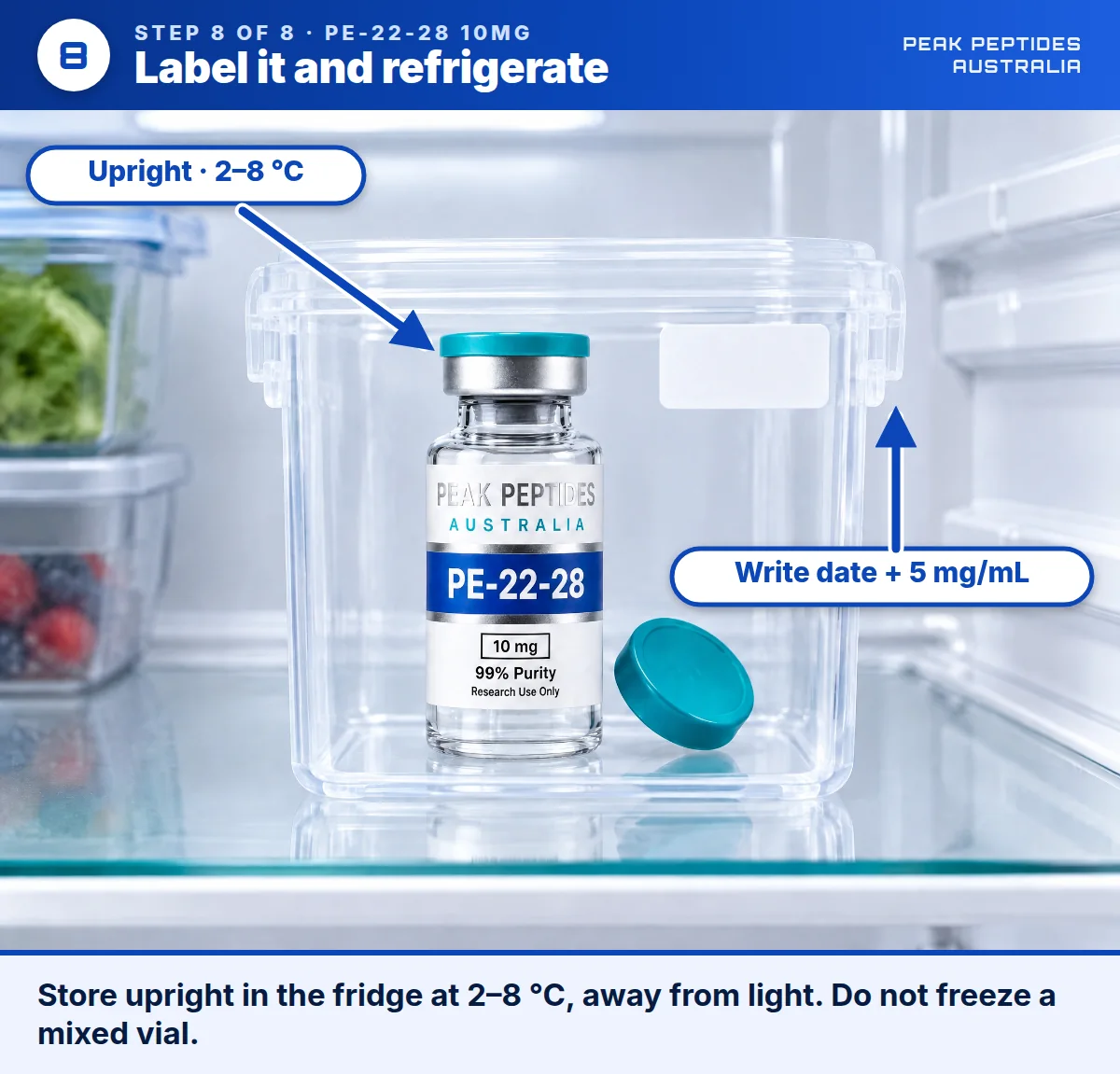
8Step 8: Label it and refrigerate
Label the vial with the preparation date, selected diluent, final volume and calculated nominal concentration. Store upright in the fridge at 2–8 °C, protected from light. Use within about 4 weeks (28 days). Do not freeze a reconstituted preparation.
How to store PE-22-28
PE-22-28 handling and storage guide
PE-22-28 handling and storage guide
Form
Handling focus
What can be stated for this listing
Sealed freeze-dried powder
Keep dry, protected from light and sealed
Keep upright in the fridge at 2–8 °C, away from light. Use within about 4 weeks (28 days); never freeze.
Before preparation
Inspect cap, crimp, stopper and powder
Unexpected moisture, damage or discolouration is a reason to isolate the vial
Mixed preparation
Store upright and away from light
Keep at 2–8 °C; use within about 4 weeks (28 days).
Mixed preparation
Freezer
Never freeze
Mixed preparation
Appearance
Set aside persistent cloudiness, particles or unexpected colour
Once mixed with BAC water, keep it upright in the fridge at 2–8 °C, away from light. Use within about 4 weeks (28 days), never freeze it, and write the date and strength on the vial.
PE-22-28 is a synthetic seven-amino-acid peptide with the sequence GVSWGLR. It was developed from shortened spadin fragments and is studied as an inhibitor of the TREK-1, or K2P2.1, potassium channel in laboratory systems.
What is PE 22-28 also called?
The common spelling variants are PE-22-28, PE 22-28 and PE22-28. It is also accurately described as a spadin-derived heptapeptide. Spadin is a related longer parent peptide, not an interchangeable name for PE-22-28.
What is PE-22-28 studied for in research?
PE-22-28 is studied for TREK-1 potassium-channel biology. The main direct paper used human-TREK-1-expressing HEK cells, mouse behavioural assays, mouse hippocampal neurogenesis measures and mouse cortical-neuron experiments. Those experiments frame laboratory questions rather than personal-health outcomes.
How does PE-22-28 work in the 2017 study?
In the reported cell assay, PE-22-28 inhibited current through human TREK-1 channels. TREK-1 is a potassium channel that contributes to cell electrical behaviour. The researchers measured the current with patch clamp, an electrophysiology technique, and reported an IC50 of 0.12 nM.
What does an IC50 of 0.12 nM mean for PE-22-28?
IC50 means the concentration that caused half of the measured inhibition in a particular assay. For PE-22-28, 0.12 nM came from the paper's human-TREK-1/HEK patch-clamp assay.
What did PE-22-28 studies find?
The 2017 paper reported TREK-1 inhibition in cells, lower immobility in a mouse forced-swim test, lower feeding latency in a mouse novelty-suppressed-feeding test, increased BrdU-positive-cell counts in mouse hippocampi and increased PSD-95 in mouse cortical neurons under its experimental conditions.
Does PE-22-28 research prove a treatment for depression?
No. The direct PE-22-28 paper is preclinical. Its behavioural, neurogenesis and neuron findings came from specific cell and mouse experiments, not from clinical trials. PE-22-28 is not an established depression treatment and this research listing is supplied for in-vitro work only.
Are PE-22-28 and spadin the same peptide?
No. Spadin is the longer sortilin-derived parent peptide, while PE-22-28 is a seven-amino-acid fragment designed during shortened-spadin research. Potency, duration, selectivity and biological findings must be tied to the exact peptide or analogue used in each experiment.
How does PE-22-28 compare with Semax?
PE-22-28 and Semax are both seven amino acids long but have different sequences and research origins. PE-22-28 is GVSWGLR and was studied at TREK-1. Semax is MEHFPGP, an ACTH(4–10) analogue with a C-terminal Pro-Gly-Pro group. They are not the same molecule.
How does PE-22-28 compare with Selank?
PE-22-28 is GVSWGLR, while Selank is TKPRPGP. PE-22-28 comes from spadin-fragment research and the central direct experiment concerns TREK-1 current. Selank is a tuftsin-family heptapeptide with published GABA-receptor modulation work. They are distinct research compounds.
What is the PE-22-28 sequence?
The PE-22-28 sequence is Gly-Val-Ser-Trp-Gly-Leu-Arg, written with one-letter amino-acid codes as GVSWGLR. Cayman Chemical lists the free-peptide formula as C35H55N11O9 and lists a 773.9 formula weight for its PE 22-28 acetate product.
What does 10mg mean on this PE-22-28 vial?
The 10mg label is the nominal total quantity stated for the vial. Final laboratory concentration depends on the chosen volume and the actual content verified by an appropriate method.
Is PE-22-28 approved by the TGA or FDA?
No. PE-22-28 is not an approved medicine listed in the Australian Register of Therapeutic Goods, and no FDA-approved PE-22-28 medicine is identified in Drugs@FDA. This product is supplied strictly for in-vitro laboratory research, not as a therapeutic good.
Can I buy PE-22-28 10mg online in Australia?
PE-22-28 10mg can be ordered online from Peak Peptides Australia when it is in stock. In-stock orders receive same-day dispatch from Victoria once payment is confirmed, with tracked Australia Post Express and a tracking number emailed. It is supplied for in-vitro research only.
How fast is PE-22-28 shipping in Australia?
For in-stock orders, Peak Peptides Australia dispatches the same day from Victoria once payment is confirmed. Parcels travel by tracked Australia Post Express and the tracking number is emailed. Transit time depends on the destination and Australia Post handling.
Does PE-22-28 10mg have a LabDoc report?
Yes. LabDoc report LD-UVDL records LC-MS-confirmed identity, 99.68% HPLC purity and 9.2mg HPLC content, equal to 92% of the 10mg label claim. The report records sample receipt and testing on 26 October 2026 and an overall Pass.
How is this PE-22-28 sample verified?
The vial is labelled 99% purity, and LabDoc report LD-UVDL independently tested the sample: identity confirmed by LC-MS, 99.68% purity by HPLC and 9.2mg measured content by HPLC. The signed report is on the Quality page and the report ID can be checked on labdoc.org.
What should a PE-22-28 COA show?
A useful product-specific certificate identifies the tested material, names the lab or method, gives a test date and separates identity, purity and content. For this vial, LD-UVDL reports identity by LC-MS and purity and content by HPLC, with a verification page on LabDoc’s website.
How much BAC water for PE-22-28 10mg?
For nominal measurement maths, 1 mL makes 10 mg/mL, 2 mL makes 5 mg/mL and 3 mL makes 3.33 mg/mL from the 10mg label. The page highlights 2 mL because 20 U-100 units then represents 1 mg of the nominal label amount.
How many units is 1 mg of PE-22-28?
It depends on the total volume. With a nominal 10mg vial mixed to 2 mL, the concentration is 5 mg/mL and 1 mg is 20 units on a U-100 syringe. With 1 mL it is 10 units; with 3 mL it is 30 units.
How many mg are in 10 units of PE-22-28?
With a nominal 10mg vial mixed to 2 mL, 10 U-100 units is 0.5 mg. With 1 mL, 10 units is 1 mg. With 3 mL, 10 units is about 0.33 mg. These are volume conversions from the label quantity.
How do I reconstitute PE-22-28 10mg?
Use the eight-step photo guide: prepare a clean work surface, disinfect the stoppers, measure the selected diluent volume, add it slowly down the glass wall, swirl rather than shake, inspect the liquid, label the vial and follow product-specific storage instructions.
Can I use sterile or tap water instead of BAC water?
Never use tap water. Sterile water and bacteriostatic water are different diluents: bacteriostatic water contains a preservative, while sterile water does not. Once mixed with BAC water, keep it upright in the fridge at 2–8 °C, away from light, use within about 4 weeks (28 days) and never freeze it.
What if PE-22-28 powder does not dissolve?
Do not add extra liquid simply to force dissolution because that changes the concentration. Allow the permitted gentle mixing method, then inspect under good light. Persistent powder, visible particles or cloudiness means the sample should be set aside rather than assumed suitable.
Should reconstituted PE-22-28 be cloudy?
No unexpected cloudiness, flecks or visible particles should be accepted as normal. Inspect the preparation against the product description under good light. Appearance cannot confirm identity or potency, but a visibly questionable vial should be isolated instead of used.
How long does mixed PE-22-28 last?
Once mixed with bacteriostatic water, keep the vial upright in the fridge at 2–8 °C, away from light. Use it within about 4 weeks (28 days) and never freeze it. Write the date and strength on the vial.
How should I store PE-22-28 powder before mixing?
Keep the sealed powder dry, in the fridge at 2–8 °C and protected from light (freezer −20 °C for long-term storage). Lyophilised material is sensitive to moisture, light and heat.
Can reconstituted PE-22-28 be frozen?
No. Never freeze a reconstituted peptide preparation. Freezing and thawing can stress a dissolved peptide and change its physical condition. Store a mixed vial upright in the fridge at 2–8 °C, away from light, and use it within about 4 weeks (28 days).