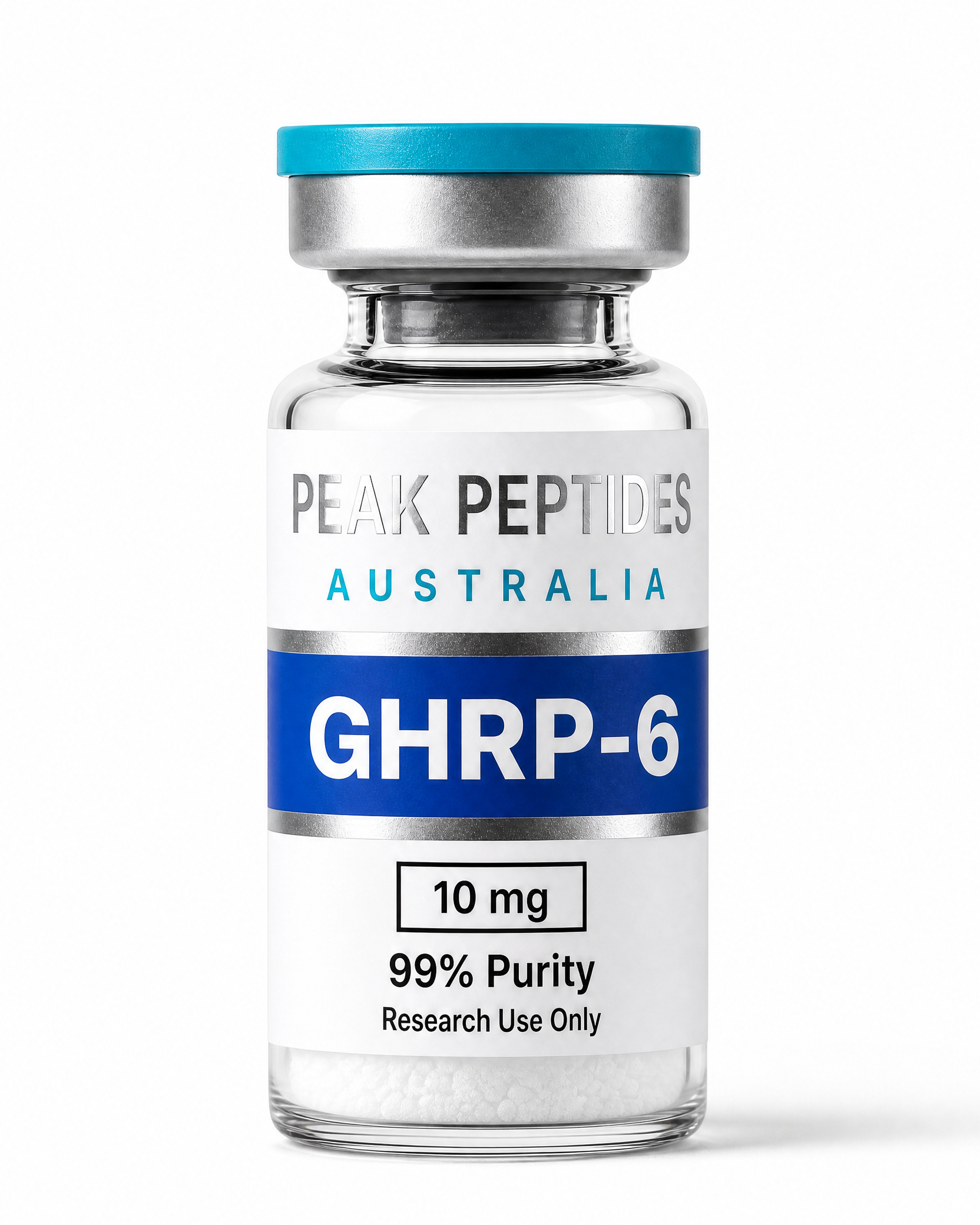
GHRP-6 10mg is a synthetic hexapeptide supplied for in-vitro ghrelin-receptor and growth-hormone-secretagogue pathway research. The vial label states 10 mg and 99% purity. In-stock orders receive same-day dispatch from Victoria after payment confirmation, with tracked Australia Post Express shipping Australia-wide.
Product Specifications
Full NameGrowth Hormone Releasing Peptide-6
Vial Size10mg
PurityRefer to available COA documentation
Legal Disclaimer
This product is sold strictly for in-vitro laboratory research purposes only. It is not a therapeutic good, is not approved by the TGA, and is not intended for human or animal consumption, injection, or any diagnostic or therapeutic use.
Ghrelin-receptor pathway research · Updated 24 October 2026
GHRP-6 10mg — What It Is, Research Findings & Reconstitution Guide
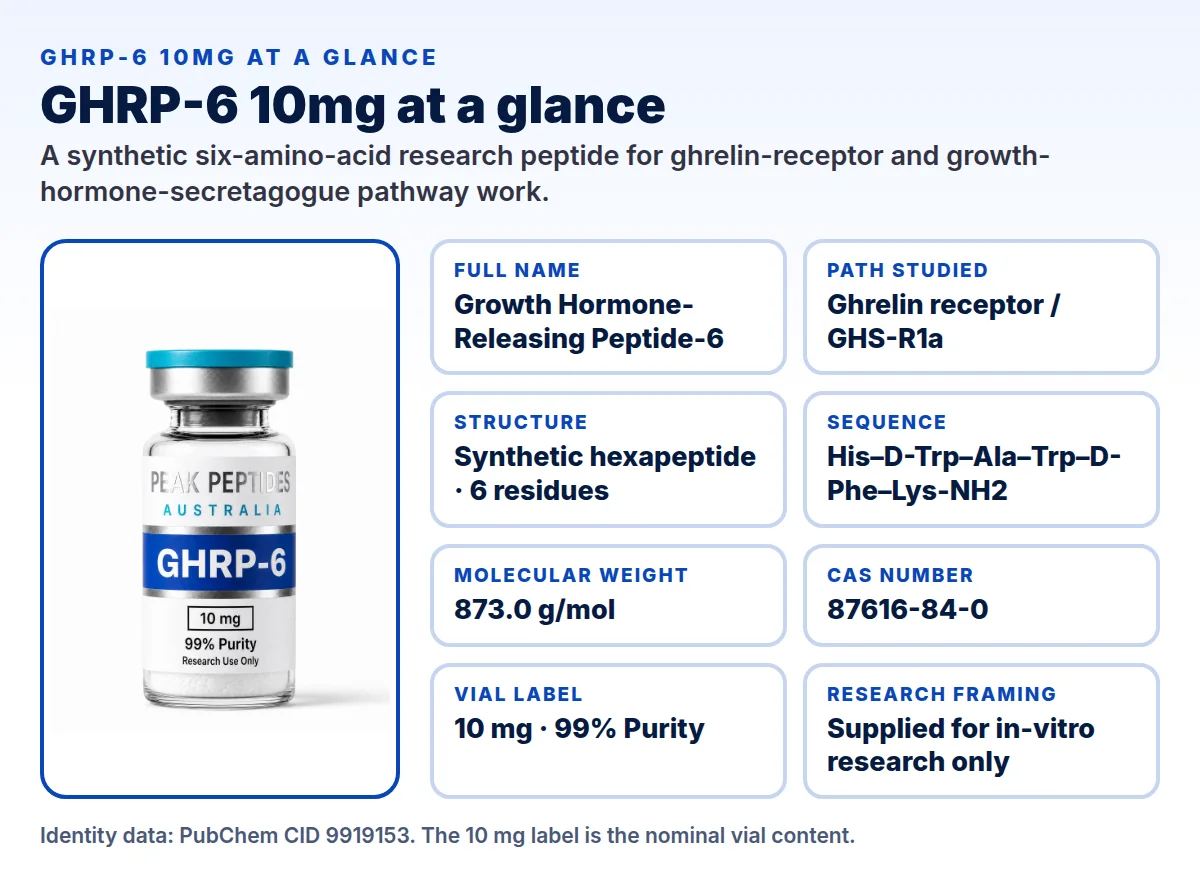
GHRP-6, short for Growth Hormone-Releasing Peptide-6, is a synthetic six-amino-acid peptide studied as a growth hormone secretagogue. In plain English, it is a research compound that activates the growth hormone secretagogue receptor, also called the ghrelin receptor, rather than supplying growth hormone itself. The scientific literature uses GHRP-6, GHRP 6, GHRP6 and growth hormone-releasing hexapeptide for this molecule. This vial is labelled GHRP-6, 10 mg and 99% Purity. This page explains the molecule’s structure, the short human hormone studies, and the difference between GHRP-6, Ipamorelin and GHRH analogues such as CJC-1295, Sermorelin and Tesamorelin. It also includes a photo reconstitution guide and 10 mg BAC water chart. Peak Peptides Australia supplies GHRP-6 for in-vitro research only, not for human or animal use.
Also referred to in research or catalogue references as Growth Hormone-Releasing Peptide-6, Growth Hormone Releasing Peptide 6, GHRP 6, GHRP6, GH-releasing peptide-6, Growth hormone-releasing hexapeptide, GHRP-6 peptide, His-D-Trp-Ala-Trp-D-Phe-Lys-NH2, SKF-110679, Hexapeptide-2.
A synthetic six-amino-acid growth hormone secretagogue for ghrelin-receptor pathway research
Primary research pathway
Growth hormone secretagogue receptor, also called the ghrelin receptor or GHS-R1a
Sequence
His-D-Trp-Ala-Trp-D-Phe-Lys-NH2
Formula and size
C46H56N12O6 · molecular weight 873.0 g/mol
CAS number
87616-84-0
Human research
Short physiology studies measured GH and IGF-I responses, not long-term body-composition outcomes
Vial label
10 mg nominal content · 99% Purity
This product’s quality evidence
No product-specific LabDoc report published; catalogue records ≥99% purity by HPLC
Source-reference mix
3 mL BAC water = 3.33 mg/mL; 30 U-100 units = 1 mg
Mixed-vial storage
Upright, away from light and refrigerated at 2–8 °C; use within about 4 weeks (28 days), never freeze
Dispatch
Same-day from Victoria for in-stock orders after payment confirmation, tracked Australia Post Express
A six-building-block peptide
GHRP-6 is a synthetic hexapeptide: a chain of six amino-acid building blocks. PubChem records its sequence as His-D-Trp-Ala-Trp-D-Phe-Lys-NH2, molecular formula C46H56N12O6, molecular weight 873.0 g/mol and CAS number 87616-84-0.
The ghrelin-receptor pathway
GHRP-6 is studied at the growth hormone secretagogue receptor, commonly called the ghrelin receptor or GHS-R1a. This receptor is part of the signalling network that links hunger biology and pulsatile growth-hormone release.
What the human studies measured
Small human physiology studies measured short-term growth-hormone and IGF-I responses. They did not measure long-term muscle gain, injury recovery, lasting fat loss, strength or athletic performance. A hormone curve is not a body-composition result.
GHRH is part of the response
In a study of nine healthy men, a GHRH antagonist removed most of the measured growth-hormone response to GHRP-6. GHRP-6 is therefore not growth hormone replacement and does not act as a fixed substitute for the body’s hormone system.
Not the same as Ipamorelin
Ipamorelin is a separate five-amino-acid growth hormone secretagogue studied through the ghrelin-receptor pathway. It is not a GHRP-6 strength, formulation or substitute. Results for one compound do not automatically apply to the other.
Different from GHRH analogues
CJC-1295, Sermorelin and Tesamorelin are GHRH analogues, which act at the GHRH receptor rather than the ghrelin receptor. They share interest in the GH axis but are different molecules with different study records and regulatory positions.
What the 10 mg label means
10 mg is the nominal quantity shown on this vial label. Adding a known liquid volume creates a measurable concentration; the total in the vial stays at 10 mg.
Current batch evidence
No product-specific LabDoc report is published for this listing. The current catalogue records ≥99% purity by HPLC, and the vial label reads 99% Purity. Review the site Quality page for the available COA evidence.
GHRP-6 is a synthetic hexapeptide studied as a growth hormone secretagogue. A hexapeptide is simply a molecule made from six amino-acid building blocks. The full name is Growth Hormone-Releasing Peptide-6, and the literature also uses growth hormone-releasing hexapeptide, GHRP 6 and GHRP6 for the same compound.
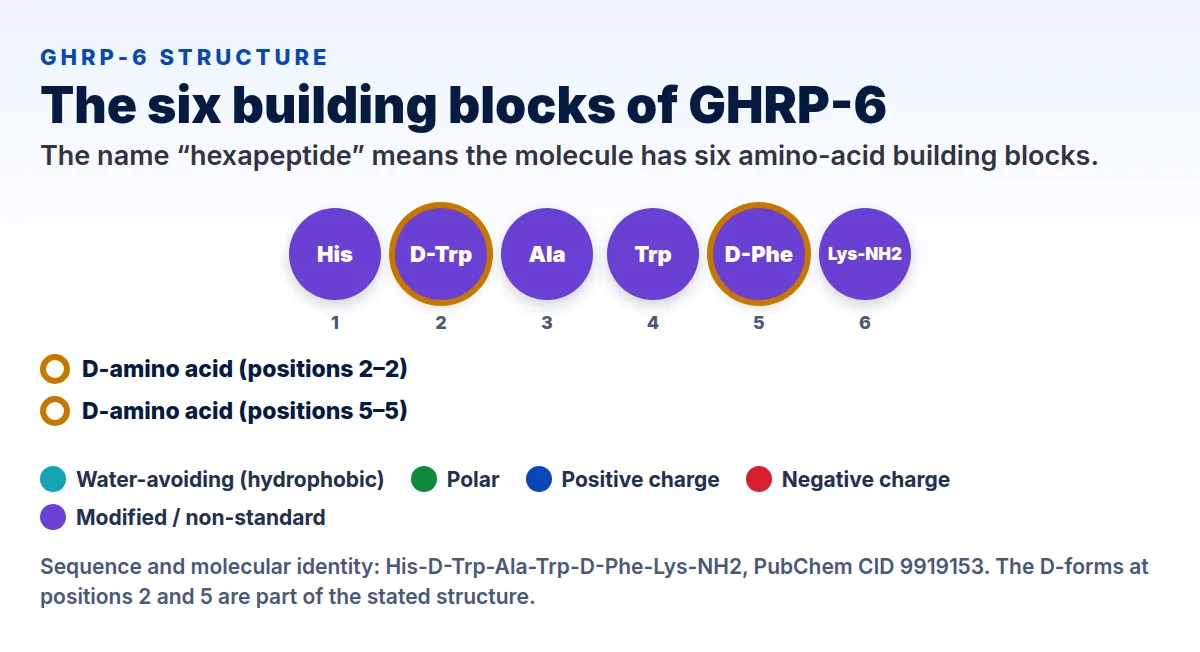
The published sequence is His-D-Trp-Ala-Trp-D-Phe-Lys-NH2. PubChem records the molecule as CID 9919153 with formula C46H56N12O6, molecular weight 873.0 g/mol and CAS number 87616-84-0. The D-forms of tryptophan and phenylalanine are stated parts of this six-residue structure, not label variants.
This product’s label identifies GHRP-6, 10 mg, 99% Purity and Research Use Only. The 10 mg figure is the nominal amount of dry material named on the vial. It does not state concentration, biological potency or an amount for a person. Peak Peptides Australia supplies this material for in-vitro research only.
GHRP-6 is a six-residue synthetic research peptide. The label on this vial states 10 mg and 99% Purity.
How does GHRP-6 work in research?
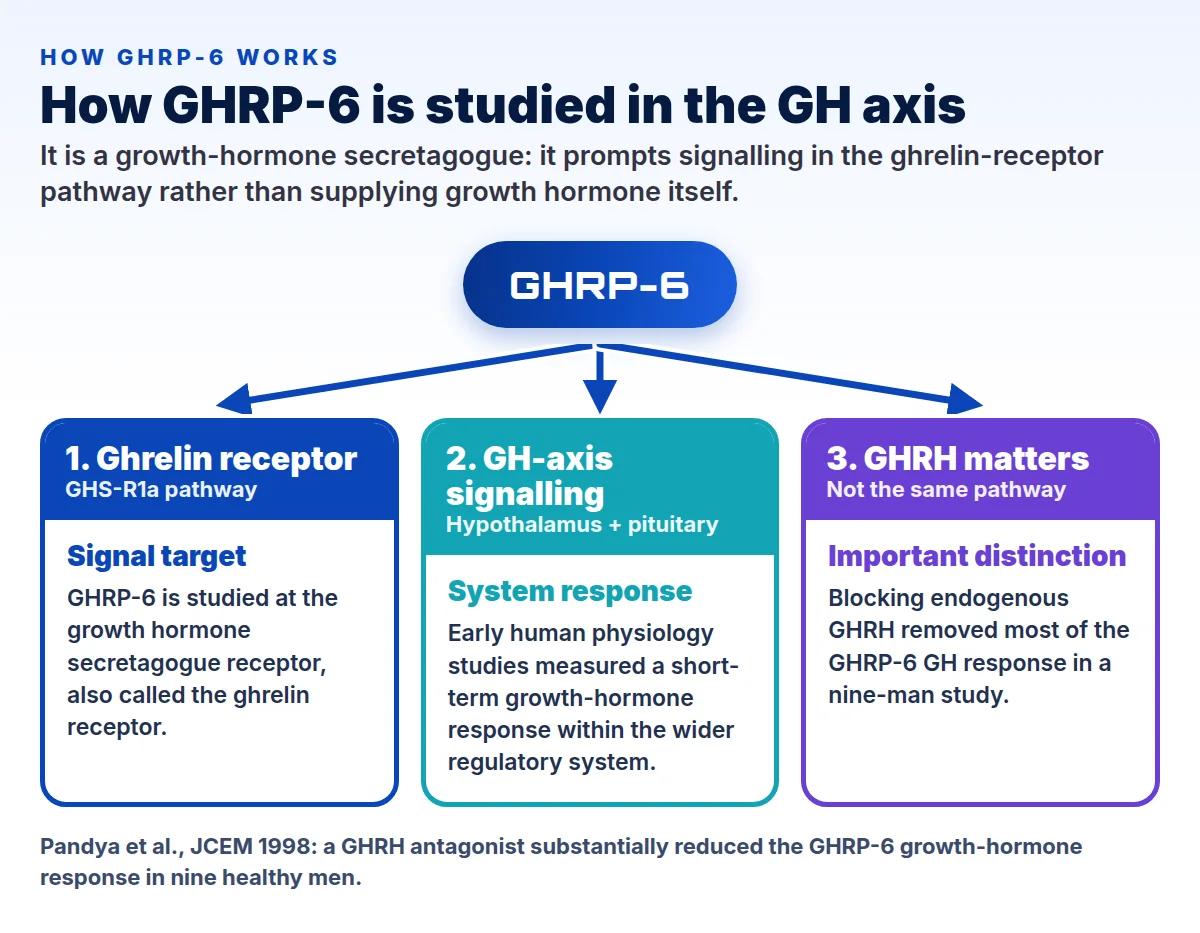
GHRP-6 is studied through the growth hormone secretagogue receptor, also called the ghrelin receptor or GHS-R1a. A secretagogue is a substance that prompts a cell or tissue to release a substance already made by the body. In this case, the research interest is the signalling that can lead to pulsatile growth-hormone release.
The ghrelin receptor sits within a broader hormone-control system involving the hypothalamus and pituitary. That detail matters because GHRP-6 is not growth hormone itself. A human study by Pandya and colleagues tested this directly: when researchers blocked endogenous GHRH, most of the measured GHRP-6 growth-hormone response disappeared.
That finding is useful for pathway research. It also prevents a common category error. GHRP-6 interacts with a signalling system; it is not a fixed replacement for growth hormone, and a short-term change in a blood hormone does not automatically predict a long-term physical outcome.
Growth hormone secretagogue receptor: the main receptor pathway studied for GHRP-6; it is also called the ghrelin receptor.
GHRH: the body’s growth hormone-releasing hormone, which acts through a different receptor and influenced most of the GHRP-6 response in the nine-man study.
Growth hormone pulse: a temporary rise measured in a controlled research setting; it is not evidence of muscle, recovery or fat-loss outcomes.
GHRP-6 is studied through the ghrelin-receptor pathway, while GHRH remains an important part of the measured GH response.
What did GHRP-6 research find in people?
GHRP-6 human research is mainly physiology research. It asks what happens to measured hormones under controlled conditions. The studies do not answer whether the compound changes long-term body composition, recovery, strength, sleep or physical performance, because those were not the outcomes measured.
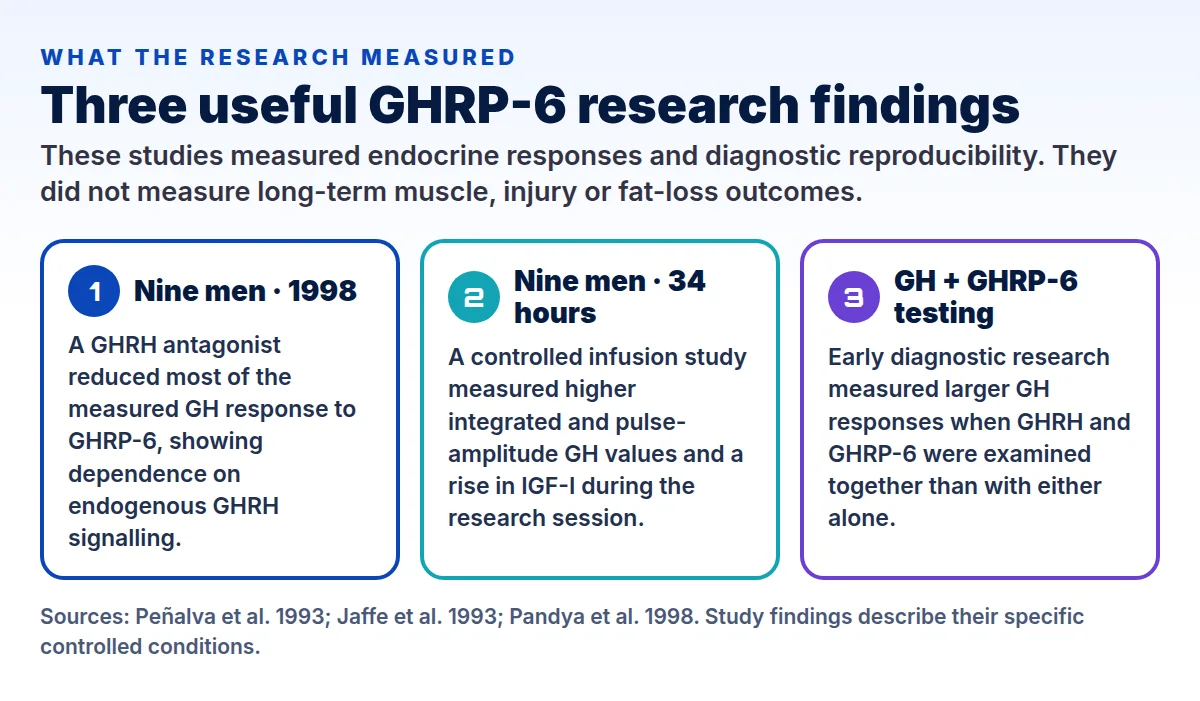
Pandya and colleagues studied nine healthy men aged 20 to 30 years on two occasions. After a GHRH antagonist, the maximum rise in growth hormone after GHRP-6 fell from 33.8 to 6.2 micrograms per litre, and the area-under-the-curve result also fell markedly. The authors concluded endogenous GHRH was necessary for most of the GHRP-6 response in humans.
A 34-hour controlled infusion study in nine healthy young men found higher integrated growth hormone concentration, higher maximum and mean pulse amplitude, and an increase in IGF-I during the research session. This is a measured endocrine finding over 34 hours. It is not a study of long-term clinical or athletic outcomes.
Another early human study examined GHRP-6 alone and together with GHRH. The combined condition produced a greater measured growth-hormone response than either compound alone under its study conditions. That result shows the pathways are biologically related; it does not make GHRP-6 and a GHRH analogue the same molecule.
The published human work measured endocrine responses. It did not measure muscle gain, injury healing or durable fat loss.
Selected human GHRP-6 physiology studies
Selected human GHRP-6 physiology studies
Study
Participants and setting
What researchers measured
Main finding
Pandya et al., 1998
Nine healthy men, two controlled visits
GH response to GHRP-6 with or without a GHRH antagonist
The antagonist removed most of the measured GH response
Jaffe et al., 1993
Nine healthy young men, 34-hour infusion
Pulsatile GH measures and IGF-I
Higher integrated GH, pulse amplitude and IGF-I during infusion
Peñalva et al., 1993
Normal men in controlled hormone tests
GH response to GHRP-6, GHRH and combinations
Combined GHRH and GHRP-6 response exceeded either alone
These are short endocrine studies. They describe measured hormone responses in their stated study conditions, not long-term treatment outcomes.
GHRP-6 vs Ipamorelin and GHRH analogues
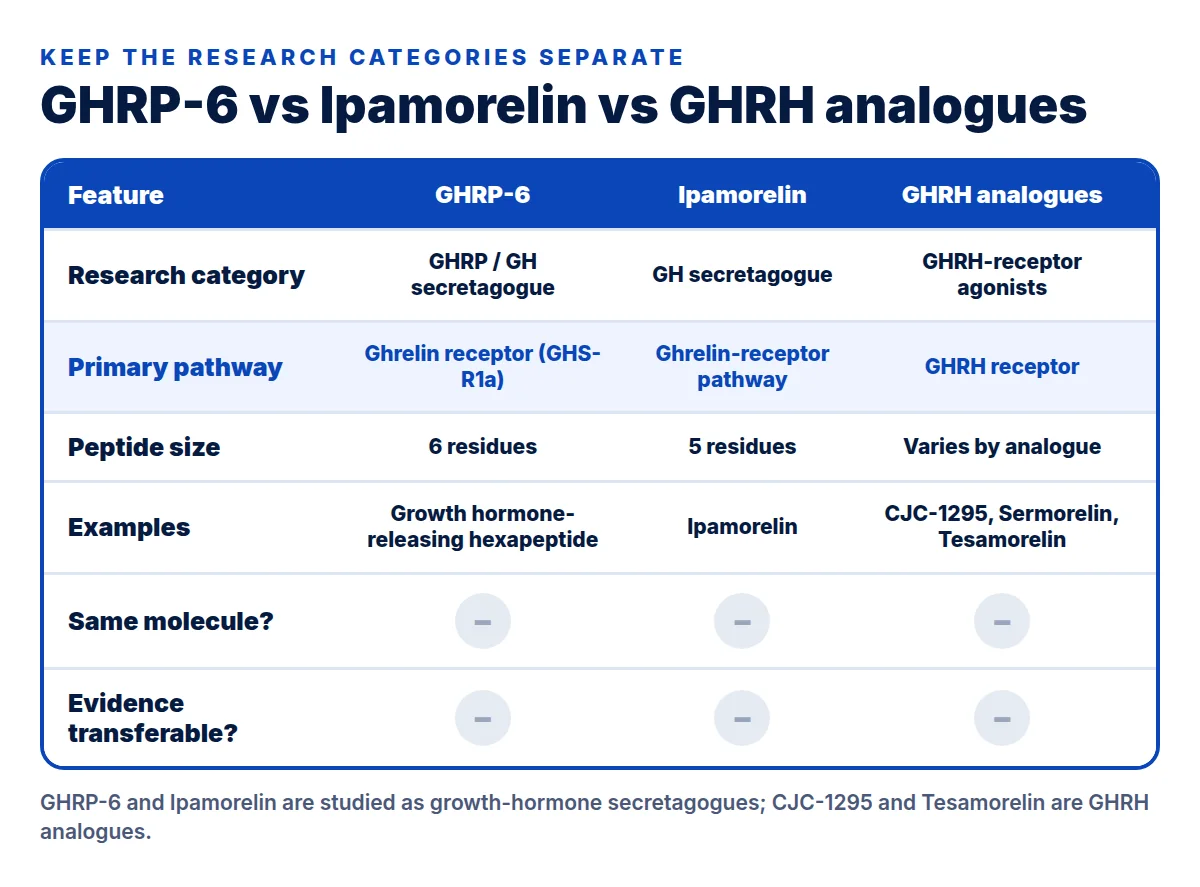
GHRP-6 and Ipamorelin belong in the growth hormone secretagogue comparison, not the GHRH-analogue comparison. Both are studied through the ghrelin-receptor pathway, but they are not the same peptide. GHRP-6 has six residues; Ipamorelin has five. A result, concentration or safety statement for one does not become evidence for the other.
CJC-1295, Sermorelin and Tesamorelin are different again. They are GHRH analogues: they act through the GHRH receptor on pituitary somatotroph cells. A 2006 randomised study calls CJC-1295 a long-acting GHRH analogue. The FDA label calls Tesamorelin a human growth hormone-releasing factor analogue and describes its binding to human GRF receptors.
The same GH-axis vocabulary can make these products sound interchangeable. They are not. The receptor, molecular structure, research duration, formulation and regulatory status all need to stay attached to the specific compound being discussed. The visual below gives a fast category check before comparing any research result.
GHRP-6 and Ipamorelin are ghrelin-pathway secretagogues; CJC-1295, Sermorelin and Tesamorelin are GHRH analogues.
GHRP-6 structure and molecular identity
GHRP-6 is short enough to show as a complete sequence: His-D-Trp-Ala-Trp-D-Phe-Lys-NH2. Histidine is first, followed by D-tryptophan, alanine, tryptophan, D-phenylalanine and lysine amide. The sequence is useful when checking molecular identity because it distinguishes GHRP-6 from five-residue Ipamorelin and much longer GHRH analogues.
PubChem lists GHRP-6 under compound ID 9919153. Its synonym record includes Growth hormone-releasing peptide-6, GH-Releasing hexapeptide 6, Hexapeptide-2, SKF-110679 and the CAS number 87616-84-0. Names can vary in search results; the stated structure and database identifiers are more reliable identity anchors.
The molecular weight is 873.0 g/mol and the exact mass recorded by PubChem is 872.44457755. Those values describe the molecule’s chemical identity.
GHRP-6 is a six-residue chain. The D-amino-acid positions shown are part of the published molecular identity.
Quality evidence for this GHRP-6 10mg vial
This GHRP-6 10mg listing has no product-specific LabDoc report. The current catalogue records ≥99% purity by HPLC, while the vial photograph is labelled 99% Purity.
A useful quality record identifies what sample was tested, names the method and records the analytical result. HPLC is a separation method commonly used to assess purity. Identity testing, content measurement and microbial or sterility testing answer different questions, so a purity figure alone is not a complete profile of a vial.
Use the Quality page to inspect the available COA information and the site’s guide to recognising a report. Match the product name, batch details and testing organisation to the material in question. Peak Peptides Australia supplies GHRP-6 10mg for in-vitro research only.
Published listing evidence: ≥99% purity by HPLC in the current catalogue.
Vial label evidence: GHRP-6, 10 mg, 99% Purity and Research Use Only.
Not published: a product-specific LabDoc report for this GHRP-6 10mg listing.
Do not use a report for another peptide as verification for GHRP-6.
Buying GHRP-6 10mg in Australia
GHRP-6 10mg is available from Peak Peptides Australia as a research material supplied for in-vitro research only. The listing uses the name GHRP-6 and the vial image shows a royal-blue GHRP-6 band with a boxed 10 mg strength. Search variants such as GHRP 6, GHRP6 and growth hormone-releasing hexapeptide refer to the same research molecule.
For in-stock orders, Peak Peptides Australia dispatches from Victoria on the same day once payment is confirmed. Parcels are sent by tracked Australia Post Express and the tracking number is emailed. The product page, vial label and quality documentation should be checked together when matching a product to its listing.
Australian regulatory context is clear: this is not a TGA-approved therapeutic good. The TGA says many peptide products imported into and supplied in Australia are unapproved therapeutic goods outside the ARTG. The FDA also lists GHRP-6 in its Category 2 safety-risk review for 503B bulk compounding.
Step-by-step guide · About 10 minutes
How to reconstitute GHRP-6 10mg (step-by-step with photos)
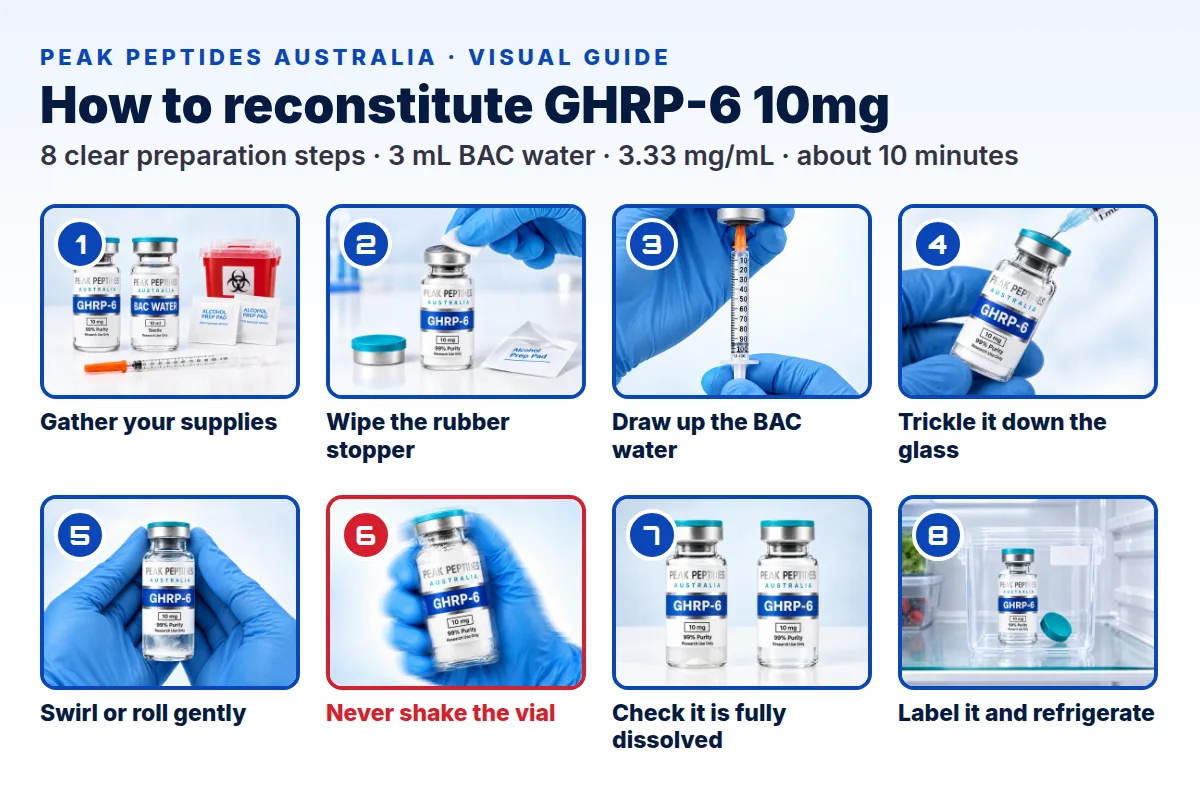
GHRP-6 10mg arrives as freeze-dried powder. Reconstitution means adding a measured liquid volume so the material dissolves into a known concentration for research measurement. The PeptideDosages reference for a 10 mg GHRP-6 vial uses 3 mL of BAC water, producing 3.33 mg/mL. The eight photos below show clean preparation, slow addition, gentle mixing, inspection and refrigerated storage.
A visual overview of the eight GHRP-6 10mg preparation steps.
What you need
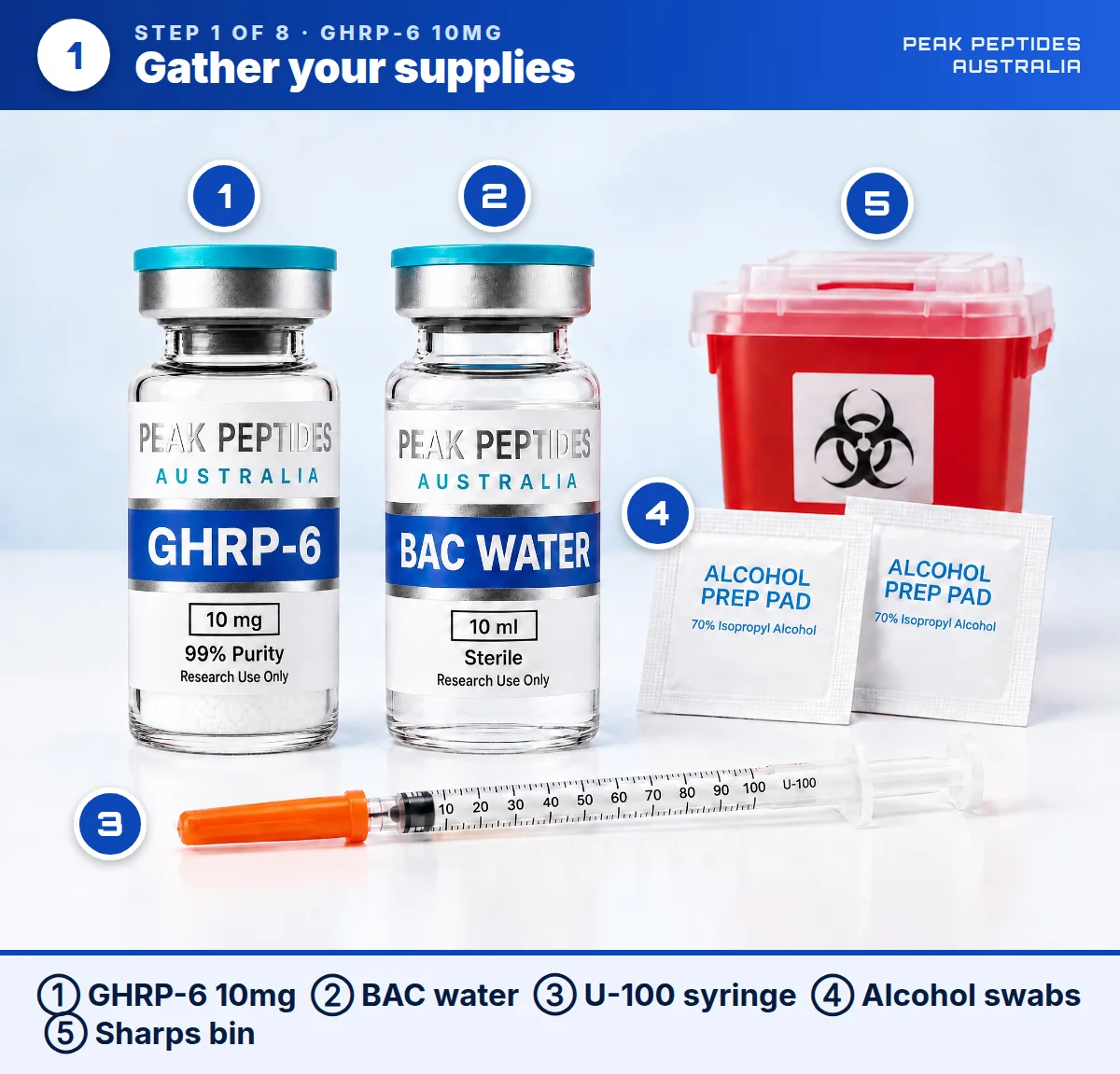
GHRP-6 10mg vialFreeze-dried powder in a sealed glass vial with a GHRP-6 10 mg label.
1 mL U-100 syringeA U-100 scale has 100 units per mL, so one unit is 0.01 mL.
Alcohol swabsUse a fresh swab to clean each rubber stopper before entry.
Sharps containerFor immediate disposal of used needles and syringes.
How much BAC water for GHRP-6 10mg?
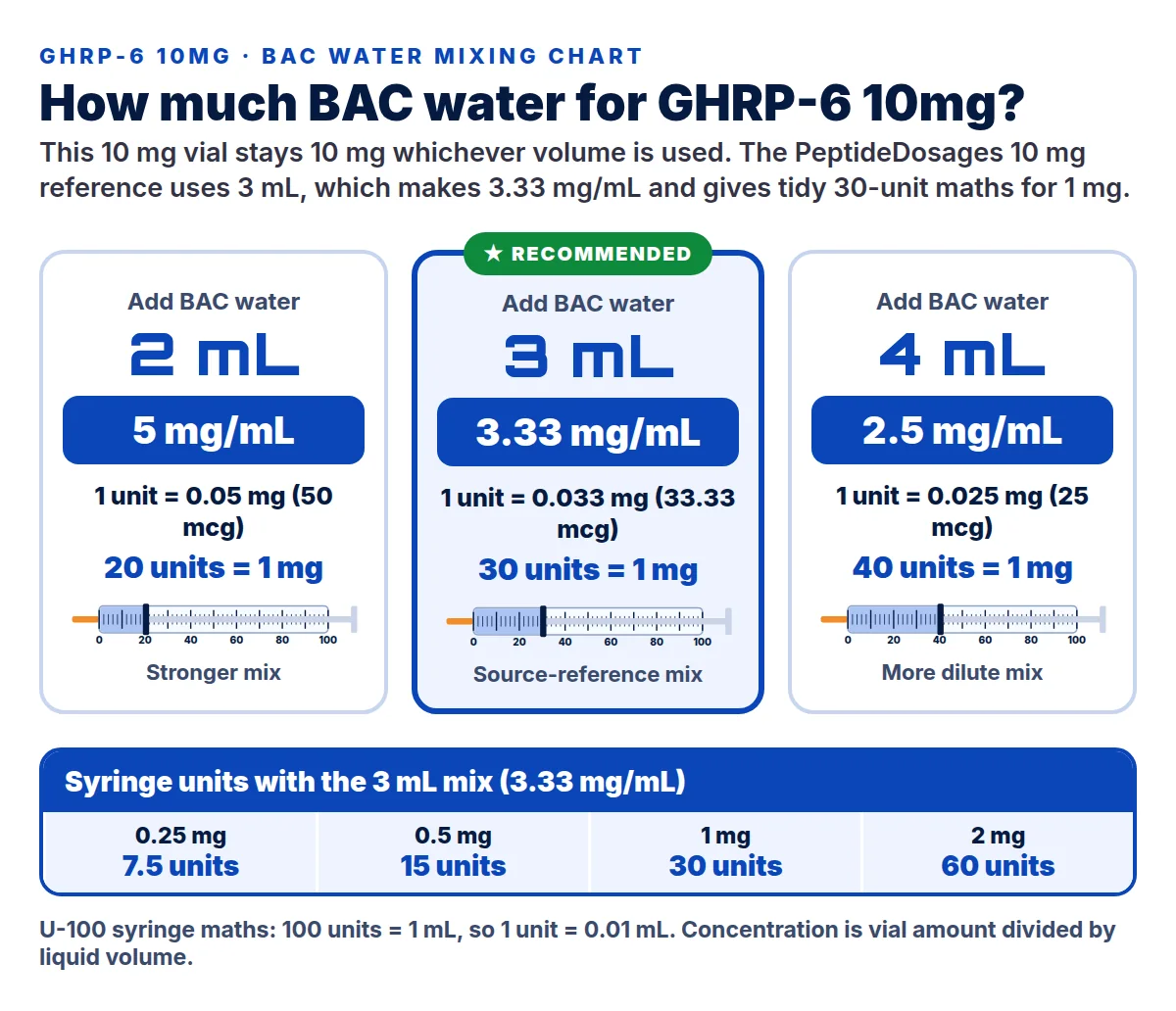
A 10 mg vial holds the same total amount regardless of the BAC water volume. More liquid lowers the concentration per mL and per U-100 unit; less liquid raises it. The chart compares 2 mL, 3 mL and 4 mL volumes so each concentration can be checked before any research measurement.
The source-reference mix is 3 mL, which gives 3.33 mg/mL. At that concentration, 30 units on a U-100 syringe equals 1 mg and 10 units equals about 0.33 mg. The formula is concentration = 10 mg divided by the selected liquid volume; U-100 units are mL multiplied by 100.
The 3 mL source-reference mix gives 3.33 mg/mL and 30 U-100 units for 1 mg.
3 mL is highlighted because it gives the simplest numbers.
Syringe units with the 3 mL mix (3.33 mg/mL)
Syringe units with the 3 mL mix (3.33 mg/mL)
Amount
Units on a U-100 syringe
Volume
0.25 mg
7.5 units
0.075 mL
0.5 mg
15 units
0.15 mL
1 mg
30 units
0.3 mL
2 mg
60 units
0.6 mL
The 8 steps
1Step 1: Gather your supplies
Lay out the labelled GHRP-6 10mg vial, BAC water, new U-100 syringe, alcohol swabs and sharps container on a clean, well-lit surface. Check the vial label and sealed stopper before starting. The source-reference concentration uses a total of 3 mL of BAC water.
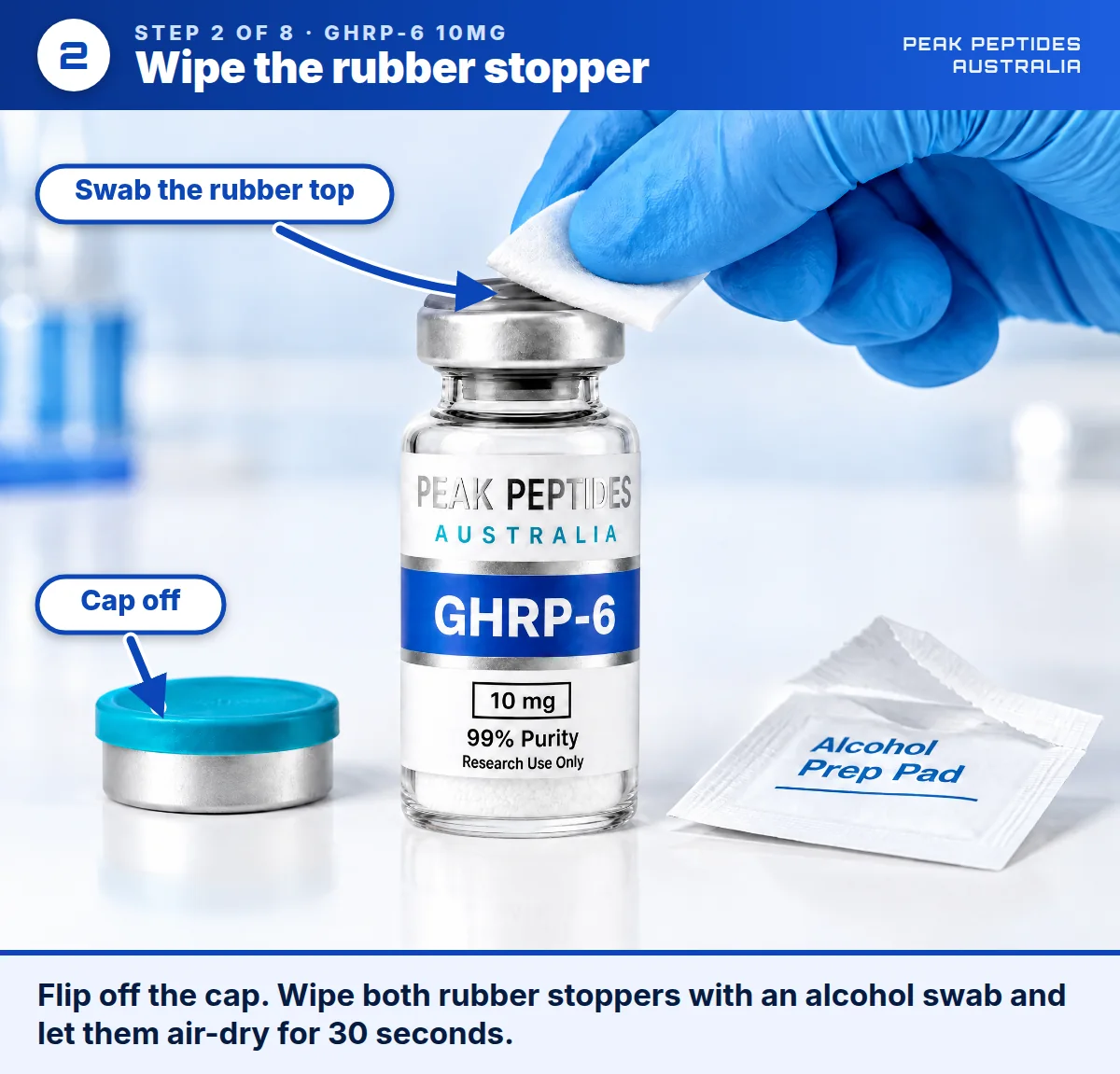
2Step 2: Wipe the rubber stopper
Remove the flip-off cap without disturbing the rubber stopper. Wipe the GHRP-6 vial stopper and the BAC water stopper with separate fresh alcohol swabs. Let both surfaces air-dry for about 30 seconds, then avoid touching the cleaned rubber areas.
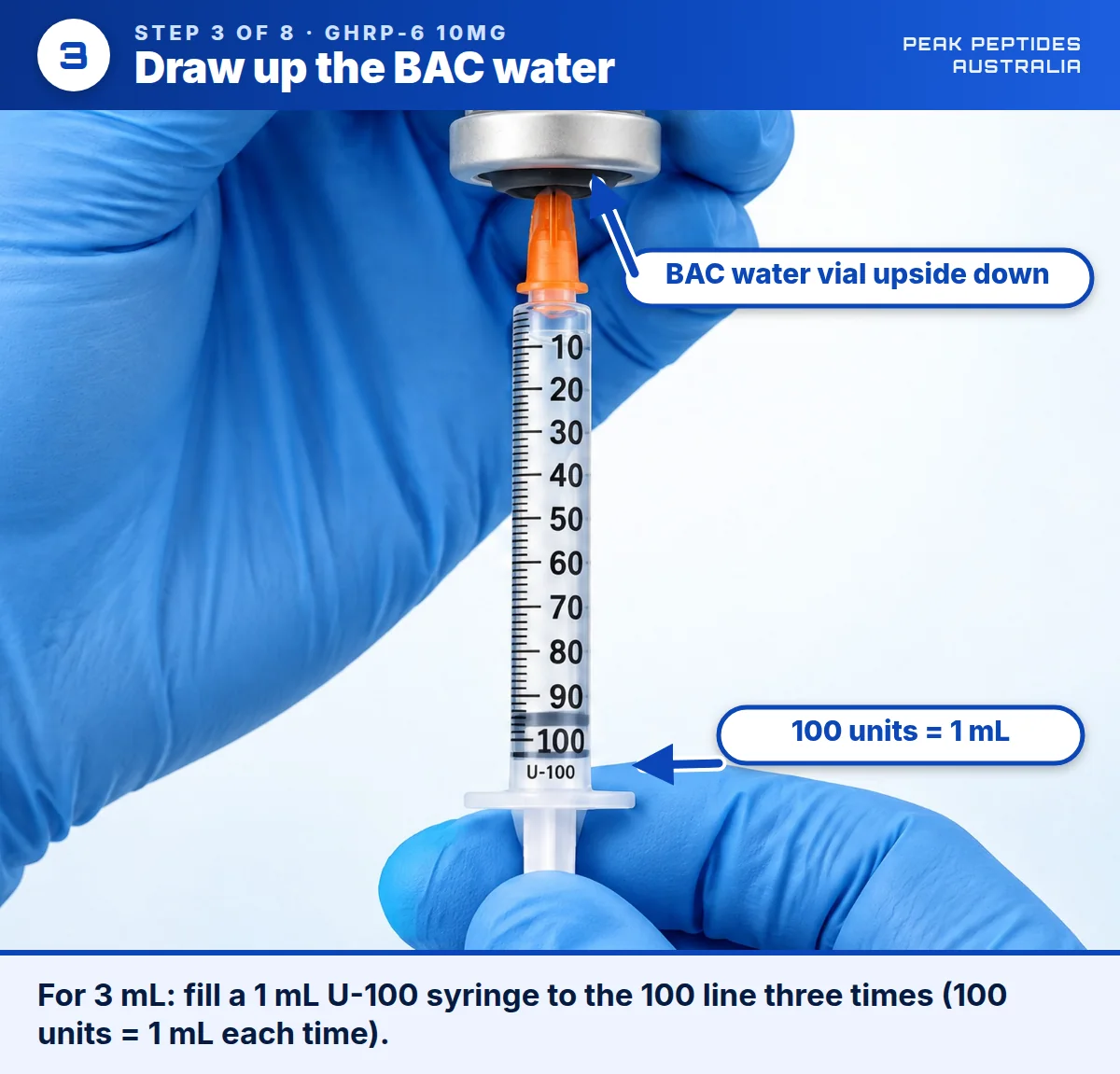
3Step 3: Draw up the BAC water
Measure BAC water using the U-100 syringe scale. One full U-100 syringe is 1 mL or 100 units. For the 3 mL source-reference mix, measure three separate 1 mL transfers. Check the liquid level at eye height and remove large air bubbles before transfer.
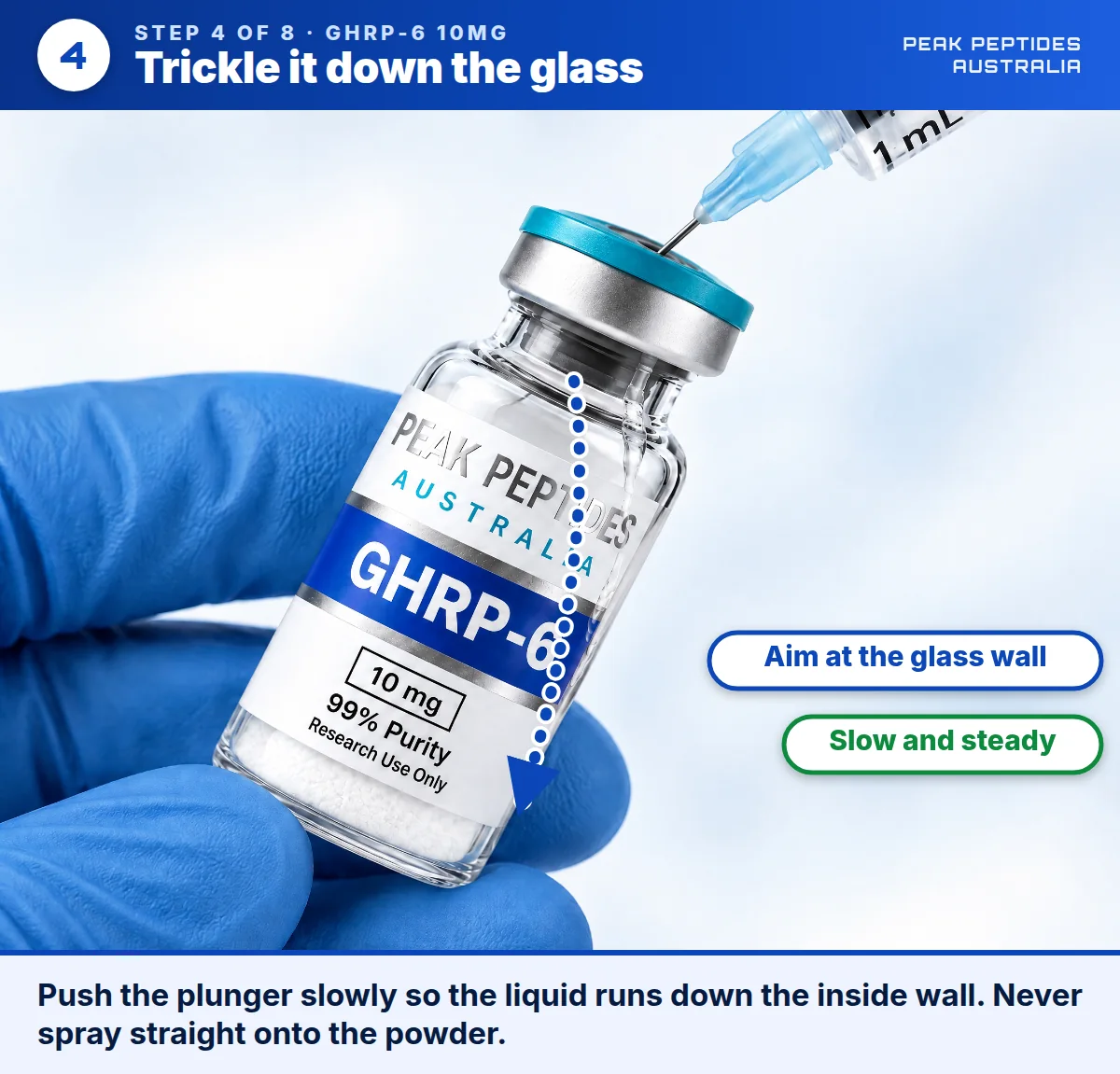
4Step 4: Trickle it down the glass
Angle the GHRP-6 vial so the needle tip rests near the inside wall. Press the plunger slowly and let the liquid run down the glass instead of forcefully striking the freeze-dried powder. Repeat the measured transfer carefully until the selected total volume has been added.
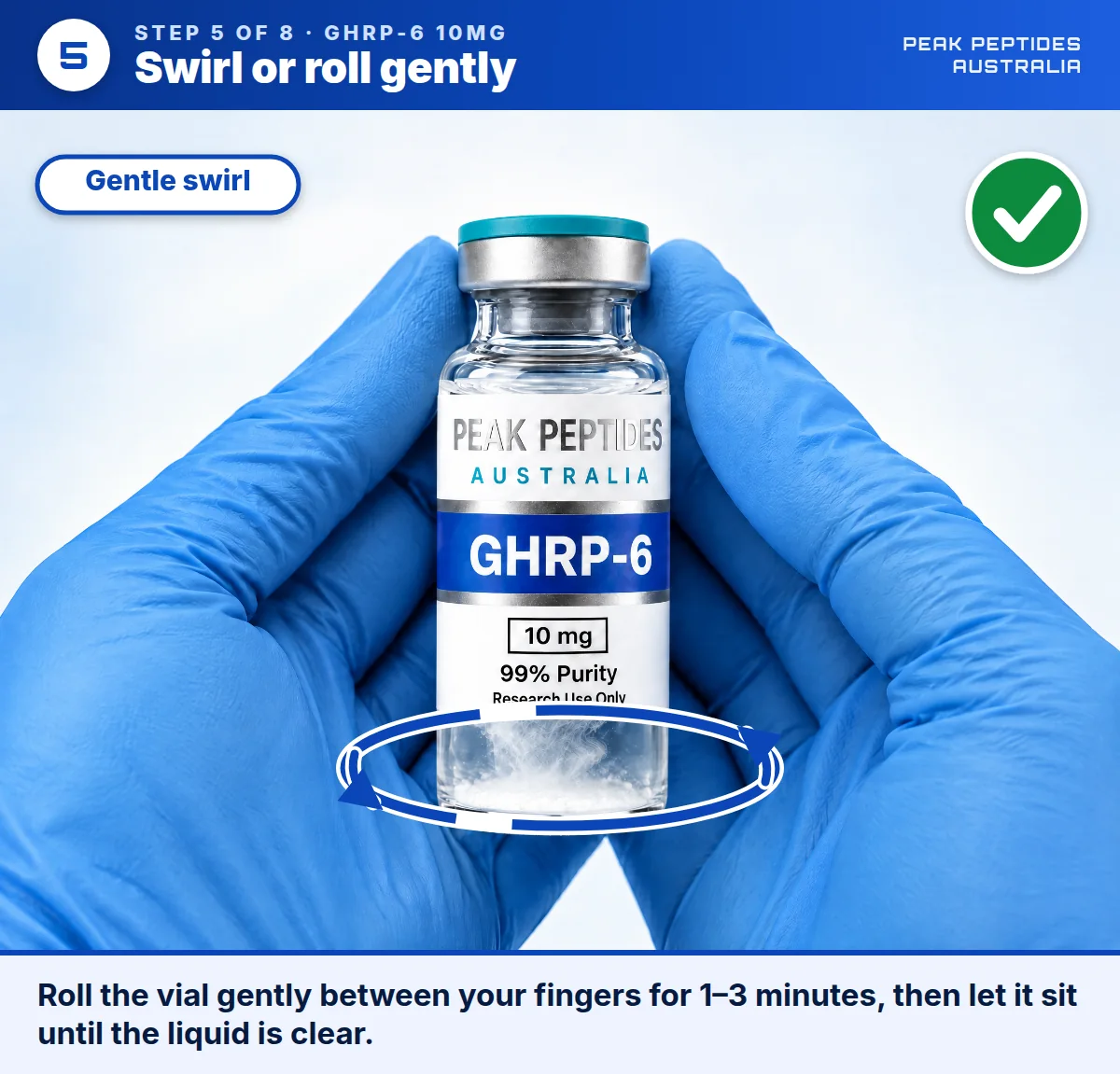
5Step 5: Swirl or roll gently
Gently roll the GHRP-6 vial between your fingers or swirl it in slow circles. PeptideDosages advises gentle swirling or rolling rather than vigorous agitation for many lyophilised protein preparations. Let the liquid contact the powder naturally and allow time for dissolution.
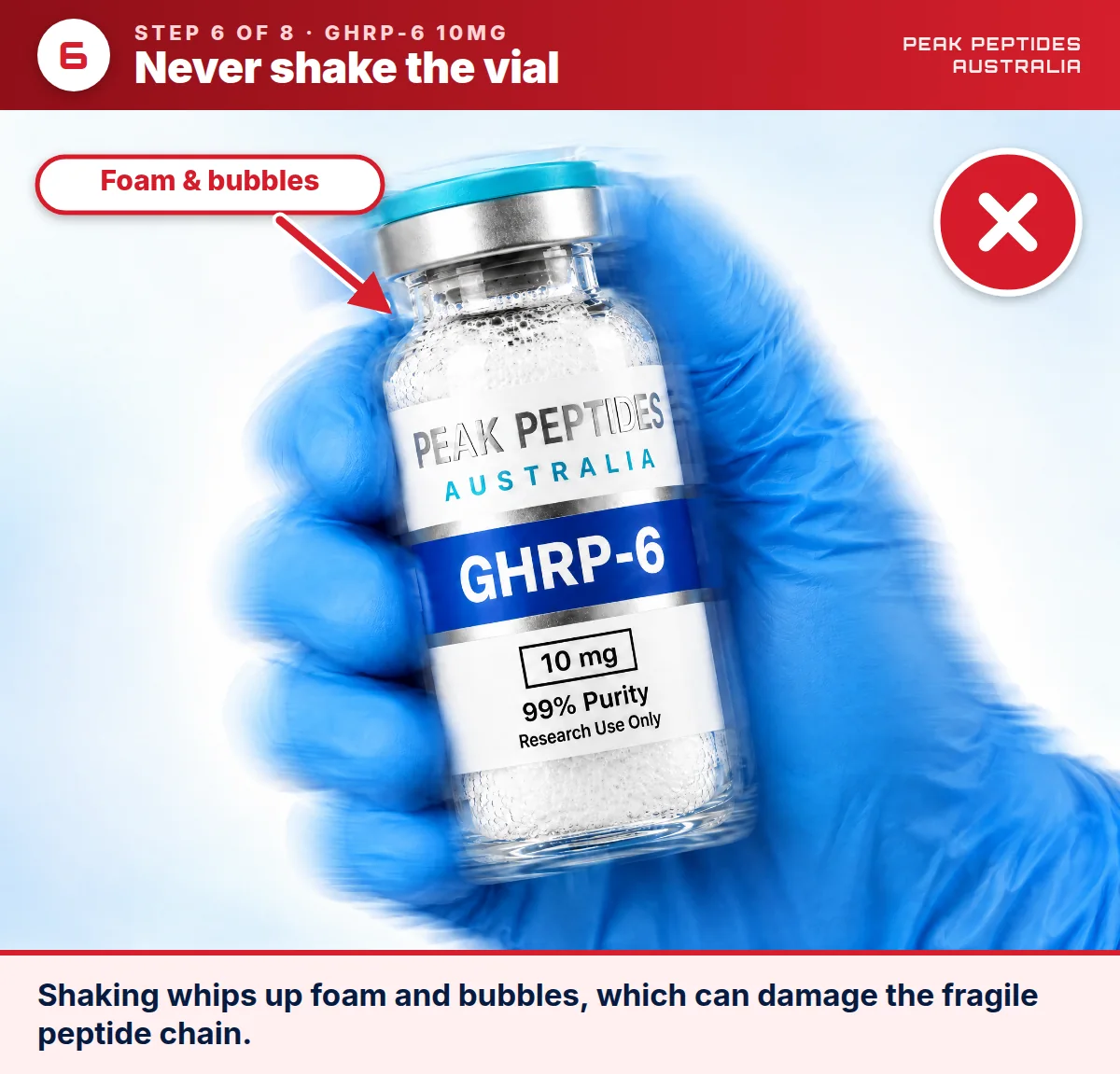
6Step 6: Never shake the vial
Do not shake the GHRP-6 vial. Vigorous agitation can produce foam, bubbles and particles in susceptible peptide preparations. If foam appears, stand the vial upright and allow it to settle. Continue only with the permitted gentle mixing method rather than trying to force a rapid dissolve.
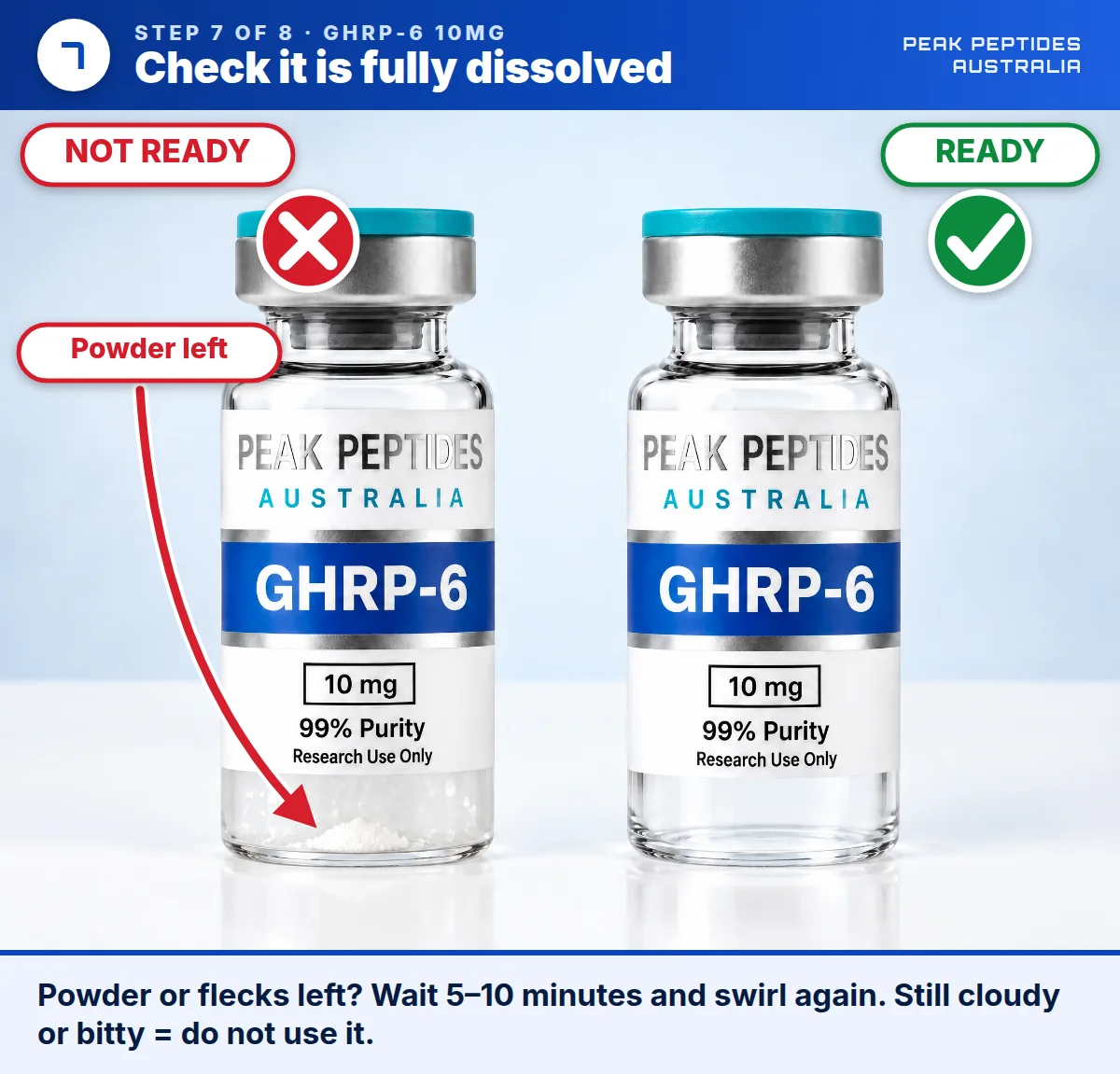
7Step 7: Check it is fully dissolved
Inspect the GHRP-6 vial in good light. Check for undissolved powder, visible flecks, persistent cloudiness, unexpected colour, leakage or stopper damage. Let residual powder settle and swirl gently again. A questionable vial should be isolated rather than treated as acceptable because it looks mostly clear.
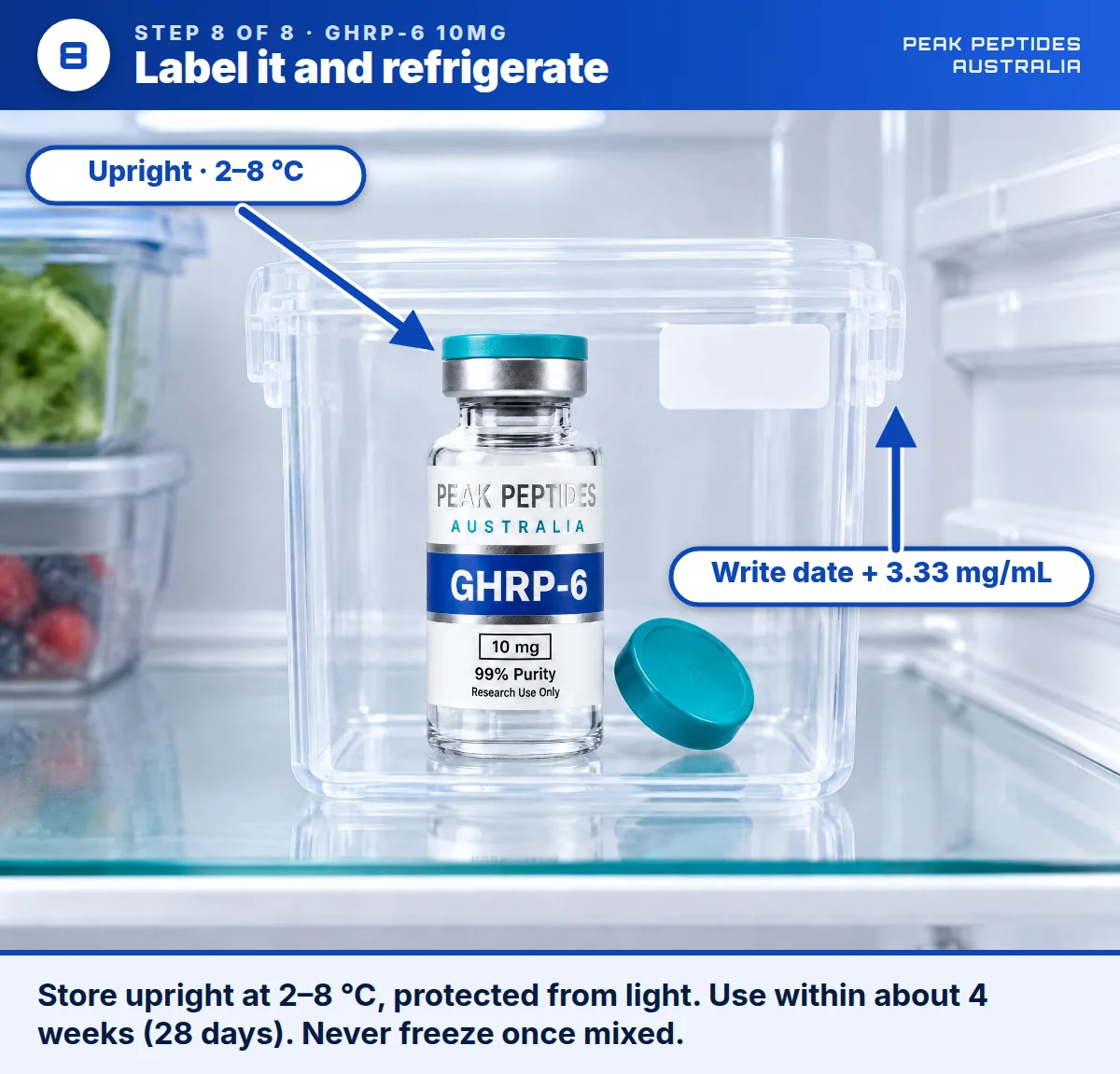
8Step 8: Label it and refrigerate
Write the preparation date, diluent, total volume and strength on the vial or container. Store the mixed GHRP-6 vial upright in the fridge at 2–8 °C, away from light. Use it within about 4 weeks (28 days) and never freeze it.
How to store GHRP-6
GHRP-6 storage and handling guide
GHRP-6 storage and handling guide
Form
Where to keep it
How long
Unopened powder
Fridge, 2–8 °C, sealed, dry and in the dark
Until the printed expiry
Unopened powder
Freezer, −20 °C
Long-term
Mixed with BAC water
Fridge, 2–8 °C, upright and away from light
About 4 weeks (28 days)
Mixed with BAC water
Freezer
Never — freezing damages the mixed peptide
Keep a mixed vial upright in the fridge at 2–8 °C, away from light. Use within about 4 weeks (28 days) and never freeze it. Record the preparation date, diluent, volume and strength on the vial.
GHRP-6 10mg FAQs — Clear Answers to Common Questions
What is GHRP-6?
GHRP-6 means Growth Hormone-Releasing Peptide-6. It is a synthetic hexapeptide, or six-building-block peptide, studied as a growth hormone secretagogue. Its main research target is the growth hormone secretagogue receptor, also called the ghrelin receptor.
What does GHRP-6 stand for?
GHRP-6 stands for Growth Hormone-Releasing Peptide-6. The same molecule is also called GHRP 6, GHRP6, growth hormone-releasing hexapeptide, GH-releasing peptide-6 and, in PubChem records, Hexapeptide-2 or SKF-110679.
Is GHRP-6 the same as growth hormone or ghrelin?
No. GHRP-6 is a distinct synthetic peptide. It is studied at the ghrelin receptor, but it is not ghrelin. It prompts growth-hormone-secretagogue signalling rather than supplying growth hormone itself, so it is not growth hormone replacement either.
How does GHRP-6 work in research?
GHRP-6 is studied through the growth hormone secretagogue receptor, also known as GHS-R1a or the ghrelin receptor. Early human studies measured a temporary growth-hormone response within the wider hypothalamus-and-pituitary signalling system.
What did GHRP-6 human studies find?
The human studies measured endocrine responses. In a 1998 study of nine healthy men, GHRP-6 raised growth hormone and blocking endogenous GHRH removed most of that response. A separate 34-hour study in nine healthy men recorded higher integrated growth hormone, pulse amplitude and IGF-I.
What were the numbers in the GHRH-blocking GHRP-6 study?
In Pandya and colleagues’ 1998 study, the mean maximum rise in growth hormone after GHRP-6 was 33.8 micrograms per litre without the antagonist and 6.2 micrograms per litre with it. The result showed endogenous GHRH was necessary for most of the observed response.
Does GHRP-6 build muscle, heal injuries or cause fat loss?
GHRP-6 is studied for how strongly it releases growth hormone. The small human GHRP-6 studies measured hormone levels over short research sessions, not muscle size, healing or fat loss over months.
Does GHRP-6 affect appetite?
GHRP-6 is researched through the ghrelin receptor, a pathway linked with hunger biology. A 2025 mouse experiment found increased food intake after intranasal GHRP-6. That experiment did not measure appetite or weight outcomes in people, so it is not a human appetite claim.
What side effects or safety concerns are reported for GHRP-6?
FDA places GHRP-6 in its 503B Category 2 list for bulk substances that may present significant safety risks. FDA notes potential immune-reaction risk from aggregation or peptide-related impurities, possible cortisol effects and increased blood glucose linked with reduced insulin sensitivity.
What is the GHRP-6 half-life?
A 2017 review of growth hormone secretagogues reports a GHRP-6 half-life of 20 minutes. The number describes the pharmacokinetic context cited in that review.
Is GHRP-6 the same as Ipamorelin?
No. GHRP-6 is a six-amino-acid growth hormone secretagogue, while Ipamorelin is a separate five-amino-acid peptide. Both are studied through the ghrelin-receptor pathway, but they have different structures, research histories and product listings.
How is GHRP-6 different from CJC-1295, Sermorelin and Tesamorelin?
GHRP-6 is a ghrelin-receptor growth hormone secretagogue. CJC-1295, Sermorelin and Tesamorelin are GHRH analogues that work through the GHRH receptor. Their shared GH-axis context does not make their strengths, results or safety information interchangeable.
Is GHRP-6 approved by the FDA or TGA?
No. GHRP-6 is not an FDA-approved medicine and this research product is not a TGA-approved therapeutic good. FDA lists GHRP-6 as a Category 2 bulk substance for 503B compounding safety review, while the TGA states many supplied peptides are unapproved therapeutic goods outside the ARTG.
Is GHRP-6 prohibited in tested sport?
Yes. The World Anti-Doping Agency Prohibited List includes growth hormone releasing factors and specifically names GHRP-6 among GH-releasing peptides prohibited at all times. Sport rules are separate from product availability and apply to tested athletes.
Can I buy GHRP-6 10mg online in Australia?
GHRP-6 10mg can be ordered online from Peak Peptides Australia when it is listed as available. It is supplied for in-vitro research only. In-stock orders receive same-day dispatch from Victoria once payment is confirmed, with tracked Australia Post Express and an emailed tracking number.
How fast is GHRP-6 shipping in Australia?
For in-stock orders, Peak Peptides Australia dispatches the same day from Victoria once payment is confirmed. Parcels travel by tracked Australia Post Express, and the tracking number is emailed. Delivery timing after dispatch is determined by Australia Post and destination.
How do I know whether a GHRP-6 vial is genuine?
Check that the sealed vial’s label matches the product listing, including GHRP-6, 10 mg and the supplied brand design. Then review the available quality documentation. Product identity needs a report for the tested material; a certificate from a different product does not verify this vial.
How is this GHRP-6 10mg sample verified?
No product-specific LabDoc report is currently published for GHRP-6 10mg. The current catalogue records ≥99% purity by HPLC and the vial label states 99% Purity. The Quality page is the place to review the available COA evidence and verification guidance.
How much BAC water is shown in the GHRP-6 10mg chart?
The source-reference mix on this page uses 3 mL of BAC water for the 10 mg vial. That gives 3.33 mg per mL. The chart also shows 2 mL at 5 mg per mL and 4 mL at 2.5 mg per mL, so the concentration maths is visible.
How many units is 1 mg of GHRP-6 with the 3 mL mix?
With 10 mg in 3 mL, the concentration is 3.33 mg per mL. On a U-100 syringe, 1 mg corresponds to 30 units, or 0.30 mL.
How many milligrams are in 10 units of GHRP-6 with the 3 mL mix?
With the 3 mL mix, 10 units on a U-100 syringe equals 0.10 mL and holds about 0.33 mg, or 333 mcg, of GHRP-6. The total vial amount remains 10 mg regardless of the BAC water volume used.
How do I reconstitute GHRP-6 10mg?
The photo guide shows a research-preparation workflow: clean the stoppers, measure BAC water, add it slowly down the vial wall, swirl rather than shake, inspect for complete dissolution, then label and refrigerate. The chart’s source-reference concentration uses 3 mL of BAC water.
Can sterile or tap water replace BAC water?
Do not use tap or distilled water. The chart and photo guide use bacteriostatic water. Plain sterile water has no antimicrobial preservative, and the PeptideDosages storage guide says its handling period depends on the product label and sterile-preparation guidance.
What if GHRP-6 powder does not dissolve?
Allow time for the powder to dissolve and use only gentle swirling or rolling. Do not add extra liquid simply to force dissolution, because that changes the concentration. Persistent particles, cloudiness, unexpected colour, leakage or stopper damage are reasons to isolate the vial.
Should reconstituted GHRP-6 be cloudy?
No. Inspect a mixed vial in good light for visible particles, persistent cloudiness or unexpected colour. PeptideDosages notes that cloudiness can reflect incomplete dissolution, aggregation, contamination or incompatibility, so a questionable vial should not be treated as acceptable merely because it later clears.
How long does reconstituted GHRP-6 last?
Once mixed with bacteriostatic water, keep the vial upright in the fridge at 2–8 °C, away from light. Use it within about 4 weeks (28 days) and never freeze it. Write the preparation date and strength on the vial.
How should unopened GHRP-6 powder be stored?
Keep an unopened lyophilised vial sealed, dry, dark and at the product-specified temperature. PeptideDosages explains that powder storage life depends on the particular peptide, formulation, container and stability data, so a generic expiry period should not be assigned to this vial.
Can mixed GHRP-6 be frozen?
No. The PeptideDosages storage guide says not to freeze a reconstituted peptide. Keep a mixed vial upright in the fridge at 2–8 °C, away from light, use it within about 4 weeks (28 days) and never freeze it. Store unopened powder in the freezer at −20 °C for long-term storage.
What does a GHRP-6 COA show?
A certificate of analysis identifies the tested sample and typically reports identity, purity and analytical method. For this listing, no product-specific LabDoc report is published. The catalogue records ≥99% purity by HPLC; the site Quality page provides the available quality-documentation pathway.